In This Article
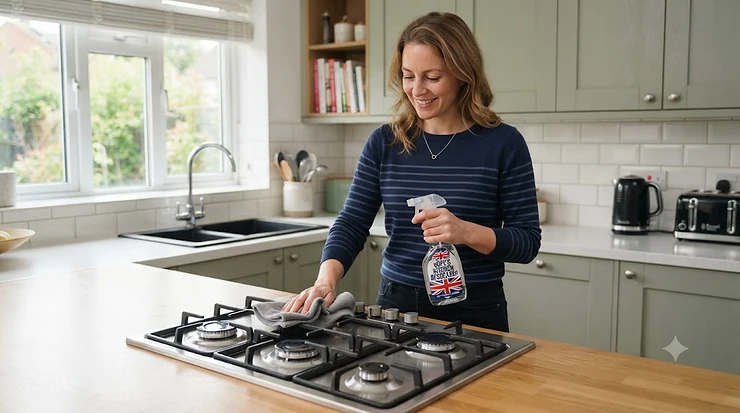
There’s a particular kind of despair that comes with looking up at your cooker hood and realising the yellowish film coating it isn’t a trick of the light. It’s grease. Weeks, maybe months, of it. A decent kitchen degreaser is the difference between a five-minute wipe-down and a Saturday afternoon spent scrubbing with a butter knife and quiet regret.
This guide is built around one simple question: which kitchen degreaser actually works, and for what? Not every grease problem is the same — a splash-back needs something different to a cooker hood filter that hasn’t seen daylight since last Christmas. So we’ve dug into seven real, currently available products, compared their formulas and aggregated customer sentiment, and paired each one with the kind of kitchen job it genuinely suits.
What is a kitchen degreaser? In short, it’s a cleaning solution — usually surfactant or solvent-based — formulated specifically to break the bond between grease and hard kitchen surfaces, letting you wipe it away rather than scrub it off. Unlike a general all-purpose spray, a proper degreaser is built to tackle cooked-on fats, airborne cooking oil residue, and the sticky film that settles on hobs, hoods, and worktops over time.
We’ll cover extractor fans, hob grease, heavy duty jobs, and the maintenance habits that stop the problem coming back in the first place. According to Which?’s independent testing of kitchen cleaning sprays, performance varies wildly between big-name and budget brands, which is exactly why spec-reading matters more than shelf position. Prices below are ranges only, since retailer pricing shifts constantly — always check the current listing before buying.
Quick Comparison Table
| Product | Best For | Price Range | Format |
|---|---|---|---|
| Elbow Grease All Purpose Degreaser Spray | Tightest budget | £3-£5 | Ready-to-use spray |
| Astonish Specialist Extra Strength Grease Lifter Spray | Everyday worktop grease | £4-£6 | Ready-to-use spray |
| Cif Cleanboost Kitchen Spray | All-round surface safety | £3-£5 | Ready-to-use spray |
| HG Hob Cleaner Spray | Ceramic, induction & gas hobs | £4-£7 | Ready-to-use spray |
| Oven Mate Mesh Filter Cleaner | Extractor fan filters | £6-£9 | Soak spray |
| EasyClean Ultra Strong Degreaser Concentrate | Heavy duty, dilutable use | £14-£18 | Concentrate |
| Mr Muscle Platinum Antibacterial Kitchen Cleaning Spray | Hygiene-conscious households | £3-£5 | Ready-to-use spray |
Looking at the spread above, the split really comes down to concentration versus convenience. Elbow Grease All Purpose Degreaser Spray, Astonish Specialist Extra Strength Grease Lifter Spray, Cif Cleanboost Kitchen Spray and Mr Muscle Platinum Antibacterial Kitchen Cleaning Spray are all grab-and-go sprays sitting in a similar budget bracket, while EasyClean Ultra Strong Degreaser Concentrate costs more upfront but dilutes down into several litres of usable cleaner, which changes the value maths considerably. HG Hob Cleaner Spray and Oven Mate Mesh Filter Cleaner are the two specialists here — one engineered for the hob’s surface chemistry, the other for the tangled metalwork of an extractor fan filter.
💬 Just one click — help others make better buying decisions too! 😊
Top 7 Kitchen Degreasers: Expert Analysis
1. Elbow Grease All Purpose Degreaser Spray — the cult-favourite budget powerhouse
The standout feature here isn’t a fancy ingredient list — it’s the sheer strength-to-price ratio that’s made this spray something of a social media staple in UK cleaning circles. It’s a 1-litre ready-to-use formula built to lift grease and oil from kitchen and bathroom surfaces without needing to be diluted first.
On paper, this is a straightforward alkaline degreaser spray with no heavy branding markup, which explains why it consistently punches above its price point. It’s rated highly by shoppers, with review scores sitting comfortably above 4 stars across hundreds of ratings, and it’s a frequent repeat purchase according to Amazon’s “bought in past month” figures.
Based on the spec comparison with pricier rivals, this is the one to reach for when the job is everyday grime rather than years of baked-on residue. Reviewers consistently note that it works fastest on fresh or moderate grease and needs a bit more dwell time on anything truly stubborn.
Pros:
- ✅ Genuinely low cost per bottle for a full litre
- ✅ Works on both kitchen and bathroom surfaces
- ✅ No dilution needed — spray and wipe straight away
Cons:
- ❌ Less effective on heavily baked-on, aged grease
- ❌ Basic trigger spray can be inconsistent on some bottles
Priced around £3-£5, this is the easiest “yes” on the list for anyone stocking a cleaning cupboard on a budget — the value verdict here is hard to beat for routine use.

2. Astonish Specialist Extra Strength Grease Lifter Spray — baking soda boosted grease-cutter
What stands out on this 750ml spray is the inclusion of baking soda in the formula, which gives it a mild abrasive boost alongside the chemical degreasing action — useful for grease that’s started to feel tacky rather than merely greasy.
The “extra strength” branding isn’t just marketing fluff here: the formula is designed specifically for de-greasing surfaces and kitchen appliances, and the baking soda component means it can also nudge off some light staining that a pure liquid spray would leave behind. What most buyers overlook about this model is that the added abrasive means it’s worth testing on painted or lacquered surfaces first, since the same grit that helps on stainless steel can occasionally dull a soft-touch finish.
Aggregated review sentiment points to strong satisfaction with its speed on hob splash-backs and cooker exteriors, with users repeatedly highlighting how little scrubbing is required once the spray has had a minute or two to work.
Pros:
- ✅ Baking soda adds gentle scouring power
- ✅ Fast-acting on tacky, semi-set grease
- ✅ Pleasant scent reported by most reviewers
Cons:
- ❌ Not ideal for delicate painted surfaces
- ❌ Smaller bottle than some rivals at this price
At around £4-£6, it sits just above the cheapest options, and the value verdict is strong if your grease problem has a slightly gritty, aged texture rather than a fresh, oily sheen.
3. Cif Cleanboost Kitchen Spray — the trusted all-rounder for hobs and surfaces
The standout advantage of this 700ml spray is its explicit design for ceramic, chrome and enamel surfaces — the exact materials that make up most UK hobs, taps and splash-backs. It’s from one of the longest-standing names in UK household cleaning, which counts for something when you’re trusting a spray near food-prep areas daily.
Here’s what to weigh: Cif’s formula is built around tough grease removal without needing to soak, and the multi-surface claim genuinely holds up across the materials it lists — this isn’t a single-surface specialist pretending to be an all-rounder. The spray mechanism tends to produce a finer mist than some rivals, which helps with even coverage on textured surfaces like enamel hob trim.
Real customer sentiment around Cif’s kitchen range tends to focus on its shine finish as much as its grease-cutting, with users noting it leaves less streaking than own-brand alternatives on chrome fittings.
Pros:
- ✅ Safe and effective across ceramic, chrome and enamel
- ✅ Fine mist spray gives even coverage
- ✅ Long-established brand with wide UK availability
Cons:
- ❌ Scent can be strong for fragrance-sensitive households
- ❌ Not marketed as a heavy duty specialist
In the £3-£5 range, this is the sensible middle-ground pick for a household that wants one bottle to cover most kitchen surfaces without buying a specialist for every job.
4. HG Hob Cleaner Spray — purpose-built shine for every hob type
The clear standout here is versatility across hob types: this 500ml spray is formulated to work on induction, ceramic and gas hobs alike, which matters because a lot of “hob cleaners” quietly assume you own a glass ceramic top and nothing else.
Based on the spec comparison, HG’s formula pairs a degreasing action with a polishing finish, so it’s doing two jobs in one pass — lifting grease and leaving a streak-reduced shine. This dual function matters in practice because a hob that’s merely grease-free but smeared still looks unclean, especially on the reflective black glass surfaces common in modern kitchens.
What reviewers consistently note is that the shine effect is genuinely visible on induction and ceramic tops, though gas hob users report needing to focus the spray on the metal trim and drip trays separately, since baked-on residue there behaves differently to a flat glass surface.
Pros:
- ✅ Works across induction, ceramic and gas hobs
- ✅ Leaves a visible, low-streak shine finish
- ✅ Compact bottle with precise trigger spray
Cons:
- ❌ Gas hob trim and burners need extra attention
- ❌ Shine finish can show fingerprints on black glass
Sitting in the £4-£7 range, this is the one worth stocking specifically for the hob rather than expecting your general kitchen degreaser to double up.
5. Oven Mate Mesh Filter Cleaner — no-scrub extractor fan filter rescue
The standout feature on this 500ml spray is right there in the name — it’s built specifically for the mesh and metal filters inside cooker hoods and extractor fans, a job most general-purpose degreasers handle badly because they’re not designed to cut through months of airborne grease bonded into metal mesh.
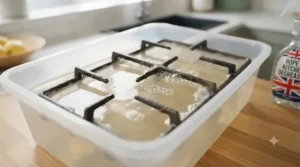
The spec sheet won’t tell you this, but user reports suggest the “no-scrubbing formula” claim holds up best when the filter is soaked rather than just sprayed and wiped — dunking the filter in a sink or bucket with the spray applied liberally, then leaving it to work, produces noticeably better results than a quick surface spray while the filter’s still mounted.
Aggregated feedback highlights how effective this is on filters that look genuinely beyond saving, with reviewers describing filters restored close to their original metal colour after a proper soak, alongside a reduction in the stale cooking-oil smell that clings to poorly maintained hoods.
Pros:
- ✅ Purpose-built for cooker hood and extractor mesh filters
- ✅ Genuine no-scrub results when soaked properly
- ✅ Also helps reduce lingering kitchen odours
Cons:
- ❌ Best results require removing the filter, not just spraying in place
- ❌ Smaller bottle size relative to price versus general sprays
At around £6-£9, this is a specialist buy, but the value verdict is excellent if you’re the kind of household that only remembers the extractor fan exists twice a year.
6. EasyClean Ultra Strong Degreaser Concentrate — industrial-strength dilutable muscle
The standout here is right in the name: this is a concentrate rather than a ready-to-use spray, marketed for kitchens, restaurants and industrial use, which tells you exactly how seriously its formula takes grease removal. One bottle, once diluted according to the label, stretches into several litres of working solution.
Here’s what most shoppers overlook about concentrates generally — the headline price per bottle looks steep next to a ready-to-use spray, but the cost-per-litre-of-usable-cleaner is usually dramatically lower once diluted, which is exactly the kind of long-term value maths that Amazon listings never spell out for you. This is genuinely industrial-strength chemistry rather than a domestic spray in stronger packaging.
Review sentiment for this concentrate skews notably positive, with a strong average rating across its review base and repeat purchases reported in the “bought in past month” data, suggesting households that try it tend to come back for the refill rather than switching brands.
Pros:
- ✅ Dilutes into multiple litres, lowering cost per use
- ✅ Industrial-grade strength for baked-on, aged grease
- ✅ Strong, consistently high review ratings
Cons:
- ❌ Requires correct dilution — not grab-and-spray
- ❌ Higher upfront price than ready-to-use sprays
In the £14-£18 range for the concentrate bottle, this is the pick for anyone doing a proper deep clean rather than a weekly wipe-down, and the per-use economics genuinely favour it over time.
7. Mr Muscle Platinum Antibacterial Kitchen Cleaning Spray — hygiene-first family favourite
The standout advantage on this citrus-scented spray is the dual claim of degreasing and disinfecting in one product — according to the manufacturer, it removes all visible grease while also addressing 99.9% of common household bacteria and viruses, which matters in kitchens with young children, pets, or anyone handling raw meat regularly.
Based on the spec comparison, this positions Mr Muscle less as a pure degreasing specialist and more as an everyday hygiene product that happens to cut grease competently — worth noting if your priority is genuinely stubborn, aged residue rather than routine surface hygiene. The bottle itself is made from 100% ocean-bound plastic, a sustainability detail that’s increasingly relevant to UK households trying to reduce single-use plastic waste.
What most buyers report is satisfaction with the citrus scent lingering pleasantly without being overpowering, alongside confidence in the disinfecting claim for everyday worktop and appliance cleaning rather than deep-set grease jobs.
Pros:
- ✅ Combines degreasing with antibacterial disinfection
- ✅ Pleasant citrus scent without being overpowering
- ✅ Bottle made from 100% ocean-bound plastic
Cons:
- ❌ Not the strongest choice for heavily baked-on grease
- ❌ Marketing leans hygiene-first over pure degreasing power
At around £3-£5, this is the household staple pick — the one you keep by the sink for daily wipe-downs rather than the one you reach for on a deep-clean weekend.
How to Choose a Kitchen Degreaser
Picking the right kitchen degreaser isn’t really about finding “the best” one — it’s about matching the formula to the job. Here’s a practical framework, drawn from the spec differences we’ve just walked through:
- Identify the surface first. Ceramic, induction, gas, stainless steel and painted surfaces all react differently to abrasives and solvents, so check the label against your specific hob or worktop material before anything else.
- Match strength to grease age. Fresh grease needs far less firepower than something that’s been baking onto a surface for months — reach for a concentrate or heavy duty formula only when a standard spray has genuinely failed.
- Consider format for the job. A trigger spray suits flat surfaces; a soak-friendly formula suits removable parts like extractor filters, which need submersion rather than surface contact.
- Factor in household priorities. If disinfection matters as much as grease removal — young kids, shared kitchens, raw meat prep — a hygiene-focused spray earns its place over a pure degreaser.
- Check dilution requirements. Concentrates offer better long-term value but need accurate measuring; if you know you won’t dilute properly, a ready-to-use spray removes that risk entirely.
- Read the surface warnings. Some stronger formulas explicitly warn against use on glass cooktops, marble or aluminium — skipping this step is the single most common way people damage a hob while trying to clean it.
- Think about frequency of use. A household doing a weekly deep clean has very different needs to one wiping down daily — buy for your actual habits, not your aspirational ones.

Cooker Hood Maintenance: The Habits That Stop Grease Building Up
A kitchen degreaser only ever solves half the problem — the other half is the maintenance rhythm around your cooker hood that determines how often you need it in the first place. This is where most households quietly fall behind, and it’s genuinely worth building into a routine rather than treating as an occasional emergency.
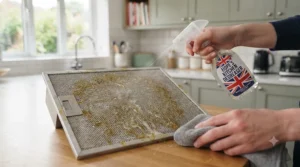
Start by removing and washing metal mesh filters roughly every four to six weeks if you cook daily, or monthly for lighter use — leaving them in place for months at a time is exactly how a five-minute wipe becomes an hour-long soak-and-scrub session. When you do remove them, a degreaser designed for mesh filters, applied generously and left to work before rinsing, will always outperform a quick spray-and-wipe attempt.
Beyond the filter itself, wipe down the underside and edges of the hood weekly with whatever kitchen degreaser you already have to hand — this is the surface that catches the first layer of airborne grease before it can settle deeper into the unit. It’s also worth checking that your extractor is actually venting effectively; a fan straining against a clogged filter works harder, pulls less air, and lets more grease-laden steam settle back onto surrounding surfaces instead of leaving the kitchen.
This isn’t just about appearances. Fire services have repeatedly linked poorly maintained kitchen extraction systems to serious fire risk, with London Fire Brigade specifically warning that built-up fat and grease in hobs, cooker hoods and extractor fans can ignite. A clean filter genuinely reduces that risk, alongside keeping your kitchen smelling less like last week’s dinner.
Degreaser for Extractor Fans: Keeping Your Cooker Hood Filter Grease-Free
Extractor fan filters are arguably the hardest-working, least-cleaned component in most UK kitchens, and a general kitchen degreaser often isn’t the right tool for the job — the mesh geometry traps grease in ways a flat-surface spray struggles to reach.
A degreaser built specifically for extractor fans, like the mesh filter cleaner covered earlier, is formulated to penetrate the layered metal structure rather than just coat the surface. The most effective approach we’ve seen reflected in real user feedback is a full soak: remove the filter, submerge it in hot water with the degreaser added, and let it sit for at least fifteen to twenty minutes before rinsing under a hot tap and letting it air dry fully before refitting.
For filters that have gone untouched for a long stretch, don’t expect a single pass to fully restore them — a second soak, or a scrub with a soft brush on the worst patches, is often needed. What the spec sheet won’t tell you is that plastic and non-metal filters need a gentler formula than metal mesh, since some heavy duty degreasers are explicitly unsuitable for painted or plastic components.
Hob Cleaning 101: Daily, Weekly and Deep-Clean Routines
Hob cleaning genuinely benefits from a tiered routine rather than a single approach, because the grease you’re dealing with on a Tuesday evening is nothing like the grease you’re dealing with after a month of neglect.
Daily: wipe the hob down while it’s still slightly warm (never hot) with a damp cloth and a light spray of your everyday kitchen degreaser — this catches fresh splashes before they’ve had time to bond to the surface, and takes under a minute.
Weekly: give the hob a proper spray-and-dwell clean, letting a dedicated hob cleaner sit for the two to three minutes the label recommends before wiping. This is also the point to lift removable gas hob components — burner caps, grates, drip trays — and clean underneath them individually, since grease pools invisibly beneath these parts far faster than on the exposed surface.
Monthly or as needed: a deep clean using a heavy duty degreaser or concentrate for any residue that’s resisted the weekly routine, paying particular attention to control knob surrounds and the gap where the hob meets the worktop — two spots that trap grease and crumbs constantly and get skipped in a quick wipe-down. On ceramic and induction hobs specifically, always check the product label confirms suitability for glass surfaces before using anything with abrasive particles, since scratches on glass hobs are permanent and immediately visible.
Degreaser for Hob Grease: Ceramic, Induction and Gas Compared
Hob grease behaves differently depending on what’s underneath it, and treating every hob the same is one of the more common ways people either under-clean or accidentally damage their cooktop.
| Hob Type | Grease Behaviour | Recommended Approach | Best For |
|---|---|---|---|
| Ceramic/Induction | Sits on smooth glass, can scorch if left | Non-abrasive cream or spray, gentle wipe | HG Hob Cleaner Spray |
| Gas | Pools around burners, grates, drip trays | Stronger spray, component-by-component clean | Cif Cleanboost Kitchen Spray |
| Stainless steel trim | Shows fingerprints and streaks easily | Fine-mist spray with polishing finish | HG Hob Cleaner Spray |
The table makes the core distinction fairly clear: ceramic and induction hobs need a formula that won’t scratch glass, gas hobs need something strong enough to tackle grease trapped around metal components, and both benefit from a final pass that reduces streaking rather than just cutting grease. Mixing these up — using a gritty degreaser on glass, or a weak spray on gas grates — is the single most common source of disappointing hob cleaning results reported in reviews.
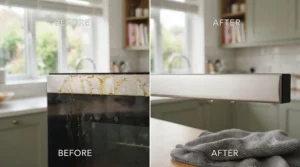
Heavy Duty Kitchen Degreaser: When Standard Sprays Aren’t Enough
There’s a meaningful difference between “degreaser” and “heavy duty degreaser,” and it’s not just marketing language. Standard sprays are formulated for routine, relatively fresh grease; heavy duty and concentrate formulas are built with a higher active ingredient concentration specifically to break down grease that’s been baked on, aged, or layered over weeks and months.
You’ll typically need a heavy duty option after a house move into a kitchen you didn’t previously maintain, after a long period of neglect, or for genuinely tough spots like the area behind a hob or the inside of a cooker hood housing. The trade-off is worth understanding honestly: stronger formulas often carry firmer ventilation and skin-contact warnings, and some are explicitly unsuitable for certain finishes, so reading the label matters more here than with a mild everyday spray.
Cost-per-use is also worth thinking through properly. A concentrate that dilutes into several litres, even at a higher shelf price, frequently works out cheaper per clean than repeatedly buying ready-to-use sprays for the same job — a genuine ROI point that’s easy to miss when comparing sticker prices alone rather than value per application.
Grease Build-Up: Why It Happens and How to Stay Ahead of It
Grease build-up isn’t really a cleaning failure so much as a physics problem. Cooking — especially frying, grilling, and anything involving oil at heat — releases fine airborne particles that settle on every nearby surface, including ones you’d never think to clean, like the top of wall cabinets or light fittings near the hob.
The reason build-up compounds over time rather than staying constant is that grease is naturally tacky, so each new layer traps dust and grime more effectively than the layer before it, creating a thickening film that becomes progressively harder to shift. This is exactly why a kitchen degreaser used weekly on a light layer works so much faster than the same product used monthly on a thick one — you’re not fighting exponentially harder problems if you stay ahead of them.
Practical prevention matters as much as the product itself: using lids on pans while frying, running your extractor fan during and for a few minutes after cooking rather than not at all, and keeping surfaces near the hob genuinely clear of clutter that grease can settle onto, all measurably reduce how often you’ll need a serious degreasing session.
Kitchen Degreaser vs Traditional Alternatives
| Method | Effectiveness on Grease | Effort Required | Surface Safety |
|---|---|---|---|
| Dedicated kitchen degreaser | High | Low-medium | Formula-specific, generally safe if label followed |
| Washing-up liquid & hot water | Low-medium | High | Very safe on most surfaces |
| Vinegar solution | Low | Medium-high | Safe on most, unsuitable on some stone |
| Bicarbonate of soda paste | Medium | Medium-high | Mildly abrasive, avoid on soft finishes |
A dedicated kitchen degreaser wins decisively on effort-to-result ratio, which is really the whole point of buying one rather than relying on washing-up liquid or vinegar. Traditional alternatives aren’t ineffective exactly — they’re just slower, and they demand considerably more scrubbing to achieve a comparable result, which matters if you’re cleaning after a full day rather than treating it as a weekend project. Where they do hold an advantage is cost and simplicity for genuinely light, fresh messes, where reaching for a specialist product would honestly be overkill.
Common Mistakes When Buying a Kitchen Degreaser
Even with a good product in hand, a few recurring mistakes undermine results more often than the formula itself does.
- Buying one product for every surface. A single all-purpose degreaser rarely performs as well on a hob, an extractor filter, and a worktop as three products each suited to their specific job.
- Ignoring surface warnings on the label. Using an abrasive or solvent-heavy formula on glass, marble or painted surfaces is one of the fastest ways to cause permanent, visible damage.
- Under-diluting or over-diluting concentrates. Skipping the measuring step either wastes product or leaves you disappointed with weaker-than-expected results.
- Spraying and wiping immediately. Most degreasers need thirty seconds to a few minutes of dwell time to actually break down grease — wiping instantly just smears it around.
- Assuming stronger always means better. Heavy duty formulas can be overkill — and occasionally riskier to skin and surfaces — for routine, light cleaning jobs that a mild spray would handle just fine.
Long-Term Cost & Real-World Performance
On paper, spec sheets talk about grease-cutting percentages and formula strength; in practice, what actually matters day to day is how a product performs across weeks and months of ordinary cooking, not just in a single dramatic clean.
Cost-per-use is the number worth tracking rather than shelf price alone. A £4 ready-to-use spray that lasts six weeks of daily use is cheaper over a year than repeatedly rebuying it every fortnight because a household needs to spray more liberally to get the same result. Concentrates shift this equation further in their favour for households doing regular deep cleans, since the diluted cost per application typically undercuts ready-to-use sprays once you account for the number of cleans a single bottle provides.
Real-world performance also depends heavily on consistency rather than product choice alone — a mid-range spray used weekly will outperform a premium heavy duty formula used only when things have already got out of hand, simply because prevention is always less work than restoration.
Safety, Regulations and Buying Sensibly on Amazon
Kitchen degreasers are classified as household chemical products, and while they’re broadly safe when used as directed, a few practical points are worth knowing. UK guidance under the Control of Substances Hazardous to Health (COSHH) regulations recommends good ventilation, avoiding mixing different cleaning chemicals, and using gloves with stronger formulas — sensible habits for any household product, not just industrial ones.
Always store degreasers away from children and pets, keep them in their original labelled container, and never decant a stronger concentrate into an unlabelled spray bottle where its strength could be forgotten. When a bottle is finally empty, most UK councils accept rinsed household cleaning chemical bottles through standard recycling collections, though it’s worth checking your local authority’s specific guidance before binning anything that held a heavy duty formula.
On the buying side, remember that Amazon listing prices change constantly, so treat any figure — including the ranges in this guide — as a snapshot rather than a guarantee. Checking current pricing and availability directly on the product page before purchasing is always the safest approach.
Frequently Asked Questions
❓ What is the best kitchen degreaser for grease build-up?
❓ Can I use kitchen degreaser on an extractor fan filter?
❓ Is heavy duty kitchen degreaser safe for ceramic hobs?
❓ How often should I clean my cooker hood filter?
❓ Does kitchen degreaser remove baked-on grease?
Conclusion
The right kitchen degreaser really depends on the job in front of you rather than any single “best overall” pick. For everyday spills, something like Elbow Grease All Purpose Degreaser Spray or Mr Muscle Platinum Antibacterial Kitchen Cleaning Spray covers routine needs without fuss. For hobs specifically, HG Hob Cleaner Spray and Cif Cleanboost Kitchen Spray are built around the surfaces you actually own. For extractor fans, Oven Mate Mesh Filter Cleaner solves a problem general sprays simply aren’t designed for. And when the grease has genuinely got the upper hand, EasyClean Ultra Strong Degreaser Concentrate and Astonish Specialist Extra Strength Grease Lifter Spray bring the strength needed to actually shift it.
What matters more than any single product, though, is the routine around it — regular filter cleaning, weekly hob attention, and staying ahead of build-up rather than letting it compound. Get that habit right, and whichever degreaser you choose will do its job faster and last considerably longer.
Recommended for You
- Antibacterial Kitchen Spray: 7 Best UK Picks for 2026
- 7 Best Oven Rack Cleaning Tools UK 2026: Tried; Compared
- Wire-Free BBQ Cleaning Brush: 7 Safe Picks for Your 2026 Grill
Disclaimer: This article contains affiliate links. As an Amazon Associate, I earn from qualifying purchases. If you purchase products through these links, we may earn a small commission at no additional cost to you.
✨ Found this helpful? Share it with your friends! 💬🤗
