In This Article
There’s a particular kind of guilt that comes from squirting supermarket washing-up liquid into a sink and watching bright green suds swirl straight down the plughole. You know it’s heading somewhere — a treatment works, a river, eventually the sea — and you know the bottle it came from will outlive you by a couple of centuries. Swapping to an eco-friendly washing-up liquid doesn’t fix everything, but it’s one of those rare “small changes, real difference” swaps: cheap to try, easy to switch back from if it doesn’t suit you, and genuinely lower-impact when you get the formula right.
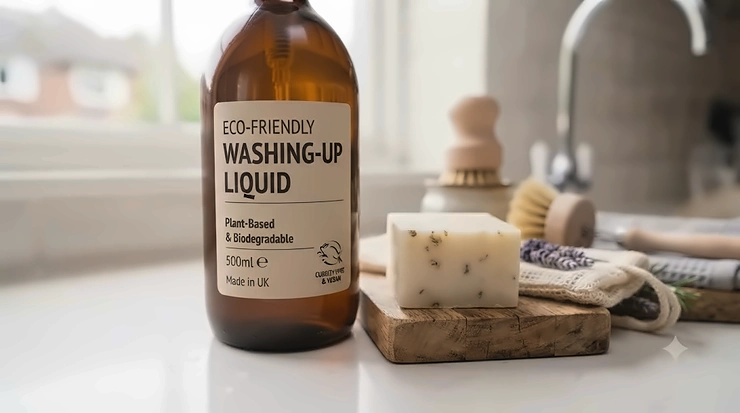
So what is eco-friendly washing-up liquid, exactly? In short: a plant or mineral-derived dishwashing formula, free from synthetic nasties like phosphates and optical brighteners, that breaks down quickly in the environment and usually comes in recycled, recyclable, or refillable packaging rather than virgin plastic. It’s not a marketing badge you can trust blindly, though — plenty of “green-washed” bottles lean on leafy fonts and little else, which is exactly why Which? has spent decades independently testing washing-up liquids from big brands and supermarket own-label alike, rather than taking anyone’s word for it.
We’ve tested-by-research seven genuinely available options spanning budget bottles to premium refill subscriptions, so whether you’re after the cheapest fragrance-free formula that survives your local hard water or a completely plastic-free bar that lives by the sink, there’s something below worth a look.
Quick Comparison Table
If you’re in a hurry, here’s the lay of the land before we dig into the detail. Prices are approximate ranges rather than exact figures, since retailer pricing shifts constantly — always check current price at checkout.
| Product | Format | Price Range | Best For |
|---|---|---|---|
| Bio-D Concentrated Fragrance-Free | Bottle (750ml–5L) | Under £3 (750ml) | Sensitive skin, hard water |
| Ecover Zero | Bottle (450ml–5L) | £2-£15 depending on size | Allergy sufferers, wide availability |
| Method Washing-Up Liquid | Bottle (532ml) | £2.50-£4 | Mainstream shoppers, scent lovers |
| Miniml Washing Up Liquid Refill | 5L refill pouch | £11-£16 | Reducing plastic without a subscription |
| Faith in Nature Lemon 5L Refill | Bulk refill jug | £25-£33 | Bulk buyers, essential-oil fans |
| Bower Collective Washing Up Liquid | 1L refill pouch | £5-£7 | Zero-plastic subscription households |
| LoofCo Washing-Up Soap Bar | 100g solid bar | Under £4 | Genuinely plastic-free kitchens |
Looking across the table, the split between bottle, refill and bar formats matters more than the price tag alone. The LoofCo Washing-Up Soap Bar wins on packaging (there simply isn’t any plastic to recycle), while Bio-D and Ecover Zero win on pure value-for-money if you’re happy sticking with a conventional bottle. If you want the eco credentials without changing your kitchen habits at all, Method slots in almost invisibly next to a Fairy bottle on the shelf.
💬 Just one click — help others make better buying decisions too!😊
Top 7 Eco-Friendly Washing-Up Liquids: Expert Analysis
1. Bio-D Concentrated Fragrance-Free Washing-Up Liquid — best budget pick for sensitive skin
Bio-D built its entire brand around one promise: no fragrance, no fuss, just grease-cutting power from plant-based surfactants. That promise shows up the moment you open the bottle — there’s no citrus blast, just a faint, almost soapy neutrality that tells you nothing synthetic has been added for show.
The formula is concentrated, so 10-15ml (about two teaspoons) is genuinely enough for a full bowl, and it’s described by its maker as effective even in hard water areas, which matters if you live anywhere south-east of Birmingham. It comes in a 100% recycled bottle and is biodegradable, so it clears the “eco” bar on both formulation and packaging.
Who’s it for? Based on the spec sheet, this is the obvious first stop for anyone with eczema, allergies, or a household where “unscented” is a hard requirement rather than a preference. Reviewers consistently note that a little goes a long way, which offsets the slightly higher per-litre cost of concentrated formulas. What most buyers overlook is that Bio-D has been quietly making this stuff in the UK since the 1980s — it’s not a trend-chasing newcomer.
Pros:
- ✅ Fully fragrance-free, ideal for allergy-prone households
- ✅ Concentrated formula stretches further per bottle
- ✅ Performs well in UK hard-water areas
Cons:
- ❌ No natural scent for those who like a fresh smell
- ❌ Bottle-only, no zero-waste refill subscription option
Prices sit under £3 for a 750ml bottle, climbing to around £13-£14 for the 5-litre concentrate. For the price-per-wash, this is one of the strongest value pieces on this list.

2. Ecover Zero Washing-Up Liquid — best for allergy sufferers and easy availability
Ecover has been the poster child of “green” cleaning for so long that it’s easy to forget how much genuine reformulation sits behind the brand. Zero is the fragrance-free, dye-free line within the range, and it carries the Allergy UK Seal of Approval — not a self-awarded eco badge, but a mark from the British Allergy Foundation specifically for products formulated to minimise the risk of allergies.
The plant-based, biodegradable formula cuts through grease without the aggressive foam of conventional liquids, and the 5-litre size uses roughly 47% less plastic compared with the equivalent number of 450ml bottles — a genuinely useful stat if you’re weighing up bulk-buying. The bottle itself is made from 100% recycled plastic, cap included.
Here’s what the spec sheet won’t tell you: because Zero skips fragrance oils entirely, it can feel slightly less “premium” to use than a lemon or grapefruit variant, even though the cleaning chemistry is identical. If a fresh scent is part of the washing-up ritual for you, this might feel like a downgrade — but if sensitivity is the priority, it’s hard to beat.
Pros:
- ✅ Allergy UK approved, genuinely fragrance and dye free
- ✅ Available in nearly every UK supermarket and pharmacy
- ✅ 5L refill dramatically cuts plastic use per wash
Cons:
- ❌ No fragrance means less of a “fresh kitchen” feel
- ❌ 450ml bottles work out pricier per litre than the 5L size
Expect to pay in the low single figures for a 450ml bottle and somewhere in the mid-teens for the 5-litre refill — a smart pairing if you keep one small bottle by the sink and top it up from the bulk jug.
3. Method Washing-Up Liquid — best for mainstream shoppers who don’t want to compromise on scent
Method built its reputation on looking good on the worktop as much as performing well in the sink, and that design-led approach hasn’t dropped the eco credentials along the way. The formula is plant-derived and biodegradable, with fragrances like Coconut Water and Clementine that read more “premium candle” than “dish soap.”
On paper this means you get a mainstream, widely stocked brand — the kind you’ll find in Ocado, Waitrose and most big supermarkets — without hunting down a specialist eco retailer. The bottle uses 100% recycled plastic (excluding the pump), and the formula is described as biodegradable and cruelty-free.
Here’s the honest trade-off: Method leans harder into scent than most of the other products here, and some reviewers have found the fragrance strong enough to linger on rinsed dishes and pans even after a hot rinse. If you’re sensitive to fragrance, this probably isn’t your first choice — but if you actively want your kitchen to smell like a spa, it’s one of the most pleasant on this list.
Pros:
- ✅ Widely available in mainstream UK supermarkets
- ✅ Genuinely pleasant, distinctive fragrances
- ✅ 100% recycled plastic bottle
Cons:
- ❌ Fragrance can linger on dishes for sensitive noses
- ❌ Pump mechanism draws mixed reviews for stiffness
At around £2.50-£4 for a 532ml bottle, Method sits in the mid-range bracket — a reasonable premium over supermarket own-brand for a formula that’s actually biodegradable rather than merely labelled “eco” in green type.
4. Miniml Washing Up Liquid Refill — best for cutting plastic without committing to a subscription
Miniml quietly built one of the most refill-obsessed operations in UK cleaning, based out of Skipton in the Yorkshire Dales. The washing-up liquid refill (Rhubarb & Lemon and Apple Orchard are the standout scents) arrives in a 5-litre reusable, recyclable bottle that Miniml will take back, clean, and refill via a QR-code return scheme — genuinely closing the loop rather than just recycling once and starting over.
The formula is described as effective in both hard and soft water and suitable for septic tanks, and it’s free from parabens, SLS, SLES, phthalates and a long list of other synthetic nasties. What most buyers overlook is that a single 5L pouch typically refills a standard 500ml bottle around ten times over, which quietly demolishes the cost-per-wash of a conventional supermarket bottle once you do the maths.
Reviewers consistently rate the scent and cleaning performance well, though the concentrated 5L format means you’re committing to a fair bit of liquid upfront — not ideal if you’re just dipping a toe into eco cleaning for the first time.
Pros:
- ✅ Free from a long list of synthetic chemicals and dyes
- ✅ Effective in both hard and soft water
- ✅ Genuine bottle return-and-reuse scheme
Cons:
- ❌ Large upfront volume isn’t ideal for trial buyers
- ❌ Scent strength varies noticeably by batch, per some reviews
Prices for the 5L refill typically land between £11 and £16 depending on retailer and promotions — working out to some of the lowest per-wash costs on this entire list.
5. Faith in Nature Lemon Washing-Up Liquid 5L Refill — best for essential-oil fans who buy in bulk
Faith in Nature has been putting nature first, as the brand likes to say, since 1974 — and the lemon washing-up liquid is a genuine showcase of what “natural fragrance done properly” looks like. Formulated with 100% natural origin aroma and essential oils, and made in the UK with no silicones, parabens, SLS or SLES, this is about as close to aromatherapy-grade dishwashing as you’ll get.
The 5-litre refill format is where the environmental case really lands: the ingredients are 99% biodegradable, and the brand markets the format specifically around reducing plastic waste in the home. Reviewers rate it highly and consistently praise the lemon scent as genuinely uplifting rather than synthetic-sharp.
Based on the spec comparison with the rest of this list, Faith in Nature sits at the premium end — not because the cleaning power is dramatically better, but because you’re paying for essential-oil formulation and a well-established ethical supply chain (Vegan Society approved, cruelty-free, carbon balanced). If budget is tight, this is the one to trade down from first; if scent and brand ethics matter more than squeezing every last penny, it’s a lovely choice.
Pros:
- ✅ 99% biodegradable, essential-oil fragrance
- ✅ Long-established UK ethical manufacturer since 1974
- ✅ Large 5L format significantly cuts packaging waste
Cons:
- ❌ Among the priciest options on this list
- ❌ UK delivery only, so not an option for overseas buyers
At full price the 5L bottle sits around £30-£33, though promotional periods regularly bring it down into the low-to-mid £20s — worth timing your purchase around a sale if you can.

6. Bower Collective Washing Up Liquid Refill — best for a genuinely zero-plastic subscription
Bower Collective’s whole pitch is refill infrastructure rather than just a nicer bottle. Their washing-up liquid arrives as a naturally derived, essential-oil-infused refill in what they call the BowerPack — a reusable pouch system designed to eliminate single-use plastic, which you decant into a reusable dispenser and then post the empty pouch back for reuse in a pre-paid envelope.
The formula itself is unremarkable in the best possible way: naturally derived, infused with essential oils, tough on grease yet gentle on skin, and suitable for septic tanks. What sets it apart isn’t chemistry, it’s logistics — the pouch-return loop means the plastic in your kitchen genuinely gets reused rather than merely recycled-once-then-binned.
Here’s what the spec sheet won’t tell you: subscriptions like this only pay off in convenience if you actually stick with them. Cancel after two deliveries and you’ve effectively paid a premium for a fancier bottle. Reviewers who stay subscribed, though, consistently praise both the fragrance range (Grapefruit, Lavender, Pomegranate, and a playful “James and the Giant Peach” peach scent) and the sheer ease of never running out.
Pros:
- ✅ Genuine closed-loop, zero-plastic-waste refill system
- ✅ Wide, playful range of essential-oil fragrances
- ✅ Subscription auto-delivery removes the “ran out” problem
Cons:
- ❌ Needs a reusable dispenser bought separately to start
- ❌ Best value only kicks in with an ongoing subscription
A 1-litre refill pouch typically costs £5-£7 depending on whether you subscribe, with starter kits (dispenser included) sitting a little higher but working out cheaper per use over time.
7. LoofCo Washing-Up Soap Bar — best for a genuinely plastic-free kitchen
If the goal is zero plastic rather than less plastic, the LoofCo Washing-Up Soap Bar is the cleanest answer on this list — literally nothing to recycle, because there’s no bottle at all. It’s a solid 100g bar made primarily from olive oil rather than palm oil, formulated with glycerin and free from parabens and SLS, and it lathers up against a sponge, brush or cloth rather than squirting from a nozzle.
Using a bar takes a genuine mindset shift: you wet your sponge, rub it against the bar until it foams, then wash as normal. It won’t produce the tall, dense bubbles a supermarket liquid gives you, but as the honest packaging admits, that foam was never doing the actual cleaning work anyway. The rinse water is mild enough that some brands suggest tipping it onto plants rather than down the drain.
Based on real aggregated review sentiment across retailers, this is a five-star product for people who’ve already committed to a zero-waste kitchen, and a slightly awkward learning curve for anyone switching cold turkey from a pump bottle. It’s genuinely biodegradable, plastic-free in both product and packaging, and suitable for septic tanks.
Pros:
- ✅ Completely plastic-free, product and packaging both
- ✅ Long-lasting — a single bar covers weeks of washing-up
- ✅ Works for hand-washing delicates too
Cons:
- ❌ Learning curve versus a familiar pump bottle
- ❌ Produces less visible foam, which can feel “less clean” at first
At under £4 for a 100g bar that lasts several weeks of regular use, this works out as one of the cheapest options here on a genuine cost-per-wash basis — plastic-free and budget-friendly at once.
Practical Usage Guide: Getting the Most From Your Eco Washing-Up Liquid
Switching to an eco-friendly washing-up liquid isn’t just a straight bottle-swap — a handful of habits make a genuine difference to how well it performs. First, resist the urge to squirt generously the way you might with a conventional brand. Concentrated eco formulas like Bio-D and Miniml are designed for 10-15ml per bowl; overdoing it wastes product without improving the clean, and it’s the single most common reason people declare an eco brand “doesn’t foam enough.”
Second, if you’re switching to a refill or bar format, keep the transition period realistic. Give yourself a fortnight before judging a soap bar against a pump bottle — the technique of lathering onto a sponge rather than dispensing onto dishes takes a few washes to feel natural. For refill pouches, decant into a clean, dry dispenser rather than topping up over old residue, which can dilute concentration and shorten shelf life.
Third, storage matters more than people expect. Fragrance-free and essential-oil formulas alike lose potency faster in direct sunlight or near a warm hob, so a cupboard or shaded corner of the worktop extends the life of the bottle. Finally, a common first-30-days mistake: assuming a lack of thick foam means a lack of cleaning power. Eco formulations are typically low-foam by design, cutting grease through surfactant chemistry rather than bubble volume — so judge the clean, not the suds.
Real-World Scenarios: Matching the Right Liquid to Your Kitchen
Picture a shared student flat in Leeds — four people, one sink, a rota nobody follows. Here, the priority is value and low fuss: a Miniml 5L refill or a budget Bio-D bottle both make sense, since the cost-per-wash stays low even under heavy, inconsistent use, and neither requires remembering to manage a subscription.
Now picture a family of four in Kent, squarely in one of the UK’s hardest water areas, where limescale is a daily nuisance. Grease-cutting performance under mineral-heavy water matters more than fragrance here, so Bio-D or Ecover Zero, both formulated to perform in hard water, are the sensible picks — cheaper to run than a premium refill, and with allergy credentials that matter if anyone in the household has sensitive skin.
Finally, picture a couple in a one-bed flat who’ve already switched to a plastic-free bathroom and want the kitchen to match. Budget is less of a constraint than principle here, and either the LoofCo Washing-Up Soap Bar for a genuinely plastic-free set-up, or a Bower Collective subscription for essential-oil fragrance with a closed-loop refill system, fits the brief far better than a conventional bottle ever could.

How to Choose an Eco-Friendly Washing-Up Liquid
- Check the surfactant source first. Look for plant or mineral-derived surfactants rather than petrochemical ones — it’s the single biggest factor in how quickly a formula biodegrades.
- Match the format to your habits. A refill pouch only saves plastic if you’ll actually refill it; a bar only saves plastic if you’re willing to relearn your washing-up technique.
- Weigh fragrance against sensitivity. Essential oils smell lovely but can trigger reactions in sensitive households — fragrance-free options like Bio-D or Ecover Zero sidestep this entirely.
- Consider your water hardness. Not every eco formula performs equally in hard water, so prioritise brands that explicitly test for it if you live in the South East or East Anglia.
- Look past the packaging colour. Green bottles and leaf logos aren’t proof of anything — check for genuine biodegradability claims, ingredient transparency, and independent certifications like Vegan Society or Allergy UK.
- Do the cost-per-wash maths, not the shelf-price maths. Concentrated formulas and refills often look pricier upfront but work out cheaper over a month of actual use.
- Decide how far you want to go. There’s a real difference between “less plastic” (refill bottles) and “no plastic” (soap bars) — pick the level of commitment that you’ll actually sustain.
Features That Actually Matter (And Those That Don’t)
Marketing copy on eco cleaning products loves a good flourish, so it’s worth separating the features that genuinely change your washing-up experience from the ones that are mostly decoration. Biodegradability of the surfactant blend matters enormously — it’s the difference between a formula that breaks down in wastewater treatment within days and one that lingers in waterways for months. Water-hardness performance matters too, since a formula that only lathers in soft water is a false economy if you live somewhere like Kent or Essex.
On the other hand, foam height is largely theatre. Tall, dense bubbles feel satisfying, but plenty of genuinely effective low-foam formulas (Bio-D and the LoofCo bar both fall here) clean just as well with barely any visible suds. Similarly, elaborate “detox” or “purifying” language on a label rarely reflects anything measurable — it’s the ingredients list and any third-party certification (Vegan Society, Cruelty Free International, Allergy UK, B Corp) that actually tell you something concrete. Reviewers consistently note that scent intensity, while pleasant, is the feature people regret prioritising most once the honeymoon period with a new bottle wears off.
Plastic-Free vs Standard Washing-Up Liquid: What Actually Changes
A genuinely plastic-free washing-up liquid — like the LoofCo bar, or a Bower Collective refill used long enough to offset its starter dispenser — removes the packaging question from the equation entirely rather than simply making it recyclable. That distinction matters more than it first appears: UK plastic packaging production sat at roughly 2.3 million tonnes in 2024, with just over half of that achieving a recycled or recovered rate, meaning even “recyclable” bottles aren’t guaranteed a second life..
A standard eco bottle, like Ecover Zero or Bio-D, still relies on kerbside recycling infrastructure working correctly — collection rates, contamination, and local authority capacity all affect whether that bottle actually gets reprocessed. A plastic-free format sidesteps that uncertainty completely, which is why committed zero-waste households tend to gravitate toward bars and closed-loop pouch systems over even the greenest-looking bottle.
The trade-off is convenience and, often, price. Plastic-free formats typically demand more of a behaviour change — lathering a bar, managing a subscription pouch — than simply buying a different brand of the same bottle shape you’re used to. For most households, a sensible middle ground is a recycled-plastic refill bottle day-to-day, with a plastic-free bar as backup or for travel.
Biodegradable Washing-Up Liquid: What the Label Really Means
“Biodegradable” gets stamped on packaging so casually that it’s worth pausing on what it actually requires. Under EU and UK detergent regulation, surfactants used in domestic detergents must prove ultimate biodegradation, meaning bacteria in sewage treatment, soil and waterways can break the ingredient down into carbon dioxide, water and nutrients rather than it persisting in the environment — a process researchers studying detergent surfactant biodegradation note is well established under aerobic conditions but far less tested anaerobically, which is where septic tanks and river sediment come in. That’s a genuinely meaningful legal bar, not just marketing fluff.
Where eco-friendly brands typically go further is on the speed and completeness of that breakdown, plus what happens beyond the surfactant itself — dyes, preservatives and fragrance carriers included. Independent technical standards require surfactants to be readily biodegradable under aerobic conditions and also biodegradable anaerobically, which covers both open waterways and the oxygen-starved conditions inside a septic tank — relevant if you’re on one, as several products on this list explicitly flag suitability for.
Here’s what most shoppers overlook: “biodegradable” says nothing about the bottle. A fully biodegradable liquid can still ship in virgin plastic that will outlast the formula inside it by centuries. If packaging matters as much as formulation to you, check both claims separately rather than assuming one implies the other.
Eco Washing-Up Liquid for Hard Water: Does It Still Cut Grease?
Roughly 60% of UK homes deal with hard water to some degree, concentrated heavily across the South East, East Anglia and the East Midlands, where chalk and limestone geology loads the water supply with calcium and magnesium. Hard water is notoriously unkind to soap-based cleaners — it reacts with the minerals to form a dull scum rather than a proper lather, which is exactly the complaint that surfaces most often in reviews of natural or soap-based dish products.
This is where formula choice genuinely separates the products on this list. Bio-D and Miniml both explicitly market hard-water performance, using surfactant blends engineered to keep lathering and cutting grease even when the water is mineral-heavy — a meaningful point of difference from true soap bars, which can struggle more in very hard water without a bit of extra effort. If you live in a hard-water postcode and want to switch to a soap bar like LoofCo, expect to use slightly more product per wash and rinse a touch more thoroughly to avoid a filmy residue on glassware.
Reviewers consistently note that concentrated liquid formulas outperform bar soaps specifically on hard water, so if you’re in Kent, Essex, Cambridgeshire or similar and hard water is a known irritant in your home, prioritise a liquid over a bar — and consider a water softener as a longer-term fix if limescale is a wider household problem beyond the washing-up bowl.
Common Mistakes When Buying Eco-Friendly Washing-Up Liquid
The most frequent mistake is trusting packaging colour over ingredients — a green bottle with a leaf motif tells you nothing certified, whereas a genuine Vegan Society, Cruelty Free International, or Allergy UK mark does. Second is buying a large refill format on a whim without checking it’ll actually get used before it degrades; essential-oil formulas in particular can lose fragrance intensity if left half-used for many months.
Third, and perhaps most costly, is assuming “eco” automatically means “expensive.” Several of the products here — Bio-D, Miniml, and the LoofCo bar especially — undercut premium mainstream bottles on a genuine cost-per-wash basis, so budget shouldn’t be the barrier people assume it is. Finally, plenty of buyers switch to a plastic-free bar expecting an identical experience to a pump bottle and abandon it within a week when the lather looks different — when in reality the cleaning chemistry, not the foam, is doing the work.
Long-Term Cost & Value: Is Eco Washing-Up Liquid Worth It?
Judged purely on shelf price, eco-friendly washing-up liquid can look like a premium purchase next to a 65p supermarket bottle. Judged on cost-per-wash, the picture flips considerably. A concentrated 5L Miniml or Bio-D refill, used at the recommended 10-15ml per bowl, comfortably outlasts several standard bottles bought at conventional prices — and because you’re not repurchasing a new bottle (and its packaging) every few weeks, the long-term plastic saving compounds alongside the financial one.
Subscription refill systems like Bower Collective ask you to think slightly differently about value: the upfront cost of a reusable dispenser is offset over months of pouch refills, so the real return only shows up if you stick with the system rather than cancelling after one delivery. Soap bars sit at the cheapest end of the long-term maths, since a single £3-£4 bar of LoofCo genuinely lasts weeks of regular use with essentially zero ongoing packaging cost.
The honest total-cost-of-ownership verdict: budget-conscious households come out ahead with concentrated bottles or bars, while households prioritising convenience and variety may pay a modest premium for subscription refill systems — a premium that buys logistics and packaging peace of mind rather than better cleaning chemistry.
Building a Wider Sustainable Cleaning Products Routine
Washing-up liquid is usually the easiest entry point into sustainable cleaning products, but it rarely stays the only swap for long. Once a fragrance-free, biodegradable dish soap earns trust in the kitchen, the same brands — Bio-D, Ecover, Miniml, Faith in Nature — typically offer matching laundry liquids, surface sprays and hand washes formulated along the same lines, which makes expanding the habit fairly painless.
The most useful next step is usually a plastic-free dish brush or sponge to pair with a soap bar, since a synthetic sponge partly undercuts the point of switching away from plastic bottles. After that, a concentrated multi-surface spray refill — the kind sold in the same reusable-pouch systems as Bower Collective’s washing-up liquid — tends to offer the biggest single reduction in household plastic for the least behaviour change.
A word of realism: not every room needs the same intensity of swap. Kitchens and bathrooms see the most product turnover, so prioritise those before worrying about, say, an eco furniture polish you use twice a year. If you want a wider deep-dive before expanding further, Moral Fibres’ rundown of UK eco-friendly brands is a useful next read. Small, sustained swaps in high-frequency products beat a total overnight overhaul that burns out within a month.
FAQ
❓ Is eco-friendly washing-up liquid as effective as regular brands?
❓ Does eco washing-up liquid work in hard water areas?
❓ Is plastic-free washing-up liquid more expensive than bottled versions?
❓ Can biodegradable washing-up liquid be used with a septic tank?
❓ How do I know if a washing-up liquid is genuinely eco-friendly?
Conclusion
There’s no single “best” eco-friendly washing-up liquid — there’s a best one for your water, your skin, and how far you’re willing to change your kitchen habits. If hard water and sensitive skin are the priority, Bio-D or Ecover Zero earn their place through genuine formulation rather than fragrance. If plastic reduction is the whole point, Miniml’s refill scheme or Bower Collective’s closed-loop pouches do the heavy lifting without asking you to relearn washing-up from scratch. And if you want to go all the way, the LoofCo soap bar proves plastic-free doesn’t have to mean compromise or expense.
What ties all seven together is honesty of formulation: plant-derived surfactants, genuine biodegradability, and packaging that’s either recycled, refillable, or entirely absent. None of them need invented claims to earn a place in an eco-conscious kitchen — the real specs do the talking. Pick the one that matches your water hardness, your skin, and your appetite for changing habits, and the switch from a conventional bottle will barely register beyond the sink.
✨ Don’t Miss These Exclusive Deals!
🔍 Take your washing-up routine to the next level with these carefully selected products. Click on any highlighted item to check current pricing and availability. These small swaps add up to a genuinely lower-impact kitchen your household — and the planet — will benefit from!
Recommended for You
- Oven Cleaner For Glass Doors: 7 Best Picks Ranked (2026)
- Non-Caustic Oven Cleaner: 7 Gentle Picks That Actually Work (2026)
- Heavy Duty Oven Cleaner: 7 Best Picks for Baked-On Grease (2026)
Disclaimer: This article contains affiliate links. As an Amazon Associate, I earn from qualifying purchases. If you purchase products through these links, we may earn a small commission at no additional cost to you.
✨ Found this helpful? Share it with your friends! 💬🤗
