
In This Article
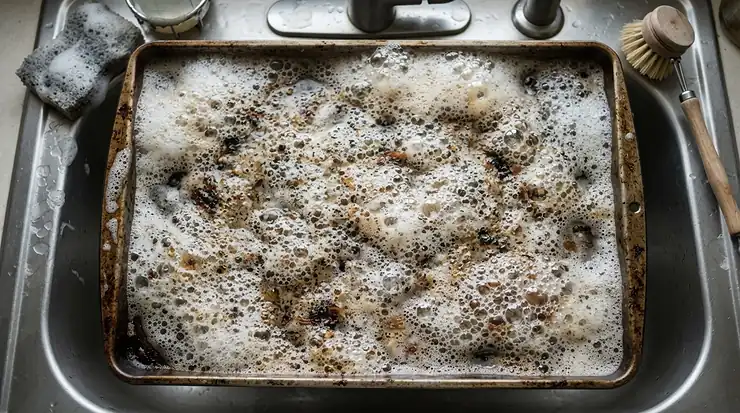
Picture the scene. The Sunday roast was a triumph, the tin is a crime scene, and the washing-up liquid for greasy dishes you grabbed was chosen mostly because the bottle matched your tea towels. Twenty minutes later you’re still pushing a cold, congealed sheen around with a sponge that now smells faintly of gravy.

It doesn’t have to go like that. Modern dishwashing liquid is a surprisingly clever bit of chemistry, but the bottles on the shelf are not equal. Some pack a heavy dose of grease-fighting surfactants. Others lean on gentleness, a recycled bottle, or a very pleasant smell. Each is brilliant at something, and none is best at everything.
So this guide does the sorting for you. It compares seven real UK-available bottles using their label data, brand claims and the review patterns I could verify, and it explains what every spec means at the sink. You’ll also find notes on washing-up liquid for hard water, a proper routine for pan cleaning, and honest advice on cost per wash.
Prices below are indicative ranges only. Check current prices before you buy.
Washing-Up Liquid for Greasy Dishes at a Glance
Short on time? Start here.
| Product | Standout | Size | Price range | Best For |
|---|---|---|---|---|
| Fairy Platinum Quickwash | Heaviest surfactant load | 625ml | around £3-£4 | Baked-on roasting tins |
| Elbow Grease Power Degreaser | Budget degreaser | 600ml | under £3 | Big households, tight budgets |
| Palmolive Original | Rich, long-lasting lather | 750ml | around £2-£3 | Everyday mixed loads |
| Ecover Camomile & Clementine | Recycled bottle, 5L refill | 450ml / 950ml / 5L | around £2-£3 (450ml) | Eco-minded households |
| Bio-D Pink Grapefruit | UK-made, plant-based | 750ml / 5L | around £3-£4 (750ml) | Sensitive hands |
| Method Peach & Pink Pepper | Pump dosing | 532ml | around £3-£4 | Design-conscious kitchens |
| Fairy Original | Big-bottle value | 1450ml | around £4-£6 | Large families |
Looking at the table, Fairy Platinum Quickwash is the one to reach for when the grease is serious. Elbow Grease Power Degreaser delivers the strongest value if you wash up daily. Anyone buying on principles rather than pure power should look at Ecover Camomile & Clementine or Bio-D Pink Grapefruit, accepting that they cost more per bowl than the budget options.
💬 Just one click — help others make better buying decisions too!😊
Top 7 Washing-Up Liquid for Greasy Dishes: Expert Analysis
1. Fairy Platinum Quickwash — heaviest grease-fighting load on the list
This is the bottle for the lasagne dish that has sat overnight looking smug. The Lemon variant’s retailer listing shows anionic surfactants in the 15-30% band, with a further 5-15% non-ionic. That’s the upper end of the label bands I found for mainstream UK bottles, and the other bottles here sit lower.
What does that mean in practice? More active ingredient per squirt, so a smaller dose should cut through the same amount of fat. The manufacturer also claims faster grease clearing than the next-best-selling brand after a ten-minute soak. That’s a brand claim, not independent testing, but the formulation is consistent with it.
Based on the label, this is the sensible choice for roasting tins, fried-egg pans and anything with burnt-on cheese. Reviewer data is thinner than I’d like. The retailer listing showed around 96% positive ratings from more than 5,000 customers at the time of research. I couldn’t verify detailed review themes beyond that.
Pros:
- ✅ Very high surfactant content for heavy grease
- ✅ Rinses quickly, reducing the need for overnight soaks
- ✅ Packed in the UK, according to retailer listings
Cons:
- ❌ Contains benzisothiazolinone, a preservative that may bother sensitive skin
- ❌ Label warns of long-lasting harm to aquatic life
Expect to pay around £3-£4 for 625ml. For heavy grease, that’s solid value.
2. Elbow Grease Power Degreaser — best budget bottle for daily grease
The name is a gift, but the numbers back it up. At the time of research, the 600ml Lemon bottle held a rating of 4.4 out of 5 from around 3,100 Amazon UK ratings and ranked 13th in Amazon’s Washing-Up Liquid chart. It comes in several scents, including Apple, Pink Grapefruit and Gingerbread.
The listing describes a concentrated, plant-based, dye-free formula that cuts grease in cool water and is made in the UK. Treat those as brand claims and check the bottle’s label. The practical point is the dose. If the claim of cool-water performance holds, it suits households that don’t run the hot tap flat out for every plate.
Aggregated reviews are consistently positive on grease and value, with many noting that a bottle lasts a long time. Opinions are mixed on the consistency, with some finding it gel-like and others finding the bottle thin. A minority of buyers were plainly unhappy, so it isn’t a universal hit.
For busy kitchens where cost per wash matters, I’d put this first.
Pros:
- ✅ Strong value per bottle, with cheaper multipacks
- ✅ Many reviewers report it lasts a long time
- ✅ Wide range of scents
Cons:
- ❌ Consistency and bottle thickness get mixed comments
- ❌ Little independent lab testing available
At roughly £1.50-£3 per 600ml bottle, depending on pack size, it’s the value pick of the group.
3. Palmolive Original — rich lather for everyday mixed loads
Lather is not the same as cleaning power, but it does serve a practical purpose. A thick, stable suds layer tells you when the water still has surfactant working in it and when it’s time to add another dose. The UK 750ml listing promises a rich, long-lasting lather suitable for plates, glasses, pots and pans.
The label shows anionic surfactants in the 5-15% band and non-ionic below 5%. That’s a standard-strength profile, not a concentrate. It handles a normal day of plates and pans comfortably, though it will need a heavier hand than Fairy Platinum Quickwash when the pan is properly baked on.
Review evidence is the weak spot. The UK listing I found carried no reviews, and the review data I saw related to the American formulation, which differs. I won’t pretend otherwise.
One note for sensitive skin: the label includes methylisothiazolinone and octylisothiazolinone preservatives.
Pros:
- ✅ Generous 750ml bottle
- ✅ Lather makes it easy to judge when to re-dose
- ✅ Widely stocked
Cons:
- ❌ Two isothiazolinone preservatives on the label
- ❌ Standard strength rather than concentrate
Expect around £2-£3. It’s fair value for ordinary washing-up, though not the pick for the toughest jobs.
4. Ecover Camomile & Clementine — best for a lower-plastic kitchen
Ecover sells this in 450ml, 950ml and 5L refill sizes. The bottle is 100% post-consumer recycled plastic, with a cap at 50%. The formula is plant- and mineral-based, dermatologically tested and suitable for septic tanks. The ingredient list includes sodium lauryl sulfate, lauryl glucoside and cocamidopropyl betaine, so it still works through conventional surfactant chemistry.
Here’s what most buyers overlook: the small nozzle limits how much you can squeeze out. An older UK supermarket comparison found the bottle and its famous rival lasted longest mainly because of that nozzle. A good habit, then, is to buy the 5L refill and top up a smaller bottle.
Reviews are mixed, and I’d rather say so. Promotion-collected reviews on a UK retailer praise the cleaning and scent. Elsewhere, some buyers report dry skin and cracked fingertips, which varies by person.
Pros:
- ✅ 100% recycled bottle, with a 5L refill option
- ✅ Small nozzle discourages overdosing
- ✅ Plant-based, biodegradable formula
Cons:
- ❌ Costs more per 100ml than supermarket-style bottles
- ❌ Some reviewers report dry skin
Around £2-£3 for 450ml, with the refill reducing the per-ml cost. The refill route is the smart one.
5. Bio-D Pink Grapefruit — UK-made, plant-based and gentle on hands
If you want a plant-based formula from a UK manufacturer, this is the cleanest answer. The brand describes it as vegan, concentrated and made in the UK, and gives a dosing guide of 10-15ml, about two teaspoons, for an average bowl. A bottle that tells you exactly how much to use is rare, and it’s useful for anyone trying to cut waste.
The brand also says it suits soaking burnt-on residue and sensitive skin. Those are manufacturer claims. The reviews on the brand’s own site add some colour. Buyers mention that it handles greasy roasting pans and doesn’t dry their hands, and one says it lasts well. One reviewer notes the bottle’s top doesn’t release product fast enough.
A caveat: those reviews come from the manufacturer’s own website, and a small sample at that. Treat them as hints, not proof.
Based on the ingredient claims, this suits households with reactive skin or pets whose owners avoid some fragrance chemicals.
Pros:
- ✅ Clear dosing guidance, around 10-15ml per bowl
- ✅ Reviewers report it’s gentle on hands
- ✅ 5L refill available for lower plastic use
Cons:
- ❌ One reviewer found the bottle top slow to dispense
- ❌ Review evidence is limited and brand-hosted
Expect around £3-£4 for 750ml, usually a little above supermarket brands. Reasonable for what it offers.
6. Method Peach & Pink Pepper — pump bottle that controls your dose
Design is the draw here. The 532ml bottle has a pump, which measures a consistent dose and keeps your sink area looking considered. The brand describes plant-based, biodegradable ingredients and Leaping Bunny approval, and the line includes refill options, although the refill I found is in a different scent.
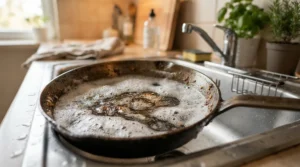
On greasy dishes, the pump is a genuine advantage. Overdosing is the quiet money-waster in most kitchens, and a pump prevents the heavy-handed glug. Even so, the label claims “tough on grease” without the heavy surfactant percentages that Fairy Platinum Quickwash shows. For a baked-on tin, expect to soak, not just wipe.
I couldn’t verify UK reviews for this scent. Retailer pages I checked showed none, so there’s no aggregated sentiment to report. The honest summary is that it looks good on paper and the track record is unproven here.
Pros:
- ✅ Pump gives a consistent, controlled dose
- ✅ Leaping Bunny cruelty-free approval
- ✅ Plant-based, biodegradable formulation
Cons:
- ❌ Premium price for a smaller bottle
- ❌ Limited verifiable UK review data
Expect roughly £3-£4, typically above standard supermarket bottles. Worth it if you value the pump and the brand’s ethics.
7. Fairy Original — best big-bottle value for large families
The brand has a long history. Fairy Liquid was sold in the UK from 1950, advertised on both grease removal and mildness to hands. The 1450ml bottle is the size to buy if you wash up for a crowd.
Retailers describe the formula as ultra-concentrated, built to cut grease without long soaking. With a large bottle, the maths is straightforward. A bigger volume generally means a lower cost per bowl, assuming you dose sensibly. Expect a steadier, more familiar performance than the specialist options, which makes it a dependable default.
On sentiment, an older UK supermarket comparison found the brand’s liquid and Ecover Camomile & Clementine on par, and noted both lasted longest thanks to their small nozzles. I couldn’t verify recent review data for this exact bottle size.
My practical advice is to decant into a pump dispenser. A 1450ml bottle is heavy to tip at the sink.
Pros:
- ✅ Largest bottle in this lineup for cost per use
- ✅ Familiar, predictable formula
- ✅ Small nozzle helps limit overdosing
Cons:
- ❌ Heavy bottle is awkward to pour
- ❌ Not positioned as an eco-led option
Around £4-£6 for 1450ml. For big households, it’s good value.
How the Seven Compare on Paper
| Product | Label data / claims | Skin and eco notes | Best For |
|---|---|---|---|
| Fairy Platinum Quickwash | 15-30% anionic, 5-15% non-ionic | Benzisothiazolinone; aquatic harm warning | Heavy baked-on grease |
| Elbow Grease Power Degreaser | Listing claims concentrated, plant-based | Check the bottle label | Budget daily use |
| Palmolive Original | 5-15% anionic, under 5% non-ionic | Two isothiazolinone preservatives | Everyday loads |
| Ecover Camomile & Clementine | 5-15% anionic and non-ionic | Plant and mineral based, recycled bottle | Lower-plastic kitchens |
| Bio-D Pink Grapefruit | Brand claims plant-based | Brand claims hypoallergenic | Sensitive hands |
| Method Peach & Pink Pepper | Brand claims plant-based | Leaping Bunny approved | Pump-dose fans |
| Fairy Original | Brand claims concentrated | Label not verified here | Bulk buyers |
The pattern is clear. Higher surfactant load is available in only one bottle here, while the eco-led options trade a little raw strength for gentler formulas. If your biggest problem is pan cleaning with burnt-on residue, label data points to Fairy Platinum Quickwash. If the biggest problem is the budget, Elbow Grease Power Degreaser gets there for less.
What Is Washing-Up Liquid for Greasy Dishes?
Washing-up liquid for greasy dishes is a hand-dishwashing detergent built around surfactants, molecules that bind to both fat and water so grease lifts off and rinses away. Stronger formulas carry a higher surfactant load, and most work best in hot water. Concentrates need less per wash.
That’s the textbook answer. Here’s the practical version. Each surfactant molecule has a water-loving head and a fat-loving tail. The tails dig into grease, the heads face the water, and the fat breaks into tiny droplets that rinse away. Heat helps because warm fat softens and spreads, and most modern dishwashing liquids function best with hot water.
Two details matter more than the marketing suggests. Concentration decides how far a bottle goes, and the ingredient mix decides how it behaves in your water and on your skin.
How to Choose Washing-Up Liquid for Greasy Dishes
Follow these seven steps and you’ll avoid most disappointments.
- Check the surfactant band on the label. Higher percentages mean more cleaning power per squirt, which is why Fairy Platinum Quickwash stands out for heavy grease.
- Decide how greasy your cooking really is. Roasts and fried food justify a stronger formula, while a salad-and-pasta household can use something gentler.
- Consider your water. Hard-water kitchens often need a little more product, so concentrates make sense there.
- Think about your skin. If your hands react easily, review the preservatives and fragrances, and consider a gentler option such as Bio-D Pink Grapefruit.
- Judge cost per bowl, not cost per bottle. A big bottle such as Fairy Original or a 5L refill often wins on volume.
- Look at the dispenser. Pumps and small nozzles reduce overdosing, which quietly saves money.
- Match the packaging to your values. If recycled plastic or refills matter, Ecover Camomile & Clementine is built around that.
Washing-Up Liquid for Hard Water: What Actually Changes
Hard water is the plot twist in the washing-up story. Hard water forms when water percolates through limestone and chalk, picking up calcium and magnesium. Those ions react with traditional soap to form scum rather than lather, which is why old-fashioned soap struggles in hard-water homes.
The good news is that washing-up liquid is not soap. Most modern formulas use synthetic surfactants, which are less susceptible to hard water than soap. You’ll still lather, but the water’s mineral content can cut effectiveness and leave films on glassware.
In practical terms, UK water companies classify hardness in mg/L of calcium carbonate: below 100 is soft, 100-200 moderately hard, 200-300 hard, and above 300 very hard. Limescale becomes noticeable above roughly 200. The south and east of England are generally hardest, thanks to chalk and limestone, while Scotland, Wales and the north-west tend to be softer.
If you live in a hard-water postcode, a concentrated washing-up liquid for hard water makes sense. Fairy Platinum Quickwash and Elbow Grease Power Degreaser are my first suggestions, on the grounds of their strength. Dose slightly higher, use hot water, and rinse glasses thoroughly. No bottle fully beats the water, so a final rinse matters more than the brand. Dishwasher salt only helps if you run a dishwasher.
Grease-Cutting Dish Soap vs Other Ways to Beat Grease
Is grease-cutting dish soap always the right tool? Mostly, but not exclusively.
| Method | Grease power | Hard-water behaviour | Cost per use | Best For |
|---|---|---|---|---|
| Concentrated washing-up liquid | High | Reasonable, needs good rinsing | Low | Everyday washing-up |
| Washing-up spray (e.g. Elbow Grease Washing Up Spray) | Medium to high | Similar | Moderate | Quick pan touch-ups |
| Dishwasher tablets | High, in a machine | Better with salt and rinse aid | Moderate | Full loads |
| Bar or solid soap | Lower | Weakest, prone to scum | Low | Light, low-grease washing |
Judging by this comparison, liquid remains the best all-rounder because you control the dose and the water temperature. A spray such as Elbow Grease Washing Up Spray is handy for quick jobs, and some buyers say it cuts grease well. For serious loads, though, a dishwasher with the right tablet will outperform hand washing. Solid soap is the poor choice for greasy dishes, especially in hard water.
Pan Cleaning: A Practical Guide to Beating Baked-On Grease
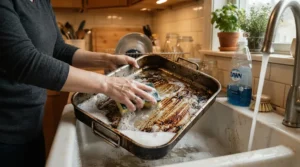
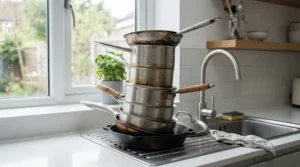
Pan cleaning is where cheap technique beats expensive bottles. Follow this routine and even stubborn pans give in.
- Scrape first. Remove solid fat and food with a spatula or kitchen paper. Less fat in the water means more surfactant for what’s left.
- Add hot water and a measured dose. Fill the pan, add your washing-up liquid, and leave it for 10-15 minutes. A product with higher surfactant content, such as Fairy Platinum Quickwash, may need less time.
- Use the right scourer. A soft sponge or nylon scrubber suits non-stick pans, while stainless steel can take tougher pads.
- Work from the edge inwards. The burnt-on ring at the rim is the hardest part, so give it the longest scrub.
- Rinse hot. Hot rinsing flushes fat away and reduces streaking.
- Dry straight away. This is especially helpful in hard-water areas, where standing water leaves marks.
For cast iron, most modern advice accepts a small amount of detergent, but follow the manufacturer’s guidance and don’t soak. If your washing-up liquid for pots and pans leaves a film, you’ve probably used too much.
Real-World Scenarios: Which Bottle Suits Which Kitchen?
Choosing in the abstract is hard. These three profiles make it concrete.
The Kent family of four. Roasts on Sundays, a stir-fry or two midweek, hard water, and a dishwasher that only runs part of the week. The brief is power and volume. Fairy Original in the 1450ml size covers daily needs, and Fairy Platinum Quickwash is the specialist for the roasting tin. Together they’d likely suit a budget of around £7-£10.
The student flat in Leeds. Five people, one sink, takeaway trays and frying pans, and a tight budget. Moderately hard water. Elbow Grease Power Degreaser in a multipack is the clear fit, because it’s cheap and widely praised for value.
The sensitive-skinned eco-cook in Glasgow. Soft water, regular curries and baking, and a strong preference for low plastic and gentle formulas. Bio-D Pink Grapefruit with its 5L refill, or Ecover Camomile & Clementine with a refill bottle, fits better. Soft water means a smaller dose may be enough.
Notice the pattern. Water hardness, skin and budget decide the winner far more reliably than scent.
Problem → Solution Guide for Greasy Washing-Up
Problem: glasses come out cloudy. This is usually hard water, not your washing-up liquid. Rinse glasses in clean hot water and dry them immediately. A rinse with diluted white vinegar can help for glassware, though avoid it on surfaces the maker warns against.
Problem: suds vanish within minutes. That means the water is saturated with grease or the dose was too small. Add a little more, or change the water. Concentrates like Fairy Platinum Quickwash often need less topping up.
Problem: grease returns as a film. The water was probably too cool. Fat that cools in the bowl redeposits on everything. Use hot water and wash the greasiest items last.
Problem: dry, cracked hands. Wear gloves and measure doses carefully. Switching to something like Bio-D Pink Grapefruit may help, but personal reactions vary.
Problem: burnt-on pan residue. Soak, then scrub, rather than scrubbing harder. Patience beats force.
Long-Term Cost and Maintenance of Washing-Up Liquid
Bottle price is a misleading number. What matters is cost per bowl.
Take the dosing guidance from Bio-D Pink Grapefruit: 10-15ml per average bowl. At around 12.5ml, a 750ml bottle gives roughly 60 bowls. If that bottle sits in the £3-£4 range, you’re paying roughly 5-7p a bowl. A 1450ml bottle such as Fairy Original, dosed the same way and priced in the £4-£6 range, would work out lower, around 3-5p. Those are indicative calculations, so check current prices.
Refills push the maths further. The 5L options from Ecover Camomile & Clementine and Bio-D Pink Grapefruit cut per-ml cost and plastic. Pump bottles such as Method Peach & Pink Pepper cut waste by controlling the dose.
Maintenance is simple. Decant refills into a pump, keep the nozzle clean, and don’t leave bottles sitting in standing water, which can clog dispensers.
Hands, Labels and Safety: What to Know
Washing up exposes your skin to water and detergents every day, and that cumulative exposure is a known cause of hand dermatitis. The National Eczema Society advises wearing cotton-lined rubber or PVC gloves, or 100% cotton gloves underneath, and notes that powder-free nitrile gloves are an option.
Check labels, too. UK products carry hazard statements, and the Fairy Platinum Quickwash listing warns that it causes serious eye irritation and is harmful to aquatic life. Preservatives such as methylisothiazolinone can trigger reactions in people with a contact allergy. If a rash persists, ask a clinician about patch testing.
None of this is a reason to panic. It’s a reason to measure doses, wear gloves for long sessions, and moisturise afterwards.

Frequently Asked Questions
❓ What is the best washing-up liquid for greasy dishes under £5?
❓ Is grease-cutting dish soap safe for non-stick pans?
❓ Is a 5L refill of Ecover Camomile & Clementine worth it?
❓ How much washing-up liquid should I use per bowl?
❓ Can I use washing-up liquid for greasy dishes in a dishwasher?
Conclusion
So where does that leave you? The honest answer is that there’s no single winner, only a best fit.
For heavy, baked-on grease, Fairy Platinum Quickwash is the one the label data supports. For the best value on a daily basis, Elbow Grease Power Degreaser is hard to beat. Palmolive Original and Fairy Original are the dependable everyday and bulk options, respectively. If you care about plastic and gentler formulas, Ecover Camomile & Clementine and Bio-D Pink Grapefruit lead, with Method Peach & Pink Pepper adding a neat pump.
Whichever you choose, technique matters as much as the bottle. Use hot water, dose sensibly, soak pans rather than scrubbing harder, and rinse well if you live in a hard-water area. Do that, and even a modest bottle performs above its price.
Pick the one that fits your water, your skin and your budget, then go and win the war against the roasting tin.
✨ Ready to Kiss Greasy Dishes Goodbye?
🔍 Click any highlighted product above to check current pricing and availability, and bring a cleaner, easier washing-up routine to your kitchen today!
Recommended for You
- Concentrated Washing-Up Liquid Value: 7 Best Picks That Save (2026)
- Pet-Safe Oven Cleaner: 7 Trusted Non-Toxic UK Picks (2026)
- Washing-Up Liquid For Sensitive Skin: 7 Best Picks (2026)
Disclaimer: This article contains affiliate links. As an Amazon Associate, I earn from qualifying purchases. If you purchase products through these links, we may earn a small commission at no additional cost to you.
✨ Found this helpful? Share it with your friends! 💬🤗
