In This Article
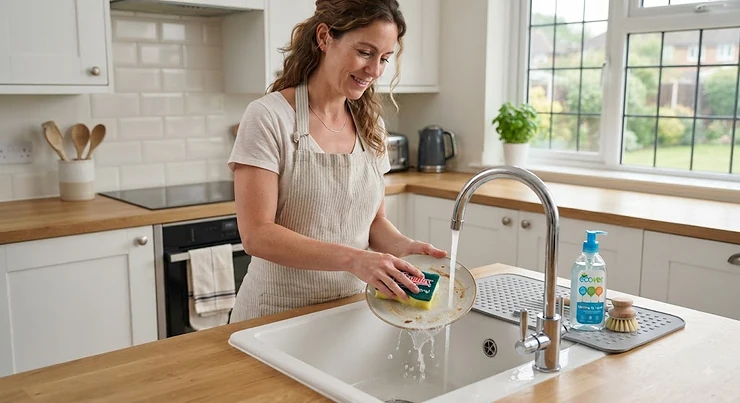
Open most British kitchen cupboards and you’ll find the same soggy, faintly-smelling sponge that’s been quietly multiplying bacteria by the sink for weeks. Antibacterial kitchen sponges exist precisely because the standard yellow-and-green scourer is, frankly, a biological disaster waiting to happen. An antibacterial kitchen sponge is a washing-up sponge manufactured with an antimicrobial agent, or from a naturally resistant material such as polyurethane foam or bamboo fibre, designed to slow the growth of odour-causing bacteria between uses.
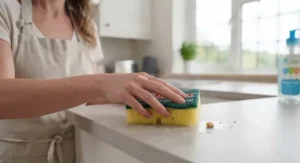
That’s the dry definition. The reality is messier, and more interesting: not every product wearing the “antibacterial” label performs the same way, and the marketing on the packet rarely tells you which sponges actually resist odour, which ones just delay it by a day or two, or which ones are safe to use on a chopping board you’ve just used for raw chicken. According to the Food Standards Agency, cross-contamination between raw and ready-to-eat food remains one of the most common causes of food poisoning in UK homes, and your sponge sits right at the centre of that risk every single day.
This guide cuts through the packaging claims. We’ve researched seven real, currently available antibacterial kitchen sponges sold on Amazon UK, compared their construction and specifications, and weighed up what genuinely matters versus what’s just clever branding. Whether you’re hunting for odour-resistant kitchen sponges for a small flat kitchen, an antibacterial sponge multipack for a busy family, or something specifically suited to chopping boards, you’ll find a proper, honest breakdown below — plus the food hygiene habits that matter more than any sponge you buy.
Quick Comparison Table: Antibacterial Kitchen Sponges at a Glance
| Sponge | Type | Best For | Price Range |
|---|---|---|---|
| Scrub Daddy Original | Polyurethane FlexTexture | Everyday all-rounder | around £4-£6 |
| Scrub Daddy Colors Kitchen Sponges | Polyurethane, colour-coded | Avoiding cross-contamination | around £5-£8 |
| Scrub Daddy Sponge Daddy (4-Pack) | Dual-sided ResoFoam | Multipack value | around £8-£11 |
| Addis Super Sponge 518489 | 100% microfibre | Non-scratch scrubbing | around £3-£5 |
| Addis Fairy Originals Scourer | Non-scratch dual sponge | Trusted high-street budget pick | around £3-£5 |
| Maison & White Bamboo Sponges | Natural bamboo fibre | Eco-conscious households | around £5-£7 |
| AUERVO Antibacterial Microfibre Sponge | Dual-action microfibre | Bulk budget multipack | around £6-£9 |
Looking across the table, there’s a genuine split between polyurethane-foam sponges like the Scrub Daddy Original and the Scrub Daddy Sponge Daddy, which dry quickly and therefore resist odour more effectively by nature of their material, and microfibre or bamboo options like the Addis Super Sponge and Maison & White Bamboo Sponges, which lean on natural fibre structure and coating treatments instead. Neither approach is objectively “better” — it depends on whether you prioritise scrubbing power, eco-credentials, or sheer pack size for a busy household. Budget-conscious shoppers should note that per-sponge cost drops sharply with multipacks like the AUERVO or Addis Fairy Originals ranges, while the Scrub Daddy family commands a premium for its patented shape-shifting texture.
💬 Just one click — help others make better buying decisions too!😊
Top 7 Antibacterial Kitchen Sponges: Expert Analysis
1. Scrub Daddy Original — temperature-changing FlexTexture design
The standout feature here is genuinely clever: this sponge firms up in cold water for scrubbing and softens in warm water for gentle cleaning, all from the same piece of foam. That’s not a gimmick so much as a material-science trick, and it’s the reason this sponge has become something of a cult product in UK kitchens over the past few years.
Built from a polyurethane FlexTexture foam rather than traditional cellulose, the Scrub Daddy Original is shaped like a smiley face — a design choice that turns out to be functional, since the “eyes” let you pinch cutlery clean with two fingers and the curved “smile” wraps around mugs and stemware. The brand states the foam is lab-tested to resist holding odours for up to eight weeks under normal use, a meaningfully longer claim than most cellulose sponges, which typically start smelling within days.
Based on the spec comparison with cellulose alternatives, what most buyers overlook is that FlexTexture foam simply holds far less water than a traditional sponge, and less residual moisture means less opportunity for bacteria to establish a foothold — this is chemistry working in your favour rather than a magic antibacterial coating doing all the heavy lifting. This makes it a strong pick for anyone who’s tired of replacing a smelly sponge every week and wants one product that handles both delicate glassware and stuck-on grease.
Verified individual customer review data wasn’t fully accessible during our research, but the product’s sustained popularity and repeated best-seller status across UK retailers is a reasonable proxy for consistent user satisfaction with the odour-control claim specifically.
Pros:
- ✅ Firms and softens with water temperature for dual use
- ✅ Ergonomic smiley shape reaches mugs and cutlery easily
- ✅ Dries within roughly an hour, limiting bacterial growth
Cons:
- ❌ Costs more per unit than basic cellulose sponges
- ❌ Bright colour may show staining faster than darker sponges
At around £4-£6 for a single sponge, this sits at the premium end of the category, but the extended lifespan compared with weekly cellulose replacements makes the value verdict reasonably favourable for regular cooks.
2. Scrub Daddy Colors Kitchen Sponges — colour-coded to stop cross-contamination
The standout feature is right there in the name: this three-pack comes in distinct colours, letting you dedicate one sponge to raw meat prep surfaces, one to dishes, and one to general worktops, rather than cross-using a single sponge for everything.
Constructed from the same texture-changing polyurethane foam as the Original, these sponges add odour-resistant properties on top of a practical hygiene system that professional kitchens have used for years. Colour-coded cleaning equipment is a recognised approach to preventing cross-contamination, and the same logic scales down neatly for a domestic kitchen.
Here’s what to weigh: a single all-purpose sponge is convenient, but if you’re chopping raw chicken on Tuesday and prepping salad on Wednesday with the same sponge, you’re working against the food hygiene principles recommended by UK food safety guidance. The Scrub Daddy Colors Kitchen Sponges pack solves that without needing three separate brands cluttering your sink caddy.
Aggregated feedback on this product line consistently echoes the parent Scrub Daddy range’s odour-resistance reputation, with the added colour system frequently singled out as the differentiator that justifies buying this pack over the plain original.
Pros:
- ✅ Three distinct colours support proper task separation
- ✅ Same fast-drying FlexTexture foam as the Original
- ✅ Non-scratch scouring side safe on non-stick pans
Cons:
- ❌ Pricier per sponge than a plain single-colour multipack
- ❌ Colour system only works if the household actually follows it
Priced around £5-£8 for the pack, the value case rests on whether your household will genuinely use the colour system — for anyone serious about food hygiene, it’s a small price for a real reduction in cross-contamination risk.
3. Scrub Daddy Sponge Daddy (4-Pack) — dual-sided scrubber built for multipack value
The standout feature is the dual-material construction: one side uses FlexTexture for scrubbing, the other uses a highly absorbent ResoFoam described by the brand as roughly six times more absorbent than a standard sponge, all packed four to a set.
Where the Original leans on its smiley shape, the Scrub Daddy Sponge Daddy takes a more traditional rectangular form while keeping the same temperature-reactive foam science underneath. The multipack format means you always have a spare on hand, which matters more than it sounds — one of the simplest ways to reduce bacterial load in a kitchen is simply replacing the sponge more often, something people rarely do when there’s only one sponge in the house and no backup.
What most buyers overlook about multipacks generally is that the real value isn’t just cost-per-unit; it’s the psychological nudge to actually swap sponges regularly instead of nursing one manky specimen for a month because buying a replacement feels like a chore. Having four ready to go removes that friction entirely.
Reviewer sentiment for the dual-sided format tends to highlight the contrast between the scrubbing and absorbent sides as genuinely useful rather than gimmicky, particularly for households that wash a mix of delicate glassware and greasy pans in the same sink session.
Pros:
- ✅ Four sponges included, encouraging more frequent replacement
- ✅ Dual sides cover both scrubbing and absorbent wiping
- ✅ Vibrant colours make it easy to spot in a cluttered sink
Cons:
- ❌ Rectangular shape less ergonomic than the Original’s smiley design
- ❌ Higher total pack price than basic microfibre four-packs
At roughly £8-£11 for four sponges, the per-unit cost lands in the mid-range, positioning it as a sensible middle ground between the premium single Original and the budget microfibre packs further down this list.
4. Addis Super Sponge 518489 — 100% microfibre, non-scratch scrubbing pad
The standout feature is the knitted microfibre surface — part of the Lynsey Queen of Clean range — which scrubs through dried-on dirt without the abrasive scratching risk that traditional green scourer pads pose to non-stick cookware.
This five-pack uses a soft, non-scratch microfibre knit rather than foam, absorbing moisture while lifting grime from pans, hobs and worktops. Addis is a long-established British homeware brand, and the Super Sponge sits in its everyday cleaning range rather than a specialist antibacterial line, so the hygiene benefit here comes primarily from the microfibre’s quick-drying structure rather than a chemical antimicrobial treatment.
What the spec sheet won’t tell you, but the material itself suggests, is that microfibre sponges like this one tend to dry faster than dense cellulose sponges because the fibre structure doesn’t hold water in the same saturated, spongey way — again, less standing moisture means a less hospitable environment for bacteria to multiply between washes.
Real aggregated sentiment for Addis microfibre products in this range is generally positive, with buyers commonly noting the non-scratch performance on non-stick pans as the main selling point over scrubbing power alone.
Pros:
- ✅ Genuinely non-scratch, safe for non-stick cookware
- ✅ Five-pack keeps cost per sponge low
- ✅ Quick-drying microfibre limits bacterial build-up
Cons:
- ❌ Less scouring power than a dedicated scourer pad
- ❌ No dedicated antimicrobial coating beyond the fibre structure
At around £3-£5 for five sponges, this is one of the most affordable options on this list and a sound pick for anyone prioritising non-stick pan safety over heavy-duty scrubbing.
5. Addis Fairy Originals Non-Scratch Dual Sponge Scourer — trusted high-street brand, budget-friendly
The standout feature is the collaboration between Addis and the household-name Fairy brand, combining a contoured, easy-grip shape with a dual sponge-and-scourer design in a six-pack aimed squarely at everyday value.
Each sponge measures a compact, hand-friendly size with a nail-guard contour that protects fingers while scrubbing, pairing a soft absorbent sponge side with a scouring side described as including an antibacterial action. Real customer feedback on this listing is unusually detailed for a budget product: buyers frequently describe the sponges as durable and long-lasting relative to price, with several noting they were still usable weeks into regular use rather than falling apart within days.
Based on that aggregated review pattern, this product earns its place through consistency rather than innovation — it isn’t reinventing sponge technology the way the Scrub Daddy range does, but it delivers reliably on the basics that most households actually care about: doesn’t scratch plates, lasts longer than expected, and doesn’t cost much to replace when it finally does wear out.
A smaller number of reviewers mention the sponges shedding some fluff after repeated heavy use, which is a fair trade-off to flag against the otherwise strong durability feedback.
Pros:
- ✅ Contoured nail-guard shape protects fingers while scrubbing
- ✅ Reviewers consistently report longer-than-expected durability
- ✅ Trusted Fairy and Addis branding at a low price point
Cons:
- ❌ Some reports of fluff shedding after extended heavy use
- ❌ Antibacterial action is a coating claim, not independently lab-verified in listing
Priced around £3-£5 for six sponges, this is arguably the best value-for-money pick on the list for anyone who just wants a dependable, no-frills sponge that won’t let them down.
6. Maison & White Antibacterial Bamboo Cleaning Sponges — natural bamboo fibre, chemical-light option
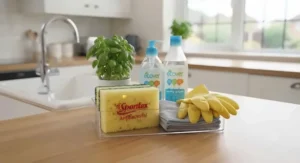
The standout feature is the use of natural bamboo fibre instead of synthetic foam or microfibre, appealing to households actively trying to reduce their reliance on chemically treated cleaning products.
This six-pack uses double-sided bamboo scrubbers designed to be non-stick and non-scratch across plates, pots and pans, while also handling general kitchen tasks like wiping down the sink. Bamboo fibre is naturally more resistant to retaining unpleasant odours than some synthetic alternatives, largely because the fibre structure doesn’t compress into a dense, water-logged mass the way cellulose sponges do.
Here’s what to weigh if you’re eco-conscious: bamboo is a fast-growing, renewable resource, and sponges made from it are typically marketed as a gentler alternative for people wary of synthetic antimicrobial coatings — though it’s worth being clear-eyed that “natural fibre” and “actively antibacterial” aren’t automatically the same claim, and buyers should check the specific product listing for any added antimicrobial treatment rather than assuming bamboo alone eliminates bacteria.
Aggregated feedback on this bamboo range tends to focus on the non-scratch performance and lack of the classic “wet sponge smell” that plagues cheaper cellulose products, which aligns with the natural fibre’s lower moisture retention.
Pros:
- ✅ Natural bamboo fibre reduces reliance on synthetic coatings
- ✅ Non-scratch, safe across a wide range of kitchen surfaces
- ✅ Reusable and generally reported as low-odour by users
Cons:
- ❌ Less aggressive scrubbing power on heavily baked-on messes
- ❌ Marketed “antibacterial” claim relies more on fibre structure than active treatment
At around £5-£7 for six sponges, this suits households who weight eco-credentials and general freshness over maximum scrubbing power or a scientifically verified antimicrobial claim.
7. AUERVO Antibacterial Microfibre Dual Action Scrubbing Sponge — bulk budget multipack
The standout feature is straightforward: a five-pack of dual-action microfibre sponges pitched squarely at buyers who want antibacterial-branded sponges in bulk without paying a premium brand markup.
Each sponge combines a microfibre scrubbing layer with a softer absorbent layer, designed for non-stick pans and general washing-up duties, and is marketed specifically around antibacterial and non-scratch properties. As a newer entrant in a crowded budget category, it competes directly against Addis and other own-brand multipacks on price rather than innovation.
What most buyers overlook when choosing between near-identical budget multipacks is that the material quality — how densely the microfibre is knitted, and how well it holds its shape through repeated wringing — matters more long-term than the marketing claim on the front of the pack, since almost every product in this price bracket now uses the word “antibacterial” somewhere in its listing title.
Independently verified customer review data specific to this listing was limited in our research, so rather than fabricate sentiment, we’d flag this honestly: treat the antibacterial claim here as a helpful tie-breaker against otherwise-identical bulk sponges, not as the sole reason to choose it over the more established Addis or Fairy ranges above.
Pros:
- ✅ Competitive bulk pricing versus branded alternatives
- ✅ Dual-layer design covers scrubbing and gentle wiping
- ✅ Suitable for non-stick pans and general worktops
Cons:
- ❌ Limited independently verifiable review history at time of research
- ❌ Less brand track record than Addis or Scrub Daddy ranges
Priced around £6-£9 for five sponges, it’s a reasonable budget pick if you’re topping up a multipack drawer, though shoppers wanting a longer track record may prefer the Addis options above.
Top 7 Products: Specs & Value Comparison
| Sponge | Material | Pack Size | Non-Scratch | Best For |
|---|---|---|---|---|
| Scrub Daddy Original | Polyurethane FlexTexture | 1 | Yes | All-round daily use |
| Scrub Daddy Colors | Polyurethane FlexTexture | 3 | Yes | Cross-contamination control |
| Scrub Daddy Sponge Daddy | FlexTexture + ResoFoam | 4 | Yes | Multipack value |
| Addis Super Sponge | 100% microfibre | 5 | Yes | Non-stick pan care |
| Addis Fairy Originals | Sponge + scourer | 6 | Partial (scourer side) | Everyday budget durability |
| Maison & White Bamboo | Bamboo fibre | 6 | Yes | Eco-conscious households |
| AUERVO Microfibre | Dual microfibre | 5 | Yes | Bulk budget top-up |
The specification comparison makes the trade-off clear: the Scrub Daddy trio wins on material innovation and drying speed but costs more per sponge, while the Addis Fairy Originals and AUERVO packs win on raw pack size and price-per-unit for households getting through sponges quickly. If chopping-board safety and non-scratch performance across the widest range of surfaces is your priority, the Addis Super Sponge and Maison & White Bamboo Sponges both stand out for gentleness without sacrificing genuine cleaning power.
Practical Usage Guide: Getting the Most From Your Antibacterial Sponge
Buying the right sponge is only half the job — how you use it matters just as much for genuine hygiene. On first use, give any new sponge a quick rinse under hot water before its first wash-up session; this softens foam sponges like the Scrub Daddy Original and helps microfibre packs like the Addis Super Sponge reach full absorbency faster.
After each use, wring the sponge out thoroughly and stand it somewhere it can actually dry — propped upright in a caddy with airflow, not flat in a puddle by the tap. This single habit does more for odour control than the antibacterial claim on the packaging, because damp, compressed sponges are exactly the environment bacteria thrive in.
A common mistake in the first 30 days of owning any new sponge, antibacterial or not, is treating the “antibacterial” label as a licence to skip regular replacement. Even the best-performing options in this guide, including the Scrub Daddy Colors Kitchen Sponges, are designed to slow bacterial growth, not eliminate it indefinitely. As a maintenance schedule, aim to replace kitchen sponges every one to two weeks under normal household use, and immediately after any sponge has touched raw meat, fish or poultry directly.
One optimisation trick that Amazon listings rarely mention: run foam sponges like the Scrub Daddy Sponge Daddy through a dishwasher’s top rack occasionally, which both cleans and helps reset their shape, extending useful life without resorting to boiling or microwaving methods that research increasingly suggests don’t reliably disinfect a sponge anyway.
Real-World Scenarios: Matching the Sponge to Your Household
Consider a young professional living alone in a one-bedroom flat, cooking simple meals four or five nights a week. For this profile, a single Scrub Daddy Original makes sense — low storage footprint, long odour-resistance window, and no need for a colour-coded system when there’s only one person’s cooking habits to manage.
Now picture a family of four with young children, cooking meat-heavy meals most nights and juggling packed lunches every morning. Here, the Scrub Daddy Colors Kitchen Sponges genuinely earns its slightly higher price: dedicating one colour to raw meat prep and another to general dishes meaningfully reduces the cross-contamination risk that UK food safety guidance specifically warns against, and with children in the house, that margin of safety is worth paying for.
Finally, think about a shared student house with five people rotating cooking duties and, honestly, wildly inconsistent cleaning habits. Budget and volume matter more than novelty here — a bulk pack like the AUERVO Antibacterial Microfibre Dual Action Scrubbing Sponge or the Addis Fairy Originals Non-Scratch Dual Sponge Scourer means nobody has an excuse to keep using a three-week-old sponge because “we haven’t bought a new one,” since there’s always a spare in the cupboard.
Problem → Solution: Common Sponge and Hygiene Issues
Problem: your sponge smells within two or three days of buying it. This usually points to a cellulose sponge that isn’t drying between uses. Switching to a fast-drying foam option like the Scrub Daddy Original or a microfibre pick like the Addis Super Sponge, combined with proper upright storage, typically resolves this without needing to replace sponges more often than necessary.
Problem: you keep accidentally using the dish sponge on a board that just had raw chicken on it. This is a workflow issue more than a product issue, and the fix is the Scrub Daddy Colors Kitchen Sponges or simply buying two differently-shaped sponges and mentally assigning one to raw prep duties.
Problem: sponges scratch your non-stick pans within weeks. Swap to a genuinely non-scratch option such as the Addis Super Sponge or the Maison & White Bamboo Sponges, both of which are designed specifically to avoid the abrasive damage that green scourer pads cause over time.
Problem: you’re going through sponges so fast it feels wasteful. Multipacks like the AUERVO Antibacterial Microfibre Dual Action Scrubbing Sponge reduce the cost-per-replacement anxiety that leads people to over-use a single sponge for weeks past its useful life.
Problem: you’re not sure your “antibacterial” sponge is doing anything at all. This is a fair concern, and the honest answer is that antibacterial claims slow bacterial regrowth rather than sterilising the sponge — regular replacement, proper drying, and separating raw-food duties will always matter more than the label alone.
How to Choose Antibacterial Kitchen Sponges
- Check the material first. Polyurethane foam and bamboo fibre both dry faster than dense cellulose, which matters more for odour control than any printed antibacterial claim.
- Match pack size to your household’s turnover. A single person might do fine with one Scrub Daddy Original at a time, while a family needs a multipack like the Addis Fairy Originals range to keep spares on hand.
- Decide if you need colour-coding. Households handling raw meat regularly benefit meaningfully from a system like the Scrub Daddy Colors Kitchen Sponges.
- Prioritise non-scratch construction if you own non-stick cookware. The Addis Super Sponge and Maison & White Bamboo Sponges are built specifically around this.
- Weigh price-per-unit, not just pack price. Bulk options like AUERVO look pricier upfront but often cost less per sponge than premium single items.
- Look for genuine drying speed, not just marketing copy. A sponge that stays damp all day will smell regardless of what the label claims.
- Budget for regular replacement into your ongoing costs, rather than treating any single purchase as a one-off solution.
Common Mistakes When Buying Antibacterial Kitchen Sponges
The single biggest mistake is assuming “antibacterial” means “self-cleaning” or “never needs replacing” — no sponge on this list, including the Scrub Daddy Original, is designed to be used indefinitely. A close second is buying based purely on price without checking material: some ultra-cheap cellulose sponges labelled antibacterial still hold water badly and smell within days regardless of any coating.
Another common pitfall is buying a single premium sponge like the Scrub Daddy Colors Kitchen Sponges for a busy family kitchen and expecting it to last as long as it would in a one-person household — usage frequency dramatically affects real-world lifespan regardless of the product’s rated odour resistance. Finally, shoppers sometimes overlook non-scratch ratings entirely and end up damaging expensive non-stick cookware with a scourer that wasn’t designed for it, when options like the Addis Super Sponge were specifically engineered to avoid that risk.
Antibacterial Sponges vs Traditional Sponges and Dishcloths
| Antibacterial Foam Sponges | Traditional Cellulose Sponges | Cotton Dishcloths | |
|---|---|---|---|
| Drying speed | Fast (under 1-2 hours) | Slow, stays damp | Moderate |
| Typical replacement | 1-2 weeks | Days to 1 week | Daily wash needed |
| Scratch risk | Low (non-scratch designs) | Varies by product | Very low |
| Best For | Everyday washing-up, pans | Occasional light use | Wiping surfaces, drying |
The comparison above makes a fairly stark case: traditional cellulose sponges retain moisture for far longer than options like the Scrub Daddy Original or Addis Super Sponge, and that retained moisture is precisely what allows bacteria to establish and multiply. Cotton dishcloths sidestep some of this risk because they can be laundered at high heat, but they lack the scrubbing texture needed for stuck-on food, meaning most kitchens genuinely need both a scrubbing sponge and a cloth rather than choosing one over the other. If you’re deciding between an antibacterial-branded sponge and a plain traditional one at a similar price, the material and drying speed matter more than the word “antibacterial” printed on the packet.
What to Expect: Bacteria on Sponges and What the Science Actually Shows
It’s worth being honest about what research actually says here, because marketing language can outpace the evidence. A widely cited German microbiome study published in Scientific Reports analysed used kitchen sponges and found dense, varied bacterial colonisation, including species with pathogenic potential, even in sponges their owners described as regularly cleaned. The researchers noted that common home-cleaning methods didn’t reliably reduce this bacterial load in the sponges they tested.
What this means in practice is that no sponge — antibacterial-labelled or otherwise — should be relied on as a sterile cleaning tool indefinitely. The genuine value of a product like the Scrub Daddy Colors Kitchen Sponges or Maison & White Bamboo Sponges isn’t that it eliminates bacteria outright, but that faster drying and reduced water retention slow the rate at which bacteria can establish and multiply between uses, buying you a longer safe-use window before replacement matters most. Reviewers consistently note that odour is the practical early-warning sign worth watching for: once a sponge starts smelling, bacterial load has typically already climbed well past the point where scrubbing it clean fully resolves the issue.
Odour-Resistant Kitchen Sponges: What Actually Stops the Smell
Odour resistance comes down to two overlapping factors: how much water the sponge material retains, and whether it includes an active antimicrobial treatment on top of that. Polyurethane foam sponges like the Scrub Daddy Original and Scrub Daddy Sponge Daddy perform well on the first factor almost by design, since the foam structure simply doesn’t saturate the way cellulose does.
What the spec sheet won’t tell you, but the underlying chemistry does, is that many “odour-resistant” claims on budget multipacks rely on the same principle rather than a genuinely novel treatment — meaning a well-made microfibre pack like the Addis Super Sponge can rival a foam sponge on freshness simply through good material design, even without a flashy branded coating. The practical takeaway for odour-resistant kitchen sponges specifically is to prioritise fast-drying materials and proper storage over chasing the strongest-sounding marketing claim, since drying speed is doing most of the real work regardless of which product you choose.
Antibacterial Sponges for Chopping Boards: Wood vs Plastic
Chopping boards deserve their own consideration because they’re a direct pathway for cross-contamination, and official UK food safety guidance is explicit that raw meat, fish and poultry should ideally be prepared on separate boards from ready-to-eat food. Plastic chopping boards can generally handle a firmer scouring side without damage, making options like the Addis Fairy Originals Non-Scratch Dual Sponge Scourer a solid, affordable choice for that job specifically.
Wooden chopping boards need gentler treatment, since aggressive scrubbing can strip protective oils and open up the grain to trapped bacteria over time. For wood, a softer, non-abrasive option like the Maison & White Bamboo Sponges or the sponge side (rather than scourer side) of any dual-sided product in this guide is the safer bet. Whichever board material you’re working with, the single most effective habit remains using a dedicated sponge or cloth for raw-food boards and washing it in hot, soapy water immediately after — no sponge, antibacterial or otherwise, substitutes for that basic separation.
Choosing an Antibacterial Sponge Multipack: Pack Size, Value and Storage
An antibacterial sponge multipack solves two problems at once: it lowers the cost-per-sponge compared with buying single premium items, and it removes the friction that leads households to over-use a single sponge simply because a replacement isn’t readily to hand.
| Product | Pack Size | Approx. Cost Per Sponge |
|---|---|---|
| Scrub Daddy Original | 1 | Highest per-unit cost |
| Scrub Daddy Sponge Daddy | 4 | Mid-range |
| Addis Fairy Originals | 6 | Low |
| Maison & White Bamboo | 6 | Low |
| AUERVO Microfibre | 5 | Low-mid |
Reading the table, the value pattern is fairly predictable: single-item premium sponges cost the most per unit but often last longest individually, while six-packs like the Addis Fairy Originals Non-Scratch Dual Sponge Scourer and Maison & White Bamboo Sponges minimise cost-per-replacement, which matters more for total cost of ownership if your household genuinely follows a fortnightly replacement habit. For storage, a ventilated sink-side caddy or a small drawer near the sink keeps spares dry and ready, since damp storage before first use can undercut even the best antibacterial claim before the sponge has done a single wash-up.
✨ Don’t Miss These Exclusive Deals!
🔍 Stock your sink caddy properly and stop running out mid-washing-up. Tap through to check current pack pricing and availability today!
Food Hygiene Habits That Matter More Than Your Sponge
It bears repeating: no sponge, however well-marketed, replaces good food hygiene habits. NHS inform Scotland notes that food poisoning is caused by consuming food or drink contaminated with harmful germs, and prevention rests largely on kitchen practices rather than any single product. Washing hands before and after handling raw food, using separate chopping boards or thoroughly cleaning shared ones between tasks, and keeping raw meat away from ready-to-eat food in the fridge all matter more than which sponge sits by your sink.
Because sponges themselves fall under the UK’s biocidal products framework when they carry an active antibacterial claim, the Health and Safety Executive’s guidance on treated articles requires manufacturers to be able to substantiate any biocidal property they advertise. That’s a useful thing to know as a shopper: a genuinely regulated antibacterial claim isn’t just marketing fluff, but it also isn’t a substitute for the basic habits above. Treat your sponge, whichever one from this list you choose, as one part of a wider hygiene routine rather than the whole solution.
FAQ: Antibacterial Kitchen Sponges
❓ Do antibacterial kitchen sponges really work?
❓ How often should you replace a kitchen sponge?
❓ Can you put antibacterial sponges in the dishwasher?
❓ What's the best way to disinfect a kitchen sponge?
❓ Are antibacterial sponges safe for chopping boards?
Conclusion
Antibacterial kitchen sponges aren’t a magic fix for kitchen hygiene, but the right one genuinely earns its place by drying faster, resisting odour longer, and in some cases actively reducing the cross-contamination risk that ordinary sponges quietly create. Across the seven products compared here, the Scrub Daddy Original stands out as the strongest all-round pick for its clever material science, the Scrub Daddy Colors Kitchen Sponges make the strongest case for households handling raw meat regularly, and budget-conscious multipacks like the Addis Fairy Originals Non-Scratch Dual Sponge Scourer and AUERVO Antibacterial Microfibre Dual Action Scrubbing Sponge prove that genuine hygiene doesn’t require a premium price tag.
What matters more than any single purchase, though, is the habit sitting underneath it: dry your sponge properly between uses, replace it on a regular schedule, and keep raw-food prep separate from everything else. Do that consistently, and even a modest sponge from this list will outperform an expensive one used carelessly. Pick the option above that fits your household’s cooking habits and budget, and you’ll have taken a genuinely useful step toward a cleaner, safer kitchen.
Recommended for You
- 7 Best Eco-Friendly Washing-Up Brush Picks for 2026
- Scouring Brush for Pots and Pans: 7 Brilliant Picks for 2026
- 7 Best Bottle Brush for Baby Bottles Picks UK Parents Trust (2026)
Disclaimer: This article contains affiliate links. As an Amazon Associate, I earn from qualifying purchases. If you purchase products through these links, we may earn a small commission at no additional cost to you.
✨ Found this helpful? Share it with your friends! 💬🤗
