In This Article
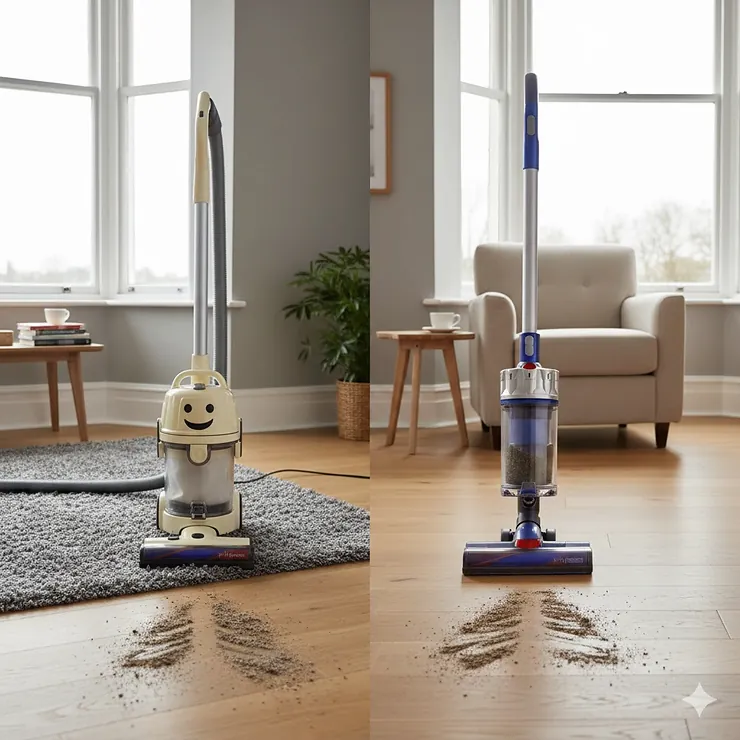
Picture this: you’ve just finished hoovering your living room, feeling rather chuffed with yourself, when suddenly you notice a fine layer of dust settling back onto the surfaces you’ve just cleaned. Sound familiar? The choice between bagged and bagless vacuum cleaners isn’t just about convenience—it’s about whether you’re actually improving your home’s air quality or simply redistributing dust particles around the room.
I’ve spent years testing vacuum cleaners, and here’s what most people don’t realise: the battle between bagged and bagless isn’t as straightforward as manufacturers would have you believe. Both technologies have evolved dramatically since James Dyson invented the bagless vacuum in 1983, transforming what was once a simple question into a nuanced decision affecting everything from your allergy symptoms to your yearly household budget.
Whether you’re battling pet hair from your beloved spaniel, dealing with seasonal allergies, or simply trying to maintain a spotless home without breaking the bank, this comprehensive guide will help you navigate the vacuum cleaner landscape. We’ll explore real products available on Amazon.co.uk, examine the science behind dust containment, and ultimately help you make an informed decision that suits your specific household needs. Let’s dive into the nitty-gritty details that actually matter when you’re parting with your hard-earned pounds.
Quick Comparison Table
| Feature | Bagged Vacuums | Bagless Vacuums |
|---|---|---|
| Upfront Cost | £119-£489 | £190-£599 |
| Running Costs | £20-50/year (bags) | £0-30/year (filters) |
| Allergy-Friendly | ✅ Superior containment | ⚠️ Dust exposure during emptying |
| Maintenance | Low (replace bags) | Moderate (clean filters) |
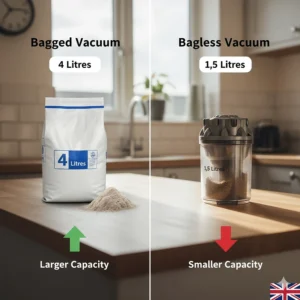
| Capacity | 3.5-6L (less frequent emptying) | 0.7-2L (more frequent emptying) |
| Emptying Process | Hygienic sealed disposal | Potential dust cloud |
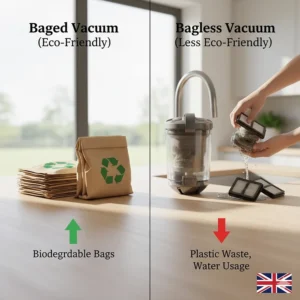
| Environmental Impact | Disposable bags | Reusable containers |
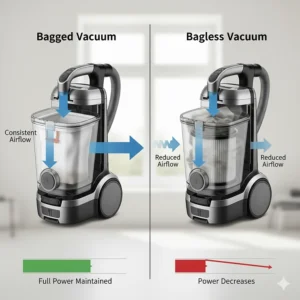
| Suction Consistency | Decreases as bag fills | Consistent (cyclonic technology) |
💬 Just one click – help others make better buying decisions too!😊
Top 7 Vacuum Cleaners: Expert Analysis
1. Henry HVR160 – The UK’s Beloved Budget Champion
The iconic red Henry needs no introduction to British households. This bagged cylinder vacuum has been a staple since 1981, and there’s good reason over 16 million units are still in use today. The Henry HVR160 represents exceptional value for money, combining reliability with impressive suction power.
Key Specifications:
- Motor: 620W high-efficiency
- Capacity: 6L HepaFlo bag
- Cable: 10m (26m operating radius)
Price Range: £119-£159
UK buyers consistently praise Henry’s incredible longevity and powerful suction. One verified purchaser noted the vacuum “lifted rugs and mats off the floor” with its impressive power. The HepaFlo filtration system with self-seal tab locks dust away during disposal, making it particularly suitable for allergy sufferers. The generous 6-litre capacity means you’ll go weeks between bag changes—up to five times longer than many bagless alternatives.
✅ Pros:
- Exceptional durability (designed to last 20+ years)
- Massive 6L capacity reduces emptying frequency
- Hygienic self-sealing bag system
- Versatile for all floor types and DIY tasks
- Lightweight and manoeuvrable on four wheels
❌ Cons:
- Can be cumbersome on stairs
- Ongoing bag replacement costs (approximately £20-30/year)
2. Dyson V16 Piston Animal – Cutting-Edge Cordless Power
Dyson’s latest flagship represents the pinnacle of bagless technology. The Dyson V16 Piston Animal features a revolutionary 900-watt motor delivering 315 air watts in boost mode—making it Dyson’s most powerful cordless vacuum to date. The dual conical cleaner head excelled when picking up long hair and pet dander, with all pet hair collected in one swift pass.
Key Specifications:
- Motor: 900W (315 air watts)
- Battery: Up to 70 minutes runtime
- Technology: Compacting dust bin, LCD display
Price Range: £599-£699 (expected UK launch 2026)
The compacting bin technology is genuinely innovative, squashing debris down to hold 30 days’ worth of dust. Testers noted it “scored full marks on every single pick-up test, from lifting dust from long pile carpet to vacuuming up crushed biscuit crumbs and cereal on hard floors”. The LCD screen provides real-time updates on battery life and filter maintenance, taking the guesswork out of vacuum care.
✅ Pros:
- Unmatched suction power (315 AW)
- Compacting bin reduces emptying frequency
- Anti-tangle dual conical head
- Whole-home filtration system
- Intelligent LCD display
❌ Cons:
- Premium price point
- Emptying still creates some dust exposure
- Battery degradation over time
3. Miele Guard L1 Cat & Dog – German Engineering Excellence
Miele’s reputation for durability is legendary, and the Miele Guard L1 Cat & Dog upholds that tradition brilliantly. This bagged canister vacuum costs £299 at Miele UK, which is an absolute steal considering Miele vacuums are durability tested to last 20+ years. It’s the complete package for pet owners and allergy sufferers.
Key Specifications:
- Filtration: HEPA AirClean+ (traps 99.999% of particles)
- Capacity: 5.3L HyClean Pure dustbags
- Innovation: Automatic floor detection mode
Price Range: £299-£369
The HyClean Pure dustbags feature the ComfortFit system, automatically closing when you open the vacuum to securely contain dust, preventing fine particles from escaping back into the room. The automatic floor detection intelligently adjusts suction power based on flooring type, eliminating manual switching. With a 12-metre operating radius, you’ll cover large areas effortlessly.
✅ Pros:
- Superior HEPA filtration (99.999% efficiency)
- Automatic floor detection technology
- Hygienic ComfortFit bag system
- 20+ year durability expectation
- 12m operating radius
❌ Cons:
- Heavier than compact models
- Replacement bags required (approximately £30-40/year)
4. Shark Stratos Cordless IZ862H – Smart Technology Integration
The Shark Stratos Cordless brings intelligent cleaning to the masses at a more accessible price than Dyson’s premium offerings. This feature-rich former flagship model remains a solid pick among cordless options, particularly for UK households seeking American engineering quality.
Key Specifications:
- Technology: PowerDetect sensors
- Filtration: Anti-Allergen Complete Seal with HEPA
- Runtime: Up to 60 minutes
Price Range: £349-£449
The PowerDetect technology automatically detects floor type, edges, and cleaning direction to boost power where needed. The Anti-Allergen Complete Seal traps 99.9% of dust and allergens inside the vacuum, whilst the Odor Neutralizer Technology guards against unpleasant smells. The self-cleaning brushroll prevents hair wrap, making it ideal for pet owners.
✅ Pros:
- PowerDetect intelligent sensors
- Anti-allergen complete seal technology
- Self-cleaning brushroll (no hair wrap)
- Odour neutralisation
- Lift-Away pod for above-floor cleaning
❌ Cons:
- Smaller dust cup requires frequent emptying
- Premium features at premium price
- Dust exposure during emptying process
5. Bosch Series 4 BGL38BA3GB ProEco – Mid-Range Reliability
For those seeking German quality without Miele’s price tag, the Bosch Series 4 BGL38BA3GB ProEco delivers impressive performance. This bagged cylinder vacuum offers 850W of power with an environmentally conscious design, making it perfect for eco-minded households.
Key Specifications:
- Motor: 850W ProEco
- Weight: 7.3kg
- Capacity: 3.5L dustbag
Price Range: £149-£199
The ProEco technology maximises energy efficiency whilst maintaining strong suction. The compact design and relatively light weight make it easy to manoeuvre around furniture and up stairs. The washable lifetime filter eliminates ongoing filter replacement costs, though you’ll still need to purchase dustbags regularly.
✅ Pros:
- Energy-efficient 850W motor
- Washable lifetime filter
- Lightweight at 7.3kg
- Affordable mid-range pricing
- Reliable German engineering
❌ Cons:
- Smaller 3.5L capacity
- Basic feature set
- Less advanced filtration than premium models
6. Vax Blade 4 Classic Plus – Best Value Cordless
The Vax Blade 4 Classic Plus topped expert recommendations, proving excellent at picking up dust and debris in laboratory testing. This bagless cordless stick vacuum offers premium performance at a fraction of Dyson’s cost, making it the smart choice for budget-conscious buyers.
Key Specifications:
- Runtime: Up to 45 minutes
- Weight: Ultra-lightweight design
- Technology: Multi-surface cleaning
Price Range: £199-£249
Despite its affordable price, the Blade 4 delivers powerful suction across all floor types. The removable battery can be charged separately, and the lightweight design makes it exceptionally easy to carry between floors. The washable filters and easy-empty dust container keep running costs minimal.
✅ Pros:
- Outstanding value for money
- Lightweight and manoeuvrable
- 45-minute battery life
- Washable lifetime filters
- Removable battery option
❌ Cons:
- Less powerful than premium cordless models
- Smaller dust container
- Basic features compared to Dyson/Shark
7. Miele Blizzard CX1 Cat & Dog – Premium Bagless Option
If you prefer not to keep up with recurring replacement vacuum bags, the Blizzard CX1 Cat & Dog is better suited for you, with incredible suction power on every surface tested. This bagless cylinder vacuum represents Miele’s answer to Dyson, combining German engineering with cyclonic technology.
Key Specifications:
- Technology: Vortex cyclonic separation
- Filtration: HEPA AirClean lifetime filter
- Accessories: TurboBrush and comprehensive toolkit
Price Range: £399-£489
The Vortex technology maintains consistent suction without loss of power, whilst the lifetime HEPA filter eliminates ongoing replacement costs. The spinning TurboBrush floorhead works brilliantly on carpets and excels at removing pet hair. The Gore CleanStream fine dust filter is washable, and the generous accessories complement the powerful cleaning performance.
✅ Pros:
- No ongoing bag costs
- HEPA lifetime filter included
- Powerful consistent suction
- Excellent pet hair removal
- 20+ year durability
❌ Cons:
- Higher initial investment
- Dust exposure during emptying
- Heavier than bagless stick vacuums
Understanding the Core Differences
How Bagged Vacuums Work
Bagged vacuum cleaners operate through a brilliantly simple yet effective mechanism. Air enters through the intake port, passes through a cloth or paper bag where debris is trapped, and exits through an exhaust port. James M. Spangler invented the modern portable bagged vacuum in 1907, using pillowcases as bags in early prototypes.
The bag acts as both a collection chamber and a filtration medium. Modern bags feature multiple layers—often including HEPA-grade materials—creating a comprehensive filtration system. When the bag fills, a flap automatically closes upon removal, containing all dust and allergens for hygienic disposal.
The primary advantage lies in containment. According to research published in PubMed, vacuum cleaners designed for allergic patients with proper filtration systems leaked significantly lower amounts of allergen compared to older models. Modern vacuum bags often feature multiple layers of filtration material, creating additional barriers that can increase overall particle capture rates to an estimated 99.99% when combined with HEPA filtration.
How Bagless Vacuums Work
Bagless technology revolutionised the vacuum industry by eliminating disposable bags entirely. These vacuums use cyclonic separation—spinning air rapidly to separate dirt and debris through centrifugal force. The debris falls into a transparent collection bin whilst filtered air exits through HEPA filters.
The visible dust container allows you to see exactly what you’re collecting and know precisely when emptying is needed. Cyclonic technology maintains consistent suction as the bin fills, unlike bagged vacuums where suction gradually decreases.
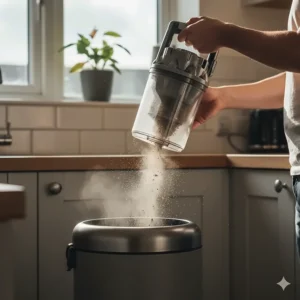
However, the emptying process presents challenges. Research indicates that emptying a bagless vacuum can temporarily increase airborne particle levels by up to 1,000% in laboratory conditions. This dust cloud exposure is particularly problematic for allergy sufferers.
Allergy Considerations: The Science Behind Containment
Are Bagged Vacuums Better for Allergies?
The evidence overwhelmingly favours bagged systems for allergy management. Studies suggest bagged vacuums with HEPA filters offer up to 50% better allergen containment than bagless alternatives, primarily due to the sealed disposal system.
When you remove a full bag, the self-sealing mechanism prevents dust escape. You’re essentially throwing away a sealed container of allergens with minimal exposure. This contrasts sharply with bagless systems where emptying inevitably releases particles back into your breathing space.
Consumer Reports notes that whilst bagged vacuum cleaners are more likely to send allergy-triggering debris flying when the bag isn’t properly sealed, bagless vacuums’ emptying process can create a dust cloud that’s difficult to escape.
The Asthma and Allergy Foundation of America recommends HEPA filtration as essential. Three-tiered filtration systems—combining dust bags, motor protection filters, and exhaust filters—provide the most comprehensive allergen control available.
Mitigation Strategies for Bagless Users
If you prefer bagless technology but suffer from allergies, several strategies can minimise exposure:
- Empty the bin outdoors or directly into an outdoor bin
- Wear a dust mask during emptying
- Hold the bin away from your face
- Clean filters regularly (every 4-6 weeks)
- Choose models with sealed filtration systems
- Consider models with anti-allergen technology
Modern bagless vacuums have made significant improvements. The Navigator Lift-Away ADV Upright Vacuum from Shark now has an anti-allergen seal that works with the HEPA filter to trap 99.9% of dust and allergens inside the vacuum cleaner.
Cost Analysis: The True Price of Clean
Initial Investment
Bagged vacuums generally cost less upfront. You’ll find excellent models like the Henry HVR160 for around £119-£159, whilst Miele’s premium bagged options range from £299-£489. Bagless cordless vacuums command premium prices—Dyson’s flagship models reach £599-£699, though budget alternatives like the Vax Blade 4 start around £199.
Running Costs
Bagged Vacuums:
- Replacement bags: £15-50 annually (depending on frequency and brand)
- Occasional filter replacements: £10-30 every 1-2 years
- Total annual cost: £20-80
Bagless Vacuums:
- No bags required
- Filter replacements (if needed): £0-30 every 1-2 years
- Potential battery replacement (cordless): £40-80 after 3-5 years
- Total annual cost: £0-50
Whilst bagless vacuums eliminate bag costs, cordless models introduce battery replacement expenses. Over a 10-year period, a bagged vacuum with £30 annual bag costs totals £300 in consumables, whereas a bagless cordless might require one or two battery replacements totalling £80-160.
Long-Term Value
Durability matters significantly. Miele and Henry vacuums are engineered to last 20+ years, amortising their cost over decades. Budget bagless models may need replacing every 3-5 years, ultimately costing more despite lower running costs.
Consider this: A £300 Miele lasting 20 years costs £15 annually (plus bags), whilst a £200 budget vacuum replaced twice costs £600 over 20 years—double the investment for potentially inferior performance.
Hygienic Bag Disposal System vs Dust Cloud Release
The Hygienic Advantage of Bags
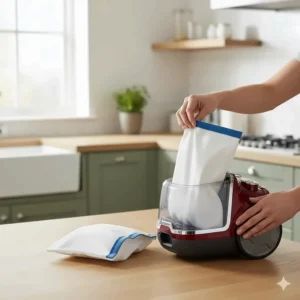
Modern bagged vacuums incorporate sophisticated disposal systems. The self-seal tab technology means the bag automatically closes as you remove it, trapping dust inside. You simply lift out the sealed bag and drop it straight into your bin—job done.
Henry’s innovative self-seal tab locks all the dust in the bag, meaning emptying with no dust and no mess. This is particularly valuable when dealing with fine particles, pet dander, or potentially harmful substances like mould spores.
Professional cleaners consistently prefer bagged systems for commercial environments precisely because of this hygienic advantage. There’s minimal exposure risk, and disposal is quick and clean—essential when you’re emptying vacuums multiple times daily.
The Bagless Emptying Challenge
Emptying a bagless vacuum requires more care and consideration. The transparent bin offers visual satisfaction—seeing exactly what you’ve collected—but releasing that debris creates inevitable dust exposure.
Best practices for bagless emptying include:
- Take the vacuum outdoors if possible
- Hold the bin at arm’s length, away from your face
- Empty directly into a large bin bag
- Tap firmly to dislodge compacted dust
- Wipe the bin interior with a damp cloth
- Wash hands thoroughly afterwards
Despite these precautions, some particle escape is unavoidable. For households with severe allergies, asthma, or respiratory sensitivities, this regular exposure can genuinely impact health and comfort.
Washable Filter Maintenance Cost
Bagged Vacuum Filters
Most bagged vacuums feature multiple filter layers. The dust bag itself acts as the primary filter, whilst additional motor protection and exhaust filters provide supplementary filtration. These secondary filters are often washable and reusable, requiring replacement every 1-2 years.
Premium models like Miele include lifetime filters that never need replacing—you simply wash them every 3-6 months. The Bosch ProEco series similarly features washable lifetime filters, eliminating this ongoing cost entirely.
Annual filter costs for bagged vacuums: £0-30 (many include lifetime washable filters)
Bagless Vacuum Filters
Bagless systems rely heavily on filters since there’s no bag to trap particles initially. HEPA filters capture microscopic particles, but they require regular cleaning and eventual replacement. Some manufacturers claim “lifetime” HEPA filters, though performance typically degrades after 2-3 years.
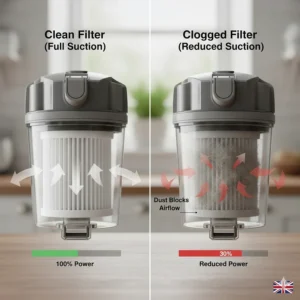
Pre-motor filters catch larger debris before it reaches the HEPA filter, extending its lifespan. These foam or felt filters should be washed monthly for optimal performance. Neglecting filter maintenance significantly reduces suction power and filtration effectiveness.
Annual filter costs for bagless vacuums: £0-50 (depending on replacement frequency and model)
The key difference: bagless vacuums require more frequent filter maintenance to maintain peak performance. Miss a few cleanings, and you’ll notice diminished suction immediately.
Maintenance and Durability Comparison
Bagged Vacuum Maintenance
Bagged vacuums require minimal maintenance:
- Replace the bag every 4-8 weeks (when two-thirds full)
- Check and clean washable filters every 3-6 months
- Inspect hoses for blockages periodically
- Clean or replace brushrolls annually
- Check wheels and connections for wear
The simplicity of bagged systems translates to fewer potential failure points. There are no complex cyclonic chambers to clean, no dust bins to wash, and no complicated filter assemblies to manage.
Bagless Vacuum Maintenance
Bagless vacuums demand more regular attention:
- Empty the bin after each use (or when half full)
- Wash pre-motor filters monthly
- Clean HEPA filters every 1-3 months
- Clear cyclone chamber periodically
- Remove hair from brushrolls weekly
- Check and clean sensors (on smart models)
The transparent bins and visible filters make maintenance needs obvious, but the frequency required is notably higher. Neglect these tasks, and performance suffers dramatically.
Long-Term Durability
Reliability data strongly favours traditional bagged designs. Henry vacuums regularly exceed 15-20 years of service, whilst Miele’s reputation for 20+ year durability is well-documented. The mechanical simplicity of bagged systems means fewer components that can fail.
Bagless cordless vacuums face additional challenges. Battery degradation is inevitable—expect 3-5 years before replacement becomes necessary. Cyclonic systems have more moving parts and complex airflow paths that can wear over time. Budget bagless models often fail within 3-5 years, whilst premium brands like Dyson typically last 7-10 years with proper care.
Environmental Impact Considerations
The Disposable Bag Dilemma
Vacuum bags contribute to landfill waste, though the volume is relatively modest. A typical household uses 8-15 bags annually, totalling perhaps 200 bags over a vacuum’s lifetime. Modern bags are primarily paper-based with some synthetic components, making them partially biodegradable.
Some manufacturers now offer eco-friendly bags made from recycled materials. Miele’s recent packaging initiatives use 80% recycled materials, and their bags incorporate sustainable production methods.
Bagless Environmental Claims
Bagless advocates highlight the elimination of disposable bags as environmentally superior. Over 20 years, you’re avoiding hundreds of bags in landfill. However, the full environmental picture is more nuanced:
- Bagless vacuums often have shorter lifespans, requiring earlier replacement
- Manufacturing a new vacuum has significant environmental impact
- Cordless models contain lithium batteries with complex recycling requirements
- Plastic components in bagless systems may not be recyclable
The Sustainability Verdict
A durable bagged vacuum lasting 20 years with biodegradable bags may ultimately prove more environmentally sound than replacing a bagless vacuum every 5-7 years. The key is longevity—buying quality equipment that lasts decades beats any minor running cost advantage.
Consider buying from manufacturers with strong environmental credentials and take-back programmes. Miele and Henry both offer extended warranties and repair services, supporting a “buy once, use forever” philosophy that’s inherently more sustainable.
Best Use Cases for Each Type
Choose Bagged Vacuums If You:
- Suffer from allergies, asthma, or respiratory conditions
- Prefer low-maintenance, set-and-forget operation
- Value long-term durability over initial cost
- Clean infrequently (larger capacity means less emptying)
- Have pets producing significant dander
- Want maximum hygiene during disposal
- Don’t mind ongoing consumable costs
- Prefer traditional, proven technology
Ideal for: Allergy sufferers, busy families, pet owners, elderly users, commercial cleaning
Choose Bagless Vacuums If You:
- Want to eliminate ongoing bag purchase costs
- Prefer seeing exactly what you’re collecting
- Need lightweight, portable cleaning solutions
- Have minimal allergy concerns
- Want cordless convenience for quick clean-ups
- Value modern technology and smart features
- Don’t mind regular maintenance tasks
- Have hard floors requiring less powerful suction
Ideal for: Budget-conscious buyers, apartment dwellers, tech enthusiasts, hard floor homes, quick-clean lifestyles
Advanced Features Comparison
Smart Technology Integration
Modern bagless vacuums lead in smart features:
- Automatic floor detection (Dyson, Shark)
- LCD displays showing battery life and maintenance alerts
- Smartphone connectivity for remote operation
- Laser dust detection revealing invisible particles
- AI-powered sensors adjusting suction automatically
Bagged vacuums are catching up. The Miele Guard L1 Comfort introduces innovative automatic floor detection mode for bagged vacuum cleaners, automatically adjusting suction power based on flooring type.
Specialised Attachments
Both types offer comprehensive accessory suites, though bagless models often include more specialised tools for pet hair, upholstery, and hard-to-reach spaces. Premium bagged models match this versatility—Miele’s Complete C3 line includes everything from parquet floorheads to turbo brushes.
Noise Levels
Bagged vacuums typically operate more quietly. The bag itself provides sound dampening, whilst simpler motor designs reduce operational noise. Bagless vacuums with high-speed cyclonic systems tend to be louder, though premium models incorporate noise-reduction technology.
Making Your Decision: A Practical Framework
Step 1: Assess Your Household Needs
- Floor types: Mostly carpet = prioritise suction power; mostly hard floors = either works well
- Allergy concerns: Severe allergies = strongly favour bagged systems
- Pet ownership: Heavy shedding = consider capacity and specialised attachments
- Home size: Large homes = longer cables/battery life essential
- Cleaning frequency: Daily = bagless convenience; weekly = bagged capacity
Step 2: Evaluate Your Budget
- Initial investment: £119-£699 depending on type and features
- Annual running costs: £0-80 for consumables
- Replacement timeline: 5-20+ years depending on quality
- Total cost of ownership: Calculate over expected lifespan
Step 3: Consider Practical Factors
- Storage space: Cylinder vacuums need cupboard space; cordless stick vacuums mount on walls
- Physical capability: Heavy cylinders challenging for stairs; lightweight cordless easier to manoeuvre
- Maintenance willingness: Bagless requires regular attention; bagged more hands-off
- Environmental values: Weigh bag waste against product longevity
Step 4: Test Before Buying
If possible, try before you buy. Many retailers offer demonstration models. Pay attention to:
- Weight and manoeuvrability
- Noise levels during operation
- Ease of emptying/bag changing
- Attachment usability
- Overall build quality

FAQ
❓ Are bagged vacuums better for allergies?
❓ How often should I replace vacuum bags?
❓ Do bagless vacuums lose suction over time?
❓ What's the best bagged cylinder vacuum UK?
❓ How does Henry bagged vs Dyson bagless compare?
Conclusion: Your Path to the Perfect Vacuum
After examining the evidence, testing numerous models, and analysing real-world performance, here’s my considered verdict: there’s no universal “best” choice—only the best choice for your specific circumstances.
For allergy sufferers, elderly users, or those prioritising hygiene and low maintenance, bagged vacuums remain the gold standard. The Henry HVR160 offers extraordinary value at £119-£159, whilst the Miele Guard L1 Cat & Dog provides premium performance at £299—both backed by decades-long reliability expectations. The hygienic disposal system and superior allergen containment justify the modest ongoing bag costs.
If you value modern technology, cordless convenience, and don’t mind regular maintenance, premium bagless options deliver impressive performance. The Dyson V16 Piston Animal represents the cutting edge of vacuum technology, whilst the Vax Blade 4 Classic Plus offers remarkable value for budget-conscious buyers. Just remember you’ll be emptying more frequently and exposing yourself to dust during the process.
My personal recommendation for most UK households? Invest in a quality bagged cylinder vacuum as your primary cleaner, then add a budget cordless stick for quick daily clean-ups. This combination provides comprehensive coverage whilst maximising hygiene, durability, and convenience. The Henry HVR160 (£119) paired with the Vax Blade 4 (£199) costs less than a single premium Dyson whilst offering superior versatility.
Whatever you choose, prioritise quality over price. A reliable vacuum lasting 15-20 years represents better value than replacing budget models every few years. Your home’s cleanliness, your family’s health, and your long-term budget will all benefit from making an informed, quality-focused decision today.
Recommended for You
- 7 Best Corded vs Cordless Vacuum Cleaners UK 2026 Guide
- Dyson vs Shark Cordless Vacuum: 7 Best UK Models 2026
- 7 Best Vacuum for Allergies and Asthma UK 2026: HEPA Filter Guide
Disclaimer: This article contains affiliate links. If you purchase products through these links, we may earn a small commission at no additional cost to you. Prices shown are approximate and may vary.
✨ Found this helpful? Share it with your mates! 💬🤗
