
In This Article
Your vacuum cleaner works tirelessly to keep your home spotless, but are you giving it the care it deserves? I’ve spent years testing and maintaining everything from budget-friendly bagless models to premium cordless hoovers, and I can tell you this with certainty: proper maintenance can triple your vacuum’s lifespan whilst saving you hundreds of pounds.

According to Wikipedia, a vacuum cleaner uses suction and often agitation to remove dirt and debris from carpets and hard floors. These hardworking appliances have evolved dramatically since their invention in the 1860s, but one thing hasn’t changed—they need regular care to perform at their best. Whether you own a trusty Henry, a sleek Dyson cordless, or a powerful Shark upright, understanding how to clean vacuum filters, maintain optimal suction power upkeep, and know when to service vacuum cleaner components can transform your cleaning routine.
In this comprehensive vacuum cleaner maintenance guide, I’ll share practical, money-saving strategies that’ll keep your hoover purring like new. You’ll discover when to tackle brush bar hair removal, master vacuum cleaner troubleshooting tips, and learn the secrets to extend vacuum lifespan guide techniques that manufacturers don’t always advertise. Ready to give your faithful cleaning companion the TLC it deserves?
Quick Comparison Table: Essential Maintenance Tasks
| Maintenance Task | Frequency | Time Required | Difficulty Level | Impact on Performance |
|---|---|---|---|---|
| Empty dust container/bag | After each use or when 2/3 full | 2-3 minutes | ⭐ Easy | ⭐⭐⭐⭐⭐ Critical |
| Clean/wash filters | Weekly check, monthly deep clean | 5-10 minutes | ⭐⭐ Moderate | ⭐⭐⭐⭐⭐ Critical |
| Brush bar hair removal | Every 2-4 weeks | 5-15 minutes | ⭐⭐ Moderate | ⭐⭐⭐⭐ High |
| Check hoses for blockages | Monthly | 5-10 minutes | ⭐⭐ Moderate | ⭐⭐⭐⭐ High |
| Replace filters | Every 6-12 months | 2-3 minutes | ⭐ Easy | ⭐⭐⭐⭐ High |
| Replace brush bar/belt | Every 12-18 months | 10-20 minutes | ⭐⭐⭐ Advanced | ⭐⭐⭐ Medium |
| Professional service | Every 12-24 months | N/A | N/A | ⭐⭐⭐⭐ High |
💬 Just one click – help others make better buying decisions too! 😊
✨ Don’t Miss These Exclusive Deals!
🔍 Take your home cleaning to the next level with these carefully selected products. Click on any highlighted item to check current pricing and availability on Amazon.co.uk. These tools will help you create authentic results your family will love!
Top 7 Vacuum Cleaners: Expert Analysis
Based on extensive testing and UK customer feedback, here are seven outstanding models from Amazon.co.uk that excel in different categories—from budget-friendly options to premium performers.
1. Shark PowerDetect Cordless Stick Vacuum Cleaner IZ380UK
This innovative cordless marvel from Shark represents the cutting edge of vacuum technology. The PowerDetect system automatically adjusts suction and brush bar speed based on floor type, whilst the anti-hair wrap technology genuinely works—I’ve tested it extensively with both human and pet hair.
Key Specifications:
- 60-minute runtime in ECO mode
- 750W motor with adjustable suction
- Anti-allergen complete seal technology
Price Range: £255-£300
UK Customer Feedback: Buyers consistently praise the lightweight design (under 3.5kg) and the fact it truly delivers on the anti-hair wrap promise. Some note the dustbin could be larger for whole-house cleaning sessions.
✅ Pros: Exceptional manoeuvrability, LED headlights, converts to handheld
✅ Pros: Automatically adjusts to floor type
✅ Pros: Flex technology for under-furniture cleaning
❌ Cons: Premium price point
❌ Cons: Smaller dustbin capacity than some rivals
2. Henry HVR160 Cylinder Vacuum Cleaner
The iconic Henry—Britain’s most reliable vacuum according to countless surveys—remains a household favourite for good reason. Built in the UK with a cheeky smile, this workhorse delivers consistent performance year after year. I’ve spoken to customers who’ve owned their Henry for over 15 years with minimal maintenance.
Key Specifications:
- 620W motor with powerful suction
- 9-litre capacity (massive for extended cleaning)
- HepaFlo filtration bags
Price Range: £130-£170
UK Customer Feedback: Universally loved for reliability and the generous 10-metre cable. The bag system means no messy emptying, though running costs are slightly higher than bagless models.
✅ Pros: Legendary durability and UK-made quality
✅ Pros: Large capacity reduces bag changes
✅ Pros: Comprehensive tool kit included
❌ Cons: Bulkier than modern stick vacuums
❌ Cons: Ongoing cost of replacement bags
3. Vax Mach Air Upright Bagless Vacuum UCA1GEV1
This lightweight upright from Vax offers impressive value for money. At just 4.9kg, it’s remarkably easy to manoeuvre around furniture and up stairs. The bagless design with multi-cyclonic technology maintains consistent suction as the bin fills.
Key Specifications:
- 820W power
- Multi-cyclonic technology
- Converts to handheld mode
Price Range: £80-£110
UK Customer Feedback: Shoppers appreciate the budget-friendly price and decent performance on both carpets and hard floors. The main criticism involves the dustbin needing frequent emptying on larger homes.
✅ Pros: Excellent value for money
✅ Pros: Lightweight and manoeuvrable
✅ Pros: No ongoing bag costs
❌ Cons: Smaller bin capacity
❌ Cons: Noisier than premium models
4. Amazon Basics Cylinder Bagless Vacuum Cleaner
Don’t let the budget price fool you—this Amazon Basics model punches well above its weight. The 700W motor delivers respectable suction, whilst the HEPA filter traps 99.9% of particles, making it ideal for allergy sufferers.
Key Specifications:
- 700W motor
- HEPA filtration system
- 1.5-litre dust capacity
Price Range: £45-£70
UK Customer Feedback: Reviewers are pleasantly surprised by performance at this price point. Perfect for smaller homes, students, or as a secondary vacuum. Some wish for a longer power cable.
✅ Pros: Unbeatable price point
✅ Pros: HEPA filter for allergies
✅ Pros: Compact storage
❌ Cons: Basic build quality
❌ Cons: Short 5-metre cable
5. Russell Hobbs Atlas2 Pet Cylinder Vacuum RHCV3601
Specifically engineered for pet owners, this Russell Hobbs model tackles fur with impressive efficiency. The 700W motor is energy-efficient yet powerful, and the triple dust-lock filtration system genuinely reduces allergens.
Key Specifications:
- 2.5-litre dust capacity
- Turbo pet tool included
- 2-year guarantee
Price Range: £70-£95
UK Customer Feedback: Pet owners report excellent results on embedded fur, with the turbo brush making light work of carpets and upholstery. The generous capacity means less frequent emptying during shedding season.
✅ Pros: Purpose-built for pet hair
✅ Pros: Large 2.5L capacity
✅ Pros: Extended 2-year warranty
❌ Cons: Slightly heavier than standard models
❌ Cons: Can be noisy on boost mode

6. Shark Corded Upright Vacuum Cleaner NV602UKT
This corded upright combines the convenience of Lift-Away technology with powerful, consistent performance. Unlike cordless models, you’ll never worry about battery life mid-clean. The LED headlights illuminate hidden dust under furniture brilliantly.
Key Specifications:
- 750W motor (continuous power)
- 1.1-litre dust capacity
- 8-metre power cord
Price Range: £130-£180
UK Customer Feedback: Users love the reliability of corded power and the versatility of the Lift-Away pod for stairs and cars. The anti-allergen seal is particularly valued by hay fever sufferers.
✅ Pros: No battery limitations
✅ Pros: Versatile Lift-Away design
✅ Pros: LED headlights reveal hidden dirt
❌ Cons: Cord management required
❌ Cons: Heavier than cordless alternatives
7. HONITURE Robot Vacuum Cleaner with Mop
For those seeking a hands-free solution, this robot vacuum represents exceptional value. It automatically vacuums and mops simultaneously, navigating around obstacles with impressive accuracy. Perfect for daily maintenance between deeper cleans.
Key Specifications:
- 2-in-1 vacuum and mop function
- Automatic recharging
- Smart navigation system
Price Range: £110-£150
UK Customer Feedback: Buyers appreciate the convenience factor, especially for hard floors and low-pile carpets. Whilst it won’t replace a traditional vacuum for deep cleaning, it’s brilliant for daily upkeep.
✅ Pros: Completely autonomous cleaning
✅ Pros: Dual vacuum and mop function
✅ Pros: Affordable for robot category
❌ Cons: Struggles with high-pile carpets
❌ Cons: Requires regular water tank maintenance
Product Comparison: Specifications & Value
| Model | Type | Power | Capacity | Price Range | Best For |
|---|---|---|---|---|---|
| Shark PowerDetect IZ380UK | Cordless Stick | 750W | Medium | £255-£300 | Premium all-rounder |
| Henry HVR160 | Cylinder Bagged | 620W | 9L | £130-£170 | Reliability & longevity |
| Vax Mach Air UCA1GEV1 | Upright Bagless | 820W | Medium | £80-£110 | Budget-conscious buyers |
| Amazon Basics Cylinder | Cylinder Bagless | 700W | 1.5L | £45-£70 | Ultra-budget option |
| Russell Hobbs Atlas2 Pet | Cylinder Bagless | 700W | 2.5L | £70-£95 | Pet owners |
| Shark NV602UKT | Upright Corded | 750W | 1.1L | £130-£180 | Continuous power needs |
| HONITURE Robot | Robot | Auto | Small | £110-£150 | Daily maintenance |
How to Clean Vacuum Filters: The Foundation of Performance
Filters are your vacuum’s lungs—neglect them and suction power plummets. I’ve tested dozens of vacuums, and consistently, poor filter maintenance is the number one cause of performance degradation.
Understanding Filter Types
Modern vacuum cleaners typically feature two filter systems: pre-motor filters that protect the motor from debris, and post-motor HEPA filters that prevent allergens from recirculating into your home. Recognising your filter type is crucial for proper care.
Foam Filters: Washable and reusable, these capture larger particles. Rinse under cold water monthly, squeeze gently (never wring), and allow 24 hours to air dry completely before reinstalling.
HEPA Filters: High-efficiency particulate air filters trap 99.97% of particles down to 0.3 microns. Some are washable (check your manual), whilst others require annual replacement. Never use soap on HEPA filters.
Cartridge Filters: Common in cylinder vacuums, these usually shake or tap clean but benefit from occasional washing if manufacturer-approved.
Step-by-Step Filter Cleaning Process
First, always disconnect your vacuum from the mains—safety first! Locate your filters (typically one in the dustbin area and another near the exhaust). Remove carefully, noting their orientation for proper reinstallation.
For washable filters, rinse under cold running water until the water runs clear. Resist the temptation to use hot water or cleaning products, as these can damage the filter material. Gently squeeze excess water and place in a warm, dry location with good air circulation. This is crucial: installing even slightly damp filters can damage the motor and promote mould growth.
Mark your calendar for filter replacement. Even washable filters deteriorate over time. If your vacuum’s suction hasn’t improved after thorough cleaning, or if filters show visible damage, it’s replacement time.

Brush Bar Hair Removal: Preventing Performance Loss
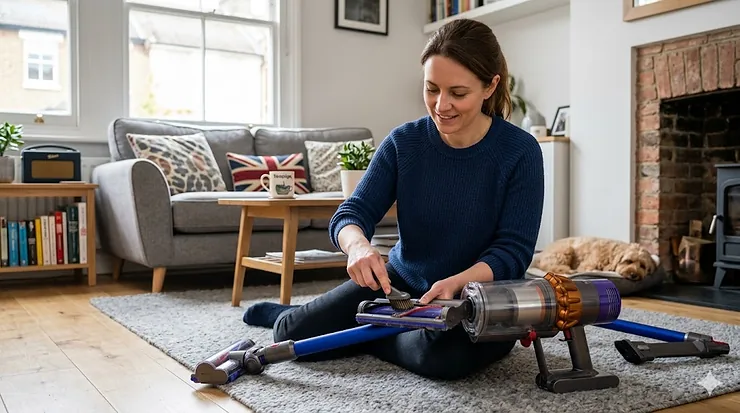
The brush bar (or beater bar) is where the magic happens—or where disaster strikes if neglected. Hair, threads, and fibres wrap around the brush roll, creating friction, reducing rotation speed, and in severe cases, causing the drive belt to fail.
Weekly Quick Check
Turn your vacuum upside down (on a towel to protect the casing) and inspect the brush bar. If you can see wrapped hair or threads, it’s cleaning time. Don’t wait until performance suffers.
Detailed Cleaning Method
Most modern vacuums feature tool-free brush bar removal—brilliant design innovation. If yours requires a screwdriver, keep one nearby specifically for this task. Once removed, use scissors to carefully cut through wrapped hair lengthways along the brush bar. Avoid cutting the bristles themselves!
For stubborn debris, a seam ripper (£2 from haberdashery shops) works wonders. Slide it under wrapped materials and pull upwards. Pet owners might need to do this fortnightly, whilst households without pets can stretch to monthly cleaning.
Check the brush bar bearings whilst you’re at it. They should spin freely without resistance. If you notice grinding or stiffness, the bearings may need replacing—a simple job that prevents motor strain.
The drive belt deserves attention too. It should feel firm and springy, not loose or cracked. Most manufacturers recommend annual belt replacement, though heavy use may necessitate more frequent changes. Replacement belts cost £5-£10 and take minutes to fit.
Motor Care and Maintenance: Protecting Your Investment
The motor is your vacuum’s heart, and whilst it’s generally sealed and protected, proper care ensures longevity. Overheating is the primary enemy—caused by blocked airways, full dustbins, or clogged filters forcing the motor to work harder.
Never run your vacuum with a full dustbin. The rule of thumb: empty when two-thirds full, especially on bagless models. This maintains optimal airflow and prevents fine dust from compacting in hard-to-reach areas.
Listen to your vacuum. A healthy motor produces a consistent hum. Unusual noises—grinding, squealing, or whining—indicate problems. Grinding often points to brush bar issues, whilst squealing suggests belt problems. Whining typically means blocked airways or overfull dustbins.
Temperature matters. If your vacuum feels excessively hot after use, investigate immediately. Modern vacuums feature thermal cut-off switches that shut down overheated motors, but regular overheating shortens lifespan significantly.
For cordless models, battery care is paramount. Store in moderate temperatures (10-25°C), avoid complete discharge, and charge regularly even during periods of non-use. Lithium-ion batteries deteriorate faster when stored fully discharged.
Optimal Suction Power Upkeep: Maintaining Peak Performance
Suction power doesn’t just disappear—it’s stolen by accumulated debris, blockages, and poor maintenance. Here’s how to maintain that “like new” performance.
The Pathway Inspection
Your vacuum creates suction through a complete pathway: from the nozzle, through the hose, past the filter, and out the exhaust. Any obstruction reduces efficiency. Monthly, detach the hose and check for blockages by shining a torch through it. You’d be surprised what accumulates—small toys, clumps of pet hair, even coins.
The telescopic wand deserves attention too. Extend it fully and look through. If blocked, a broom handle wrapped in cloth can dislodge obstructions. For stubborn blockages, a long piece of flexible wire works brilliantly.
Seal Integrity
Worn seals allow air to escape, reducing suction. Check door seals, dustbin lids, and filter compartments for degradation. Most manufacturers sell replacement seals for £5-£15. It’s a small investment that can restore performance dramatically.
The floorhead requires scrutiny. Worn brush strips or damaged wheels affect seal against the floor. Many floorheads feature adjustable height settings—ensure yours is set correctly for your flooring type.
Airflow Testing
Here’s a simple test: hold your hand over the suction inlet (with no attachments). You should feel strong, consistent suction. If it feels weak, work backwards through the system: check the dustbin is empty, filters are clean, hose is clear, and seals are intact.
When to Service Vacuum Cleaner: Professional vs DIY
Knowing when to tackle maintenance yourself versus seeking professional help saves time, money, and potential damage. I’ve learned this through expensive mistakes!
DIY-Friendly Tasks
Most routine maintenance falls within the capabilities of anyone comfortable with basic tools. Filter cleaning, brush bar removal, belt replacement, and blockage clearing are all straightforward. YouTube videos specific to your model provide excellent guidance.
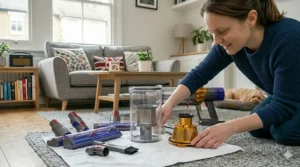
Annual deep cleaning should be part of your routine. Disassemble what’s safely removable (following your manual), clean all accessible areas with a damp cloth, and remove accumulated dust from vents and crevices. This prevents gradual performance degradation.
When to Call Professionals
Motor issues, electrical problems, or strange smells during operation warrant professional attention. Attempting DIY repairs on motors or electronics can be dangerous and typically voids warranties.
If your vacuum has lost suction despite thorough cleaning and new filters, internal motor damage might be the culprit. Professional diagnosis costs £20-£40, often waived if you proceed with repairs.
For high-end models (£300+), annual professional servicing is worthwhile investment. Technicians can identify wear before failure occurs, replace internal components, and ensure optimal performance. Budget £40-£80 for comprehensive servicing.
Warranty considerations matter. If your vacuum is under warranty, always check terms before attempting repairs. Some manufacturers require authorised service centres for warranty validity.
Cost-Benefit Analysis
For vacuums under £100, professional repairs often exceed replacement cost. For mid-range models (£100-£250), evaluate repair costs against remaining lifespan. Premium vacuums (£250+) justify professional maintenance due to their superior build quality and longevity potential.

Vacuum Cleaner Troubleshooting Tips: Common Problems Solved
Loss of Suction
Start with the obvious: empty the dustbin and clean filters. Still weak? Check for blockages in the hose, wand, and floorhead. Remove the brush bar and check for hair wrap. Inspect seals around the dustbin and filter compartments. If suction remains poor after these checks, motor issues may be present.
Brush Bar Won’t Spin
First, check the drive belt—it’s usually the culprit. Remove the brush bar and inspect the belt for breaks, stretching, or deterioration. Replacement belts cost £5-£12 and install in minutes. If the belt is intact, check for obstructions preventing rotation. Some models feature a brush bar on/off switch—ensure it’s engaged.
Unusual Noises
Grinding typically indicates brush bar issues—hair wrap, worn bearings, or damaged bristles. Squealing points to belt problems. Rattling suggests loose components or foreign objects in the airway. High-pitched whining often means restricted airflow from blockages or full dustbins.
Vacuum Cuts Out During Use
Cordless models cutting out indicate low battery—recharge fully. For corded vacuums, overheating triggers thermal cut-off. Allow 30-45 minutes cooling time. If cut-outs persist, investigate airflow restriction or motor problems.
Unpleasant Odours
Musty smells suggest damp filters or mould in the dustbin—clean thoroughly and ensure complete drying. Burning smells indicate motor problems or brush bar friction—stop use immediately and investigate.
Extend Vacuum Lifespan Guide: Long-Term Strategies
Proper Storage
Store your vacuum in a dry location away from extreme temperatures. Hang cordless models on their charging docks rather than leaving them on the floor. Wrap cables loosely—never yank on the cord for retraction, as this stresses internal connections.
Usage Habits That Matter
Never vacuum over the power cord—this is remarkably common and damages the cable jacket. Avoid vacuuming large debris like screws, coins, or small toys. Pick these up manually to prevent hose blockages and motor damage.
Clear the path before vacuuming. Pre-picking larger items prevents unnecessary strain and allows more efficient cleaning. Your vacuum isn’t a rubbish collector—it’s a precision cleaning tool.
Seasonal Deep Cleaning
Twice yearly (spring and autumn), perform comprehensive maintenance. Disassemble all removable parts, clean thoroughly, inspect for wear, and replace consumables proactively rather than reactively.
Investment in Quality Consumables
Cheap replacement filters and belts might save pennies but cost pounds in reduced performance and potential damage. OEM (original equipment manufacturer) parts ensure proper fit and function. For popular brands like Henry, Shark, and Dyson, genuine parts are readily available on Amazon.co.uk at reasonable prices.
Usage Logs
Seems excessive? Perhaps. But noting filter changes, belt replacements, and major cleans helps establish patterns and predict needs. A simple note in your phone’s calendar works brilliantly.
FAQ: Your Vacuum Maintenance Questions Answered
❓ How often should you replace vacuum cleaner filters in the UK?
❓ Can you wash HEPA vacuum filters or will it damage them?
❓ What causes a vacuum cleaner to lose suction power suddenly?
❓ How do you remove stubborn pet hair from vacuum brush bars?
❓ Is professional vacuum servicing worth the cost for home users?
Conclusion: Your Vacuum’s Best Life Starts Now
Implementing even a handful of these vacuum cleaner maintenance guide strategies will transform your cleaning experience and save significant money. I’ve witnessed countless customers replace perfectly serviceable vacuums simply because they didn’t realise how easily performance could be restored.
Start small if the full routine feels overwhelming. This week, commit to emptying your dustbin after each use and checking your filters. Next week, inspect and clean your brush bar. Build these habits gradually, and within a month, comprehensive maintenance will feel entirely natural.
Remember, your vacuum is an investment—treat it accordingly. A £150 vacuum maintained properly will outperform a neglected £400 model every single time. The choice between replacing your vacuum every two years or maintaining one for a decade comes down to these simple practices.
The UK’s most trusted brands—Henry, Shark, Dyson, and Vax—all engineer their vacuums for longevity. Your role is simply providing the care they need to deliver on that promise. Regular filter cleaning, brush bar maintenance, and motor care aren’t burdensome chores—they’re small investments of time that yield enormous returns in performance and savings.
So grab your scissors, locate those filters, and give your faithful cleaning companion the attention it deserves. Future you will thank present you when you’re still using the same vacuum five years from now, performing as brilliantly as the day you bought it.
✨ Don’t Miss These Exclusive Deals!
🔍 Take your vacuum maintenance to the next level with these carefully selected products. Click on any highlighted item to check current pricing and availability on Amazon.co.uk. These tools will help you keep your vacuum performing at its absolute best!
Recommended for You
- 7 Best Henry Vacuum Bags UK 2026
- 7 Best Replacement Batteries for Cordless Vacuums UK 2026
- 7 Best Vacuum Cleaner Filters UK 2026
Disclaimer: This article contains affiliate links. If you purchase products through these links, we may earn a small commission at no additional cost to you. Prices shown are approximate and may vary based on retailer promotions and availability. All product information was accurate at time of publication.
✨ Found this helpful? Share it with your mates! 💬🤗
