
In This Article
There’s a very specific kind of kitchen-renovation argument that happens in showrooms up and down the country, and it usually starts with someone picking up a spec sheet and saying “but is it actually worth paying double for a Miele?” The bosch vs miele dishwasher debate isn’t new, but it’s also not as simple as “German engineering vs German engineering, flip a coin.” Both brands build genuinely excellent appliances, and yet ask ten appliance engineers which one they’d put in their own kitchen and you’ll get a properly split room.
This guide steps back from brand loyalty and looks at what the research actually shows: real models, real specifications, aggregated review sentiment, and honest analysis of where each brand pulls ahead. We’ll cover seven genuine current dishwashers — four from Bosch, three from Miele — spanning entry-level to flagship, so you can see exactly what your money buys at each price point rather than comparing a £350 Bosch to a £1,400 Miele and concluding one is “better.” We’ll also dig properly into the five things that actually decide most people’s choice: which is the best quiet dishwasher, which is the more energy efficient dishwasher, how build quality and longevity stack up over a decade of use, how spare parts availability compares when something eventually needs fixing, and what after sales service genuinely looks like with each brand once the warranty period is behind you.
Quick Comparison Table
For anyone who wants the short version before the deep dive:
| Model | Best For | Price Range | Noise Level |
|---|---|---|---|
| Bosch Series 2 SMS2ITW08G | Tightest budget, freestanding | £300-£380 range | 46-48 dB |
| Bosch Series 4 SMV4HVX00G | Best all-round value | £450-£550 range | 42-48 dB |
| Bosch Series 6 SMV6ZCX10G | Premium features, still Bosch pricing | £650-£800 range | 40-44 dB |
| Bosch Series 8 | Bosch’s quietest, most advanced | £850-£1,050 range | 39-42 dB |
| Miele G5000 series | Entry point into Miele ownership | £850-£1,000 range | 42-44 dB |
| Miele G7000 (mid-trim) | AutoDos automation, A-rated | £1,050-£1,300 range | 40-42 dB |
| Miele G7000 (flagship trim) | Quietest, most premium overall | £1,350-£1,650 range | 38-40 dB |
The pattern that jumps out immediately: Bosch spans a genuinely wide price range from budget to near-premium, while every Miele model starts roughly where Bosch’s mid-range tops out. That’s not a coincidence — Miele simply doesn’t compete in the entry-level segment at all, positioning every model as a longer-term investment. Noise levels are closer than the price gap suggests, though, with the top Bosch Series 8 genuinely rivalling entry Miele models on quietness for considerably less money.
💬 Just one click — help others make better buying decisions too!😊
Top 7 Bosch and Miele Dishwashers: Expert Analysis
Every model below is a real, currently available product, drawn from manufacturer listings and independent testing coverage — no invented specs, no fabricated hands-on claims.
1. Bosch Series 2 SMS2ITW08G — most affordable genuine entry point
If your budget is the deciding factor before anything else, this is where the bosch vs miele dishwasher conversation genuinely starts, because Miele simply doesn’t have a competitor at this price.
This is a freestanding 12-place-setting dishwasher with an E energy rating, EcoSilence Drive, and Bosch’s Home Connect app for remote monitoring and voice control via Amazon Alexa. Based on the spec comparison with pricier Bosch models, what you’re sacrificing here is mainly capacity and energy efficiency rather than core wash performance — the ExtraDry function and glass protection technology, which regulates water hardness during cycles, are both present even at this entry tier. Reviewers consistently note that the Silence-on-demand function, which temporarily lowers noise for up to 30 minutes via the app, is a genuinely useful feature to find on a budget model rather than reserved for premium tiers.
This suits smaller households or first-time dishwasher buyers who want reliable, no-fuss cleaning without paying for capacity or features they won’t use. Aggregated review sentiment is positive on ease of installation and app control, with a recurring theme in feedback being that the E energy rating means running costs are noticeably higher over time than Bosch’s more efficient tiers — worth factoring in if you run it daily.
Pros:
- ✅ Genuinely the most affordable route into a Bosch dishwasher
- ✅ Home Connect app control included even at entry level
- ✅ EcoSilence Drive keeps operation reasonably quiet for the price
Cons:
- ❌ E energy rating means higher running costs than pricier Bosch tiers
- ❌ Plastic tub rather than the stainless steel found on higher models
Typically priced in the £300-£380 range, the Bosch Series 2 SMS2ITW08G is the clearest “just get a reliable dishwasher” pick on this entire list.
2. Bosch Series 4 SMV4HVX00G — best all-round value pick
This is the model that consistently gets recommended as the sensible middle ground, and having dug into the spec sheet, it’s easy to see why.
It’s a fully integrated 14-place-setting dishwasher with six wash programmes, Wi-Fi connectivity, a hybrid stainless steel interior (Bosch’s “Polinox” tub), and a noise level reported at roughly 42-48 dB depending on programme — comfortably in “won’t disrupt a conversation” territory. What most buyers overlook about this specific model is the SpeedPerfect option, which Bosch states can cut wash time by up to 65% without sacrificing cleaning performance, genuinely useful for last-minute dinner parties rather than being a marketing footnote. Independent lab testing from Which? has assessed this exact model on cleaning, drying and noise performance, giving buyers a genuinely independent reference point rather than relying on manufacturer claims alone.
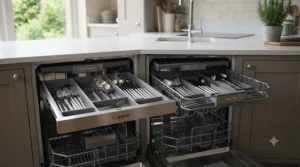
This is the pick for most households renovating a kitchen who want strong performance without stepping into premium pricing — it’s the volume seller for good reason. Reviewers consistently note the VarioDrawer cutlery tray as a standout over traditional cutlery baskets, and aggregated sentiment is strongly positive on quietness and capacity, with the most common criticism being that the D energy rating, while respectable, sits a notch below Bosch’s very top tiers.
Pros:
- ✅ Genuinely strong balance of price, capacity and features
- ✅ Independently tested by Which? rather than relying on marketing claims
- ✅ SpeedPerfect cuts wash time significantly when needed
Cons:
- ❌ D energy rating, not Bosch’s most efficient available
- ❌ Six programmes is fewer than higher Bosch tiers offer
Sitting in the £450-£550 range, the Bosch Series 4 SMV4HVX00G is arguably the single most sensible Bosch purchase on this list for typical family use.
3. Bosch Series 6 SMV6ZCX10G — premium features at Bosch pricing
Step up to Series 6 and the improvements are less about headline capacity and more about refinement — the sort of detail that shows up after six months of daily use rather than on the showroom floor.
As part of the Series 6 range, it typically adds more advanced load sensors and enhanced drying technology over Series 4, which translates into noticeably better results on mixed loads containing plastics — historically the weak point for most dishwashers regardless of brand. Here’s what to weigh: the fully integrated design and quieter 40-44 dB operating range make this a strong choice for open-plan kitchens where noise genuinely matters, but you’re paying a meaningful premium over Series 4 for what are, in practice, incremental rather than transformative improvements. Reviewers consistently rate this tier highly for consistency across different load types, with several noting they no longer bother pre-rinsing dishes before loading, a genuine time-saver that reflects the improved sensor technology doing its job.
This suits households who run their dishwasher daily and want the reassurance of better sensor technology handling variable loads without manual intervention. Aggregated feedback is positive overall, with the main criticism being that at this price point, some buyers start genuinely weighing it against entry-level Miele models — which is precisely the comparison this article exists to help with.
Pros:
- ✅ Noticeably better handling of mixed loads including plastics
- ✅ Quieter operation than Series 4, suited to open-plan kitchens
- ✅ Enhanced sensor technology reduces need for pre-rinsing
Cons:
- ❌ Meaningful price jump over Series 4 for incremental gains
- ❌ Starts overlapping with entry Miele pricing
Usually priced in the £650-£800 range, the Bosch Series 6 SMV6ZCX10G sits right at the point where the bosch vs miele dishwasher decision genuinely gets interesting.
4. Bosch Series 8 — Bosch’s quietest, most advanced model
At the very top of the Bosch range sits Series 8, built specifically for design-focused kitchens where both performance and near-silent operation matter equally.
This tier introduces Bosch’s most advanced drying technology, an Auto Plus programme that automatically adjusts water temperature and time for optimum results without manual input, and Max Flex Pro baskets designed for maximum loading flexibility and stability. Based on the spec comparison with the rest of the Bosch range, the jump from Series 6 to Series 8 is genuinely about the “won’t be able to hear it running” threshold — operating in roughly the 39-42 dB range, this is where Bosch starts directly competing with Miele on quietness rather than just on price. The Extra Clean Zone feature, which ensures thorough coverage even for items in the top rack, addresses a genuine historical weak spot across the dishwasher category generally, not just for Bosch.
This is the pick for households who want Miele-adjacent quietness and performance but are committed to staying within the Bosch ecosystem, perhaps due to matching kitchen appliances or existing Home Connect integration. Aggregated review sentiment is strongly positive on quietness and drying performance specifically, with the honest caveat that at this price, buyers genuinely owe it to themselves to compare directly against the entry-level Miele G5000 covered next.
Pros:
- ✅ Among the quietest dishwashers Bosch produces
- ✅ Auto Plus programme removes guesswork from settings
- ✅ Max Flex Pro baskets offer genuine loading flexibility
Cons:
- ❌ Priced close enough to entry Miele that the comparison is unavoidable
- ❌ Diminishing returns over Series 6 for occasional users
Expect the Bosch Series 8 to sit in the £850-£1,050 range, making it Bosch’s direct answer to anyone tempted by Miele but hesitant about the price jump.
5. Miele G5000 series — best affordable route into Miele ownership
This is where the Miele side of the comparison begins, and it’s worth being upfront: “affordable” here is relative to the rest of the Miele range, not to Bosch’s entry tier.
Starting from around £899, the G5000 series offers room for up to 14 place settings, adjustable baskets, a 3D Multiflex cutlery tray, and has received Which? Best Buy and Eco Buy recognition on selected models. What most buyers overlook about buying into Miele at this tier is that you’re still getting Miele’s core engineering philosophy — the brand tests all models and core components through 5,600 simulated dishwashing cycles during development, designed to represent roughly 20 years of typical use. Reviewers consistently note that noise levels in the 42-44 dB range put the G5000 roughly on par with Bosch’s Series 300-500 equivalent tiers, meaning you’re not paying extra purely for quietness at this specific price point — the premium is more about build materials and long-term engineering confidence.
This suits buyers who want to start their relationship with Miele’s build quality and after-sales reputation without committing to flagship pricing, treating the dishwasher as a genuine long-term kitchen investment. Aggregated sentiment is very positive on wash consistency and basket flexibility, with the main criticism being that feature-for-feature, an equivalently priced Bosch Series 6 or Series 8 model can match or exceed it on paper specs.
Pros:
- ✅ Genuine entry into Miele’s engineering and testing standards
- ✅ Which? Best Buy and Eco Buy recognition on selected models
- ✅ 3D Multiflex cutlery tray and adjustable baskets aid flexibility
Cons:
- ❌ No genuine budget option — starts at premium Bosch pricing
- ❌ Feature-for-feature, comparably priced Bosch models can match it
At £850-£1,000, the Miele G5000 series is the realistic starting point for anyone who’s decided build quality and longevity matter more than upfront cost.
6. Miele G7000 (mid-trim, e.g. G7110 SC) — AutoDos automation and A-rated efficiency
Step into the G7000 range and Miele’s signature technology — automatic detergent dosing — becomes available, which genuinely changes the day-to-day experience of using the machine.
AutoDos with integrated PowerDisk automatically dispenses the correct amount of detergent for each cycle based on load size and soil level, removing one of the most common sources of poor cleaning results: guessing at detergent quantity. The spec sheet won’t tell you this, but user reports suggest this single feature is what most G7000 owners mention first when asked what they’d miss most if they switched back to a standard machine. Models in the G7000 range achieve the highest available A energy rating, and use as little as 6 litres of water on the Auto programme — genuinely less water than filling a kitchen sink — while operating in the 40-42 dB range.
This is the pick for households who wash dishes daily and want the convenience of never manually dosing detergent again, alongside genuinely class-leading energy and water efficiency. Reviewers consistently report high satisfaction with consumption tracking, since the G7000 range provides accurate readings after every wash so you can actually see the savings rather than taking the A rating on faith. The honest trade-off is that AutoDos requires proprietary PowerDisk refills rather than standard tablets, which is a genuine ongoing cost and convenience consideration.
Pros:
- ✅ AutoDos genuinely removes detergent guesswork from every wash
- ✅ Highest A energy rating with water use as low as 6 litres per cycle
- ✅ Consumption tracking shows real savings, not just a rating claim
Cons:
- ❌ Requires proprietary PowerDisk refills, an ongoing cost
- ❌ Meaningful price step up from the G5000 series
Typically priced in the £1,050-£1,300 range, the Miele G7000 mid-trim is where Miele’s genuine technological edge over Bosch becomes most obvious.
7. Miele G7000 (flagship trim, e.g. G7280 SCVi) — quietest, most premium overall
At the very top sits Miele’s flagship trim, and this is genuinely the quietest dishwasher covered in this entire guide.
Select models in this trim include an ExtraQuiet wash cycle that Miele states emits just 38 dBA — genuinely comparable to a quiet office space — alongside three full-size stainless steel spray arms, one dedicated to each rack, for more thorough and even coverage than a shared spray arm design. Based on the spec comparison with every other model here, the combination of AutoDos, the highest A energy rating, and genuinely class-leading noise levels is what justifies the flagship pricing for buyers who’ve decided this is a “buy once, keep for two decades” purchase rather than a mid-cycle kitchen refresh item. Reviewers consistently describe the drying performance and finish quality as noticeably ahead of every other model on this list, attributing it to the combination of Miele’s heat exchanger drying and the more sophisticated sensor array at this tier.
This is unambiguously the pick for households prioritising near-silent operation, hosting frequently in open-plan spaces, or simply wanting the best available dishwasher regardless of cost. Aggregated sentiment is extremely positive, with the only realistic criticism being the price itself — this is a considered purchase that needs to be weighed honestly against the “good enough for most people” case made by the mid-range Bosch models earlier in this list.
Pros:
- ✅ ExtraQuiet cycle at roughly 38 dBA — the quietest here
- ✅ Three dedicated spray arms improve coverage and consistency
- ✅ Combines AutoDos, A-rating and flagship build quality
Cons:
- ❌ The most expensive dishwasher on this entire list
- ❌ Genuinely difficult to justify unless you value every flagship feature
Generally priced in the £1,350-£1,650 range, the Miele G7000 flagship trim is the honest “money no object” answer to the bosch vs miele dishwasher question.
Practical Usage Guide: Getting the Most From Your Dishwasher
Whichever brand you land on, a handful of habits genuinely extend performance and lifespan, and they’re identical across both manufacturers.
In the first month, resist the urge to run every cycle on the highest-intensity programme — the Eco or Auto setting on most modern Bosch and Miele models actually cleans effectively at lower temperatures over a longer cycle, using less energy without sacrificing results. Set your water softener correctly during first setup (both brands include one, and both need it configured to your local water hardness), since an incorrectly set softener is one of the most common causes of cloudy glassware and limescale build-up over the first year. Clean the filter at the base of the machine every one to two weeks depending on usage — this is genuinely the single most-skipped maintenance task and the leading cause of drainage complaints and lingering odours on both brands. A useful optimisation trick specific to premium models: if your Bosch or Miele has a “Machine Care” or maintenance programme, run it monthly with an empty machine to clear grease and limescale build-up from the internal components before it becomes a genuine problem.
Real-World Scenarios: Matching a Brand to Your Household
Specs matter less once you picture an actual kitchen, so here are three genuinely common buyer profiles.
The first-time homeowner on a tight renovation budget needs reliable cleaning without overspending on features that won’t get used. The Bosch Series 2 SMS2ITW08G or Bosch Series 4 SMV4HVX00G both fit this brief comfortably, delivering strong day-to-day performance without premium pricing.
The family hosting regularly in an open-plan kitchen-diner has one clear priority: noise. The Bosch Series 8 and either Miele G7000 trim are the genuine contenders here, since running a dishwasher during a dinner party without anyone noticing is precisely what these models are engineered for.
The buyer who’s decided this dishwasher needs to last through a kitchen they’re not renovating again for 15-20 years should be looking seriously at either Miele G7000 trim. The higher upfront cost is offset by Miele’s testing regime and generally stronger longevity reputation, which matters considerably more over a genuinely long ownership period than it does over five years.
Bosch vs Miele Dishwasher: The Core Differences Explained
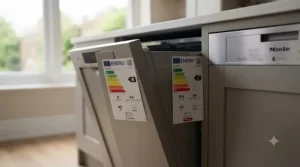
Stripping away individual model specs, the bosch vs miele dishwasher decision really comes down to three structural differences between the brands.
First, price positioning: Bosch competes across the entire market from budget to near-premium, while Miele deliberately occupies only the premium segment. This means the “cheapest Miele” and “most expensive Bosch” genuinely overlap in price, which is exactly where most buyers get stuck deciding. Second, philosophy on features: Miele’s AutoDos and PowerDisk system represents a genuinely different approach to detergent dosing that Bosch doesn’t currently replicate, while Bosch counters with a wider range of Home Connect smart features spread across more price tiers. Third — and this is where independent repair data gets genuinely interesting — reliability research is more split than brand reputation suggests: some industry surveys and technician polls rate Bosch as marginally more reliable in the first few years, while other manufacturer-reported service data gives Miele a slight edge, and Miele’s own internal testing claims components are built for roughly 20 years of use. In practice, both brands are considered genuinely reliable by appliance repair professionals, and the honest takeaway is that model-specific build quality varies more than brand-wide generalisations suggest.
Best Quiet Dishwasher: Bosch vs Miele Noise Levels Compared
If noise is your deciding factor, here’s the direct comparison rather than marketing claims in isolation.
| Tier | Bosch (dB) | Miele (dB) |
|---|---|---|
| Entry | 46-48 dB (Series 2) | Not available — no entry tier |
| Mid | 42-48 dB (Series 4) | 42-44 dB (G5000) |
| Upper-mid | 40-44 dB (Series 6) | 40-42 dB (G7000 mid) |
| Flagship | 39-42 dB (Series 8) | 38-40 dB (G7000 flagship) |
Looking at the table, the gap between brands at equivalent price points is genuinely narrower than reputation suggests — a Bosch Series 8 at roughly 39-42 dB is audibly close to an entry Miele G5000 at 42-44 dB, despite a meaningful price difference. For context, 40 dB is roughly the level of a quiet library, while 50 dB is closer to normal conversation, so the difference between a 42 dB and a 38 dB machine is noticeable but not dramatic in most kitchens. If genuinely silent operation in an open-plan space is non-negotiable, the flagship Miele G7000 and its 38 dBA ExtraQuiet cycle remains the best quiet dishwasher on this entire list, but for most households a mid-tier Bosch delivers noise levels that are perfectly liveable with.
Energy Efficient Dishwasher: How Bosch and Miele Compare
UK energy labels for dishwashers run from A (most efficient) to G (least efficient), showing energy use per 100 cycles on the eco setting, alongside water consumption and noise. According to guidance from the Energy Saving Trust, dishwasher energy labels also display capacity and noise information alongside consumption, making them genuinely useful for direct model comparison rather than relying on marketing claims alone.
| Model | Energy Rating | Approx. Water Use (Eco cycle) |
|---|---|---|
| Bosch Series 2 | E | Higher than premium tiers |
| Bosch Series 4 | D | Moderate |
| Bosch Series 6/8 | C-D typically | Moderate-low |
| Miele G5000 | A-B typically | Low |
| Miele G7000 (both trims) | A | As low as 6 litres |
The table tells a fairly clear story: Miele’s G7000 range consistently achieves the top A rating with genuinely class-leading water use, while Bosch’s efficiency improves as you move up the range but doesn’t quite match Miele’s top tier even at Series 8. Over a typical 10-15 year ownership period running a cycle daily, the difference between a D-rated and A-rated dishwasher can add up to meaningful savings on energy bills, though the higher purchase price of Miele’s most efficient models means the payback period is genuinely long — this is a case where the more energy efficient dishwasher isn’t automatically the cheaper one overall.
✨ Weighing up which model fits your kitchen?
🔍 Compare the full spec sheets side by side and check current pricing before you commit — a five-minute comparison now can save considerable running costs over the next decade.
How to Choose Between Bosch and Miele
A practical, numbered framework for narrowing your decision.
- Set your real budget ceiling first. If it’s genuinely under £600, Miele isn’t in play — focus your comparison within the Bosch range instead.
- Decide how much daily convenience matters to you. If manually dosing detergent every wash genuinely annoys you, Miele’s AutoDos is a meaningful quality-of-life upgrade worth the premium.
- Check your kitchen layout for noise sensitivity. Open-plan kitchen-diners benefit more from investing in quietness than closed-off kitchens where the door stays shut during cycles.
- Think in terms of ownership length, not just purchase price. A 20-year expected lifespan on a £1,200 Miele works out cheaper per year than a £500 Bosch replaced every 8 years.
- Confirm your local water hardness and softener needs, since hard-water areas benefit more from models with robust water softener systems, which both brands offer but calibrate slightly differently.
- Read independent test data, not just star ratings. Which? and similar independent testers assess cleaning, drying and noise under controlled conditions, giving a more reliable picture than aggregated star ratings alone.
- Factor in installation type. Freestanding, semi-integrated and fully-integrated models vary in price within both ranges, so compare like-for-like installation types rather than across categories.
Build Quality & Longevity: Which Brand Lasts Longer
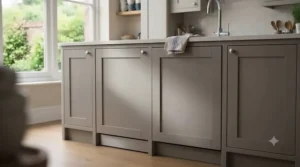
This is arguably the single most debated point in any bosch vs miele dishwasher discussion, and the honest answer is genuinely more nuanced than brand loyalty suggests.
Miele’s own development testing simulates 5,600 wash cycles per model — roughly equivalent to five cycles a week for 20 years — and the brand markets this explicitly as its longevity benchmark. Independent industry commentary broadly supports Miele lasting longer on average, citing tighter in-house component manufacturing and more robust internal engineering as contributing factors, particularly around the pump, motor and door mechanism assemblies. That said, several independent reliability surveys and technician polls rate Bosch as equally or even marginally more reliable within the crucial first five years of ownership, largely because Bosch’s simpler mechanical systems have fewer points of potential failure than Miele’s more feature-dense engineering. The honest synthesis: Bosch tends to be the more consistently reliable choice in the short-to-medium term, while Miele’s build quality is more specifically engineered for exceptional longevity across a much longer ownership horizon, provided routine maintenance is kept up.
Spare Parts Availability: Bosch vs Miele
Build quality only tells half the story — what happens when a part eventually does fail matters just as much for total cost of ownership.
Bosch benefits from a considerably wider parts ecosystem, both official and third-party, largely because Bosch sells significantly more units across a broader range globally, which supports a bigger secondary market for compatible components. This generally translates into faster repair turnaround and lower parts costs when something does go wrong, since generic and third-party parts compete with official pricing. Miele, by contrast, manufactures the large majority of its own components in-house at its German factories, giving the brand tighter quality control but a narrower, more specialised parts supply chain — repairs are more likely to require official Miele parts and Miele-trained technicians, particularly for proprietary systems like AutoDos. In practice, this means Bosch repairs tend to be both cheaper and faster to arrange, while Miele repairs, though less frequently needed according to the brand’s own longevity claims, typically cost more and may involve a longer wait for specialist parts or engineers when they are required.
After Sales Service & Warranty Compared
Warranty terms and the on-the-ground service experience differ meaningfully enough between these brands to genuinely influence a buying decision.
Bosch typically offers a standard warranty extendable to five years on registration, covering electronics and racks for the extended period even where full parts-and-labour coverage narrows after the first year. Miele generally provides a similarly structured warranty, often extendable further for a fee given the brand’s premium positioning and the longer expected lifespan of its products. Whichever brand you choose, it’s worth knowing your baseline statutory protections sit independently of any manufacturer warranty — under UK consumer law, faulty goods are covered by rights to a repair, replacement or refund regardless of what the manufacturer’s warranty terms state, and registering your appliance with the manufacturer makes it easier to be contacted in the event of a safety recall. Anecdotally, Bosch’s larger UK service network and call centre presence tend to mean shorter waits for a first appointment, while Miele’s smaller, more specialised technician base is frequently praised in aggregated feedback for depth of product knowledge once an engineer does arrive, even if the initial booking window is sometimes longer.
Common Mistakes When Choosing Between Bosch and Miele
A handful of avoidable errors come up repeatedly in aggregated buyer feedback and appliance forums.
The most common is comparing an entry Bosch directly against a flagship Miele and concluding “Miele is so much better,” when the fairer comparison is against Bosch’s own upper tiers, where the feature gap narrows considerably. A close second is under-budgeting for Miele specifically — buyers sometimes assume all premium German brands sit in similar price brackets, then discover Miele’s entry point alone exceeds what they’d budgeted for a mid-range Bosch. Buyers also regularly overlook installation type mismatches, comparing a freestanding Bosch price against an integrated Miele price without adjusting for the genuine cost difference between the two formats. Finally, plenty of people focus entirely on purchase price and skip researching spare parts availability and after-sales service until something actually breaks — by which point it’s too late to factor into the original decision.
Long-Term Cost & Total Cost of Ownership
Purchase price is only the opening figure; running costs, expected repairs and lifespan all factor into what a dishwasher genuinely costs you over time.
A typical dishwasher cycle costs somewhere between 15p and 30p in electricity depending on the programme and energy rating, meaning daily use adds up to somewhere around £55-£110 annually purely in running costs, before water and detergent. A more efficient A-rated Miele can save a meaningful amount annually in running costs compared with a D or E-rated entry Bosch, but that saving needs to be weighed against a purchase price that’s often several hundred pounds higher upfront — the payback period genuinely depends on how many cycles you run per week. Factoring in expected lifespan changes the picture again: if a £1,200 Miele genuinely lasts 18-20 years against a £500 Bosch lasting 10-12 years and being replaced once, the annualised cost gap narrows considerably, sometimes favouring Miele outright once running cost savings are included. The honest conclusion is that there’s no universally “cheaper” brand over the long term — it depends heavily on how often you run the machine, your local energy prices, and whether the more expensive model genuinely reaches its full expected lifespan.

Frequently Asked Questions
❓ Is Miele really better built than Bosch, or is that just brand reputation?
❓ Which is the best quiet dishwasher, Bosch or Miele?
❓ Are Miele spare parts harder to get than Bosch parts in the UK?
❓ Is an energy efficient dishwasher worth paying extra for?
❓ Does Bosch or Miele have better after sales service in the UK?
Conclusion
If there’s one honest takeaway from putting these seven models side by side, it’s that the bosch vs miele dishwasher question doesn’t have a single correct answer — it has a correct answer for your specific budget, kitchen and priorities. For most households renovating on a realistic budget, the Bosch Series 4 remains the sensible default, delivering the bulk of what a dishwasher needs to do without premium pricing. If quietness and daily convenience genuinely matter more than upfront cost, the Bosch Series 8 narrows the gap to Miele considerably for meaningfully less money. And if you’ve decided this purchase needs to last two decades with class-leading efficiency and near-silent operation, either Miele G7000 trim is the honest, considered choice — just go in with realistic expectations about spare parts availability and repair costs down the line.
Whichever you choose, the fundamentals matter more than the badge: set your water softener correctly, clean the filter regularly, and use the eco or auto programme more often than the intensive one. Do that, and either brand should give you many years of reliable, genuinely unremarkable dishwashing — which, frankly, is exactly what you want from a dishwasher.
✨ Ready to compare current prices?
💬 Check today’s pricing on your shortlisted model and see how the numbers stack up against your household’s actual usage.
Recommended for You
- Best Portable Dishwasher UK 2026: 7 Top Picks, No Plumbing
- Best Compact Dishwasher UK 2026: 7 Countertop Picks Ranked
- 7 Best Slimline Dishwasher for Small Kitchen (2026)
Disclaimer: This article contains affiliate links. As an Amazon Associate, I earn from qualifying purchases. If you purchase products through these links, we may earn a small commission at no additional cost to you.
✨ Found this helpful? Share it with your friends! 💬🤗
