In This Article
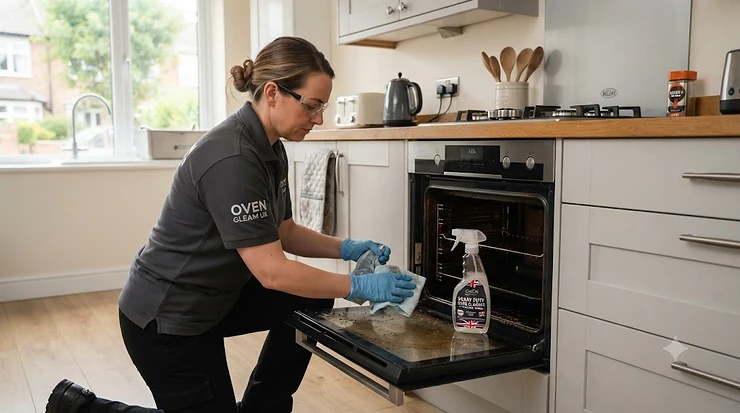
There’s a particular kind of despair that sets in when you finally open the oven door properly — not just to check on a roast, but to actually look — and discover a crust of carbon so thick it could pass for volcanic rock. If that’s you right now, welcome. You’re not alone, and no, you haven’t ruined your oven beyond saving.
A heavy duty oven cleaner is a fast-acting degreasing product, usually built around an alkaline agent like sodium hydroxide, formulated to break down carbonised fat and burnt food residue that ordinary sprays simply bounce off. Unlike a quick wipe-round product meant for weekly maintenance, these formulas are engineered for the stuff that’s been baking on, layer by layer, for months or years — the kind of grime that laughs at washing-up liquid and a sponge.
This guide is built around real, currently available products — not marketing copy lifted from a listing page. We’ve pulled together genuine specifications, aggregated review sentiment, and honest comparative analysis so you can pick the right cleaner for your specific mess, whether that’s a light monthly grease film or an oven that hasn’t been touched since the last general election. We’ll cover budget sprays, no-scrub soak kits, and genuinely industrial-strength options used by catering professionals, so there’s something here whatever your patience level and whatever your oven’s done to deserve this.
Quick Comparison Table
Short on time? Here’s the fast version before we get into the detail.
| Product | Format | Best For | Price Range |
|---|---|---|---|
| HG Oven, Grill & BBQ Cleaner Spray | Caustic spray | Fastest budget results | Under £10 |
| Oven Pride Complete Oven Cleaning Kit | Soak-bag system | No-scrub convenience | £8-£15 range |
| Mr Muscle Oven Cleaner | No-scrub spray (3-pack) | Regular 30-minute cleans | £9-£13 range |
| Easy Off Heavy Duty Oven Cleaner | Aerosol foam | Imported heavy-duty power | £9-£13 range |
| Dr. Beckmann Oven Cleaner Active Gel | Active gel | Glass doors and racks | Under £9 |
| Oven Mate Complete Deep Clean Kit | Soak-bag system | Years of built-up grime | £20-£29 range |
| Clover Vanquish Heavy Duty Oven & Food Plant Cleaner | 20% NaOH gel, 5L | Industrial-strength trade use | £25-£41 range |
Looking at the spread above, the split really comes down to how you’d rather spend your effort: sprays like HG and Mr Muscle ask for a bit of scrubbing but work fast and cheap, while soak-bag kits like Oven Pride and Oven Mate trade a longer wait time for almost zero elbow grease. Clover Vanquish sits in its own category entirely — it’s the same chemistry catering kitchens rely on, sold in a size that reflects that. None of these is objectively “best”; the right pick depends on how bad your build-up is and how much scrubbing you’re prepared to do to save a few pounds.
💬 Just one click — help other make better buying decisions too!😊
Top 7 Heavy Duty Oven Cleaners: Expert Analysis
1. HG Oven, Grill & BBQ Cleaner Spray — fastest-acting budget spray
The standout here is speed: on a lukewarm oven, HG Oven, Grill & BBQ Cleaner starts visibly softening grease within minutes rather than the half-hour some rivals demand. It’s a sodium hydroxide-based spray, applied to a warmed (not hot) oven interior, left to work, then wiped or lightly scrubbed away with a damp cloth.
The formula’s real-world trick is heat-activation — the instructions specifically recommend warming the oven to lukewarm first, which speeds the chemical reaction against baked-on fat considerably compared with a cold application. That single step is the difference between a five-minute wipe-down and a frustrating scrub session, and it’s a detail plenty of buyers miss on first use.
This one suits people who want a straightforward, no-frills spray for moderate grease rather than years of solid carbon, and who don’t mind a brief scrub on stubborn patches. Reviewers consistently report that it performs well on grills and baking trays as well as oven interiors, though several note the smell is stronger than some UK-branded alternatives and ventilation is genuinely necessary, not optional.
Pros:
- ✅ Heat-activated formula speeds up cleaning time
- ✅ Works on grills, trays and BBQs, not just ovens
- ✅ Widely available and consistently one of the best-selling options
Cons:
- ❌ Strong odour reported by multiple reviewers
- ❌ Requires warming the oven first for best results
Typically priced under £10 for a 500ml spray, this sits firmly in the budget bracket and represents solid value for moderate, regular grease rather than heavily neglected ovens.
2. Oven Pride Complete Oven Cleaning Kit — best no-scrub soak-bag system
Oven Pride‘s standout feature is the reusable plastic soak bag included in the kit — you pour the cleaner in, seal your racks and grill inside, and let chemistry do the scrubbing instead of your arm. It comes with safety gloves included, which is a small but genuinely useful touch for a caustic product.
The 500ml bottle covers both the bag-soak method for racks and a direct-application method for the oven interior, meaning one purchase handles the whole appliance rather than just the racks. Because the bag holds concentrated cleaner in constant contact with the metal for the full soak period, it tends to shift stubborn carbon that a quick spray-and-wipe would leave behind.
Based on the format, this is best suited to people who genuinely dislike scrubbing and are willing to wait 30 minutes to overnight for the soak to do the work. Aggregated reviews are strongly positive, with a large number of ratings clustering around “cleans first time” sentiment, though a minority of reviewers mention the bag can be fiddly to seal without spillage on a first attempt.
Pros:
- ✅ Reusable soak bag drastically cuts down scrubbing
- ✅ Safety gloves and cleaning bag included in the kit
- ✅ Very high review volume with consistently strong ratings
Cons:
- ❌ Bag can be awkward to seal without practice
- ❌ Best results need a longer soak than a quick spray
In the £8-£15 range depending on pack size, Oven Pride offers strong value for the convenience it buys, particularly for anyone who’d rather set a timer than wield a scraper.
3. Mr Muscle Oven Cleaner — best 30-minute no-scrub formula
The standout on Mr Muscle Oven Cleaner is its claimed 30-minute no-scrub action, sold as a three-pack of 300ml cans that gives you enough product for several cleans or one very thorough one across oven, hob and grill.
Formulated specifically to loosen burnt-on grease and food spills without a mechanical scrub, it’s applied as a foam that clings to vertical oven walls rather than sliding straight to the bottom — a detail that matters more than it sounds, since plenty of cheaper sprays simply run off before they’ve had time to work. The three-can format also means you’re not stuck buying a full new bottle every time you need a top-up clean.
This is a sensible pick for households doing a fairly regular deep clean — say, every couple of months — rather than tackling years of accumulated carbon in one sitting. Reviewers frequently mention it being a trusted, long-standing supermarket staple, with a strong volume of positive ratings, though some note that genuinely thick, aged carbon still needs a second application or light scrubbing to fully shift.
Pros:
- ✅ No-scrub formula works in around 30 minutes
- ✅ Three cans cover oven, hob and grill separately
- ✅ Long-established, widely trusted supermarket brand
Cons:
- ❌ Heavy, aged carbon may need a repeat application
- ❌ Foam runs low quickly on very large oven interiors
Priced around £9-£13 for the multipack, it’s solidly mid-range and represents good value for regular maintenance cleaning rather than a one-off rescue job.
4. Easy Off Heavy Duty Oven Cleaner — best imported heavy-duty aerosol
Easy Off Heavy Duty Oven Cleaner stands out as one of the most consistently best-selling heavy-duty options on Amazon, an imported US brand that’s built a strong UK following specifically among people who’ve tried domestic sprays and found them lacking on genuinely stubborn build-up.
Its aerosol foam format allows application to a cold oven — a genuine practical advantage, since you’re not waiting for the appliance to warm up or cool down safely before you start. The foam is designed to cling to vertical and overhead surfaces, working into baked-on carbon over a longer dwell time than some of the faster domestic sprays offer.
Based on the spec sheet and aggregated review sentiment, this is the pick for buyers who’ve already tried a “normal” oven cleaner and been disappointed by it — it’s positioned and reviewed as a step up in raw cleaning power. The trade-off reviewers mention most often is a stronger chemical smell than UK-market equivalents, plus the fact that it’s an imported product, which occasionally affects stock availability.
Pros:
- ✅ Works on a cold oven, no warming required
- ✅ Foam clings well to vertical and overhead surfaces
- ✅ Strong track record as a best-seller in its category
Cons:
- ❌ Stronger odour than some UK-formulated alternatives
- ❌ Import status can mean occasional stock gaps
Generally found in the £9-£13 range per can, it’s competitively priced for the extra cleaning power reviewers consistently report.
5. Dr. Beckmann Oven Cleaner Active Gel — best gel for racks and glass doors
The standout with Dr. Beckmann Oven Cleaner Active Gel is its “ultra power” gel consistency, which is thick enough to sit on angled and vertical surfaces — including the inside of a glass oven door — without immediately sliding off, something thin liquid sprays consistently struggle with.
Because it’s a gel rather than a foam or liquid spray, application tends to be more controlled, which matters when you’re working around seals, hinges and glass rather than a flat metal interior. It’s also marketed as suitable for barbecue grates, extending its usefulness beyond just the oven itself.
This is a strong option for anyone whose main frustration is a grimy glass door or racks rather than the oven cavity itself, since the gel’s cling factor really shows its value on non-horizontal surfaces. Aggregated feedback is generally positive on cleaning power, with the gel format specifically praised for reducing drips and mess during application compared with looser sprays.
Pros:
- ✅ Thick gel clings to vertical surfaces and glass doors
- ✅ Controlled application reduces drips and mess
- ✅ Doubles up for BBQ grates and racks
Cons:
- ❌ Smaller coverage area than larger multipacks
- ❌ Still a caustic-strength product requiring full PPE
Typically under £9, it’s one of the more affordable heavy-duty options here, particularly good value if glass and racks are your main pain point.
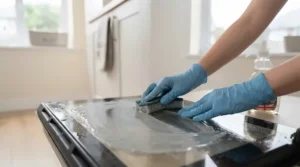
6. Oven Mate Complete Deep Clean Oven Kit — best for years of built-up grime
Oven Mate‘s defining feature is the overnight soak-bag method, purpose-built for the kind of carbon that’s had years, not weeks, to bond to your oven’s interior. It’s consistently rated among the highest-reviewed deep-clean kits on Amazon, with review volume in the thousands and a strong average rating.
The kit works by lining the oven cavity or a soak bag with cleaning solution and leaving it to sit overnight, rather than the 20-45 minute window most sprays ask for. That extended contact time is precisely what makes it effective against multi-layer carbon deposits that a same-day spray simply won’t fully penetrate — chemistry needs time against genuinely old grease, and this kit is built around giving it that time.
This is the product to reach for if your oven hasn’t been properly cleaned in a year or more, or if you’ve inherited a property with an oven in an unknown state. It’s priced at a premium relative to standard sprays, which reflects both the kit contents and, frankly, the amount of grief it saves you. The trade-off is patience — this isn’t a same-afternoon fix, and the smell during the soak, while contained, is still noticeable in an unventilated kitchen overnight.
Pros:
- ✅ Overnight soak method built for heavy, aged build-up
- ✅ Consistently among the highest-rated deep-clean kits
- ✅ Complete kit removes need for separate accessories
Cons:
- ❌ Requires overnight commitment, not a quick fix
- ❌ Premium price versus standard spray cleaners
Sitting in the £20-£29 range, it’s the priciest non-industrial option on this list, but for oven cleaner for years of build-up, the extended dwell time genuinely justifies the extra cost.
7. Clover Vanquish Heavy Duty Oven & Food Plant Cleaner — best industrial-strength trade pick
Clover Vanquish is, without exaggeration, the professional standard — a 20% sodium hydroxide gel manufactured by Christeyns and used across UK commercial kitchens, catering operations, and food processing plants rather than typical domestic use. If “heavy duty” in the name of a supermarket spray sounds like marketing, this is what the real thing looks like.
Its thick gel formula clings to vertical surfaces in ovens, fryers, grills, extraction hoods and filters, applied neat without dilution and left for 5-30 minutes depending on soil severity before agitation and a thorough rinse. Because the concentration is so much higher than domestic sprays, contact time is dramatically shorter even against severe, carbonised, multi-year deposits — a job that might take a domestic gel overnight can be tackled by Vanquish in under half an hour.
This is squarely aimed at people running a small catering operation, a food van, a pub kitchen, or anyone with an oven so far gone that domestic products have already failed. It is genuinely not for casual domestic use without care — full PPE, ventilation and strict avoidance of aluminium and zinc surfaces are non-negotiable, and it should not be treated as a drop-in replacement for a supermarket spray. Trade feedback consistently praises its raw cutting power on carbonised fat that domestic products can’t touch.
Pros:
- ✅ Industrial 20% sodium hydroxide cuts through severe carbon fast
- ✅ Trusted professional standard in UK commercial kitchens
- ✅ Versatile across ovens, fryers, hoods and grills
Cons:
- ❌ Requires full PPE and strong ventilation to use safely
- ❌ Not suitable for aluminium, zinc or alkali-sensitive finishes
At around £25-£41 for 5 litres depending on retailer, the cost per clean is genuinely very low for anyone with repeated heavy-duty needs, though this is an industrial strength oven cleaner and should be treated with the respect its concentration demands.
Practical Usage Guide: Deep Cleaning Your Oven Step by Step
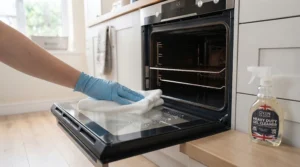
Buying the right product is half the job — using it properly is the other half, and it’s the half most people rush. Start by removing everything removable: racks, trays, thermometers, anything not bolted in. Give the oven a dry wipe first to clear loose debris, because cleaner working through crumbs instead of directly on grease is cleaner wasted.
Ventilation comes next, and it’s not optional. Open a window, ideally turn on an extractor fan, and if you’re using anything caustic-based, keep the kitchen door open too. Apply your chosen product according to its specific instructions — some want a lukewarm oven, others want it stone cold, and mixing those up genuinely changes how well the product performs. Set a timer rather than guessing; oversoaking a spray-on product past its recommended window rarely helps and can make residue harder to rinse off cleanly.
For the first 30 days with a new heavy duty oven cleaner, the most common mistake is skipping the second pass on corners and the door seal channel — carbon loves to hide in tight recesses that a flat wipe misses. A soft-bristled brush or old toothbrush gets into these spots without scratching enamel. Once you’ve wiped away the residue, do a final rinse with clean water and a damp cloth; leftover alkaline residue can leave a white haze and, more importantly, can produce fumes the next time the oven heats up if it isn’t fully removed. Run the empty oven at a moderate temperature for ten minutes afterwards with the window open, just to burn off any final trace before you cook in it again.
Real-World Scenarios: Matching the Cleaner to Your Kitchen
The weeknight cook with a moderate mess. You bake fairly often, roast most Sundays, and grease has built up steadily over a couple of months rather than years. A spray-based product like Mr Muscle Oven Cleaner or HG Oven, Grill & BBQ Cleaner fits this pattern well — 30 minutes, wipe down, done, with minimal disruption to your evening.
The new-house inheritor. You’ve moved somewhere and the oven clearly hasn’t been touched by its previous owner in a very long time. This is exactly the oven cleaner for years of build-up scenario, and it calls for an overnight soak product like Oven Mate or Oven Pride‘s full-strength application, giving the chemistry the time it genuinely needs against multi-layer carbon.
The small catering or takeaway operator. You’re running a food van, small café kitchen, or pub grill, cleaning multiple times a week under real time pressure, and domestic products just aren’t cutting it fast enough or often enough. This is where Clover Vanquish earns its keep — a 5-30 minute contact time against severe carbon, in a 5-litre size built for repeated professional use rather than the occasional domestic clean.
Problem → Solution: Fixing Common Deep Cleaning Mistakes
Problem: the cleaner isn’t touching thick black carbon. This usually means insufficient contact time, not a weak product — thick carbon needs longer dwell, so switch to a soak-bag method or extend the recommended time within the product’s safety guidance rather than scrubbing harder.
Problem: white residue left after wiping. This is typically leftover alkaline product that hasn’t been rinsed thoroughly. A second pass with a clean, damp cloth and plain water, repeated until the cloth comes away clear, usually resolves it.
Problem: strong chemical smell lingering after cleaning. Ventilate properly during application, then run the empty oven briefly at a moderate temperature with a window open once cleaning is finished — this helps burn off any final trace of residue rather than letting it linger into your next meal.
Problem: cleaner damaged a coated or non-stick surface. Always check your oven’s manual before using a caustic product on a self-clean-coated interior, as heavy duty oven cleaners can strip specialist non-stick or catalytic linings. When in doubt, a gel rather than a spray gives you more control to avoid coated areas entirely.
Problem: racks still look dull after cleaning. Racks often need a separate soak in hot water and detergent alongside your oven cleaner treatment, since baked-on residue on wire racks behaves differently to flat enamel surfaces and can need more mechanical scrubbing to finish the job.
What is a Heavy Duty Oven Cleaner?
A heavy duty oven cleaner is a concentrated degreasing product, typically alkaline-based around sodium hydroxide (caustic soda), designed to break down carbonised, baked-on grease and food residue that standard multi-purpose sprays can’t shift. It’s applied directly to the oven interior, left for a set contact time, then wiped or rinsed away, and it ranges from domestic supermarket sprays through to the industrial-strength gels used in commercial kitchens.
How to Choose a Heavy Duty Oven Cleaner
- Assess how bad the build-up actually is. Light, regular grease suits a quick spray; years of carbon genuinely needs a soak-based product with a much longer contact time.
- Check what your oven is made of. Aluminium trim, non-stick coatings and self-clean linings can be damaged by strong alkaline products, so always check the manual first.
- Weigh scrubbing time against product cost. No-scrub soak kits cost more but save real effort; sprays cost less but usually need some manual agitation.
- Think about ventilation before you buy. Stronger, faster-acting formulas typically mean stronger fumes, so match the product to your kitchen’s airflow, not just your patience — and always have a plan for treating accidental skin or eye contact before you open the bottle, not after.
- Consider frequency of use. A three-can multipack suits regular maintenance; a single premium kit suits an occasional deep rescue.
- Factor in racks and glass separately. Some products excel on flat oven interiors but struggle on vertical glass doors — gels tend to cling better than thin liquids here.
- Match strength to the job, not the marketing. “Heavy duty” on a label doesn’t always mean industrial-strength — check the active ingredient concentration if you’re tackling genuinely severe carbon.
Industrial Strength Oven Cleaner vs Everyday Sprays
There’s a meaningful gap between a supermarket spray labelled “heavy duty” and a genuinely industrial strength oven cleaner like Clover Vanquish, and it comes down to concentration and intended use case rather than branding. Domestic sprays typically sit at lower active-ingredient percentages, formulated to be reasonably safe for occasional home use with standard ventilation. Professional-grade gels, by contrast, are formulated at concentrations like 20% sodium hydroxide, designed for trained users cleaning multiple times a week in commercial kitchens with proper PPE and extraction as standard practice.
| Factor | Domestic Spray (e.g. Mr Muscle) | Industrial Gel (Clover Vanquish) |
|---|---|---|
| Typical contact time | 20-30 minutes | 5-30 minutes (on severe soil) |
| Intended user | Home cook, occasional use | Trained catering/trade staff |
| Surface caution | General caution advised | Strict — no aluminium or zinc |
| Cost per clean | Higher per-use for small packs | Lower per-use at bulk volume |
The practical takeaway is that most domestic users don’t need industrial-strength product, and using one without the right PPE and ventilation habits is genuinely risky rather than just “extra strong.” If you’re a home cook facing an unusually bad oven, a soak-bag kit designed for domestic use will almost always be the safer and more appropriate choice over sourcing trade-only chemicals.
Oven Cleaner for Years of Build-Up: What Actually Works
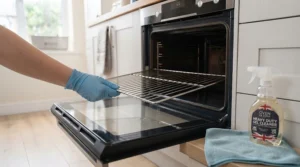
When carbon has had years rather than weeks to bond to an oven’s interior, it forms multiple hardened layers rather than a single film, and this changes what actually works. A quick spray-and-wipe product, however “heavy duty” its label, is fighting a losing battle against that kind of depth in a 20-minute window — the chemistry simply hasn’t had time to fully penetrate every layer.
What genuinely shifts years-old build-up is extended, uninterrupted contact time: overnight soak-bag kits like Oven Mate, full-strength application methods like Oven Pride‘s direct-to-oven approach, or professional-grade gels like Clover Vanquish applied for their full recommended dwell. Based on the spec comparison across these products, the pattern holds consistently — every option genuinely effective against severe, aged carbon either uses a much higher active-ingredient concentration or a dramatically longer contact time (often both). If you’ve tried a standard spray on a badly neglected oven and been disappointed, the product likely wasn’t wrong for the job in principle — it just wasn’t given, or built for, the time that job actually needs.
Self-Clean Ovens vs Chemical Deep Cleaning: Which Wins?
Many newer ovens include a pyrolytic self-clean function, which heats the interior to extreme temperatures (typically 400-500°C) to incinerate grease and food residue to ash, which you then simply wipe out once cooled. It’s a genuinely different approach to self-clean ovens versus chemical cleaners, and each has clear trade-offs worth weighing honestly.
Pyrolytic self-clean avoids chemical fumes entirely and needs no scrubbing, but the cycle typically takes 2-4 hours, uses a meaningful amount of electricity, and can produce its own smoke and smell as residue burns off — meaning good kitchen ventilation still matters. It’s also simply not an option if your oven doesn’t have the feature, and running the cycle too often can, over years, cause more wear on seals and elements than occasional chemical cleaning.
Chemical heavy duty oven cleaners, by contrast, work at room or lukewarm temperature, use no extra electricity, and suit any oven regardless of features — but they demand proper ventilation, PPE, and genuine care around eyes and skin given the alkaline chemistry involved. In practice, many households end up using both: a pyrolytic cycle for routine maintenance and a targeted chemical product like a gel for stubborn corners the heat cycle didn’t fully reach, particularly around door seals where pyrolytic heat can be less effective.
Safety, Regulations and COSHH: Using Caustic Oven Cleaners Responsibly
Most heavy duty oven cleaners rely on sodium hydroxide, and it’s worth being genuinely clear-eyed about what that means rather than treating the warning label as boilerplate. Sodium hydroxide is corrosive and classified under UK regulations as causing severe skin burns and serious eye damage on contact, which is precisely why every product in this guide specifies gloves, eye protection, and good ventilation as mandatory, not optional, precautions.
If you’re using these products in any kind of workplace setting — a café, food van, pub kitchen, or catering business — the Control of Substances Hazardous to Health (COSHH) Regulations legally require you to assess and control the risk from hazardous cleaning chemicals, which in practice means proper PPE, training, and ventilation as a formal requirement rather than a suggestion. Even in a domestic setting, the same underlying chemistry applies, so it’s worth taking it just as seriously at home.
Should skin or eye contact ever happen despite precautions, NHS guidance is to rinse the affected area with copious cool or lukewarm running water for around an hour and call 999 immediately for anything beyond the mildest contact — this isn’t a “wait and see” injury, and it’s worth reading that guidance in full before you ever need it, not while you’re panicking with a chemical burn.
Long-Term Cost & Maintenance
Working out true value means looking past the sticker price to cost-per-clean and how often you’ll realistically need to reach for the bottle. A £9 three-pack spray used every two months works out to roughly £1.50 per clean across a year of regular maintenance, which is genuinely economical for households that stay on top of grease before it hardens into carbon.
Soak-bag premium kits like Oven Mate, at £20-£29 for what’s usually a single thorough treatment, look expensive by comparison — but if that one clean genuinely resolves years of accumulated build-up that a cheaper spray would need three or four repeat attempts to even dent, the real cost-per-problem-solved often favours the premium option. For anyone cleaning multiple ovens or fryers regularly, such as a small catering operation, Clover Vanquish at roughly £5-£8 per litre in the 5L size becomes the most economical option by a wide margin, simply because the per-use cost drops sharply at that volume even though the upfront spend is higher.
The other maintenance factor worth planning for is prevention: a light wipe-down after major cooking sessions, before grease has a chance to bake on, genuinely reduces how often you need a heavy duty product at all — and every deep clean you avoid is money and time saved twice over. When a bottle is finally empty, don’t tip any residue down the sink; most councils accept small quantities of leftover household chemicals as hazardous waste at recycling centres rather than the general bin or the drain.
✨ Don’t Miss These Exclusive Deals!
🔍 Take your kitchen from crusted to spotless with these carefully selected picks. Click through to check current pricing and availability, and get your oven back to doing what it’s actually meant to do — cooking, not intimidating you every time you open the door!
Frequently Asked Questions
❓ Does heavy duty oven cleaner damage enamel?
❓ How long should I leave heavy duty oven cleaner on baked-on grease?
❓ Can I use oven cleaner on a self-clean oven?
❓ Is industrial strength oven cleaner safe for home use?
❓ What removes baked-on carbon fastest?
Conclusion
There’s no single “best” heavy duty oven cleaner because there’s no single kind of mess — a light monthly grease film and years of solid carbon are genuinely different problems that call for different tools. What matters is matching the product’s strength and contact time honestly to what you’re actually dealing with, rather than grabbing whatever’s cheapest or has the loudest “heavy duty” label on the front.
For most households facing regular, moderate build-up, a straightforward spray like Mr Muscle Oven Cleaner or HG Oven, Grill & BBQ Cleaner will do the job without fuss. If you’re staring down years of neglect, a soak-bag kit like Oven Mate or Oven Pride is worth the extra cost and patience. And if you’re running any kind of commercial kitchen, Clover Vanquish is the trade-standard choice for a reason. Whichever you choose, respect the chemistry, ventilate properly, and your oven — and your patience — will thank you.
Recommended for You
- Fume-Free Oven Cleaner: 7 Best UK Picks for 2026
- Eco-Friendly Kitchen Surface Cleaner: 7 Best UK Picks (2026)
- Kitchen Spray for Granite Worktops: 7 Best UK Picks (2026)
Disclaimer: This article contains affiliate links. As an Amazon Associate, I earn from qualifying purchases. If you purchase products through these links, we may earn a small commission at no additional cost to you.
✨ Found this helpful? Share it with your friends! 💬🤗
