
In This Article
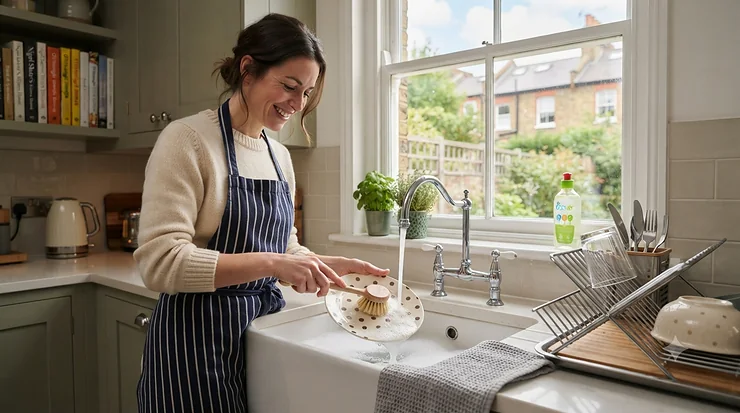
There’s a particular kind of domestic smugness that comes from a really good washing-up brush. You know the one — bristles stiff enough to shift baked-on porridge, a handle that doesn’t go soggy after a week, and (if you’re lucky) a soap dispenser that means you’re not forever hunting for the bottle of Fairy Liquid that’s mysteriously vanished behind the tap. It’s a small, unglamorous object, and yet almost every household in Britain reaches for one at least once a day.
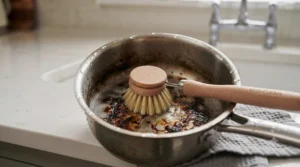
What is a washing-up brush? It’s a handled scrubbing tool, usually with stiff bristles set into a plastic, bamboo or beechwood head, used for hand-washing dishes, pots and pans without a sponge. Some versions build a soap reservoir into the handle; others use a replaceable head so the whole brush doesn’t need binning the moment the bristles wear down.
Here’s the thing, though: not every washing-up brush is doing the same job. A busy family kitchen scrubbing burnt lasagne trays five nights a week needs something different from a flat-share doing the odd mug and cereal bowl. Some people want the convenience of a built-in soap dispenser; others are actively trying to cut down on plastic waste and want a wooden washing-up brush with a replaceable head instead. This guide lines up seven genuinely available UK products across that whole spectrum, plus honest advice on sink tidies and washing-up bowls, so you can match the brush to the sink rather than the other way round.
According to the Food Standards Agency’s home hygiene guidance, effective cleaning of kitchen equipment is one of the simplest ways to reduce the risk of harmful bacteria spreading onto food — which makes the humble dish brush more important than it usually gets credit for.
Quick Comparison Table: Washing-Up Brushes at a Glance
| Product | Best For | Soap Dispenser | Price Range |
|---|---|---|---|
| OXO Good Grips Soap Dispensing Dish Brush | All-round daily use | Yes | around £8–£12 |
| Redecker Wooden Dish Brush with Replaceable Head | Plastic-free kitchens | No | around £8–£14 |
| Scrub Daddy Dish Daddy Wand | Textured scrubbing power | Yes | around £8–£13 |
| Joseph Joseph Palm Scrub | Compact, one-handed control | Yes | around £8–£12 |
| Joseph Joseph SinkTech Soap Dispensing Brush | Premium, swappable heads | Yes | around £14–£20 |
| Brabantia Sinkside Washing Up Brush | Sink-side storage via suction | No | around £7–£11 |
| Holikme 3-Pack Bamboo Dish Brush Set | Budget multi-brush households | No | around £9–£13 |
Scanning across the table, the split that matters most is soap dispenser versus none. Five of the seven brushes here dispense washing-up liquid straight through the handle, which genuinely speeds up daily use, while the Redecker Wooden Dish Brush with Replaceable Head and Holikme 3-Pack Bamboo Dish Brush Set deliberately skip that feature in favour of simpler, more repairable, lower-plastic construction. Neither approach is objectively better — it depends whether you value convenience or longevity more, which is exactly what the rest of this guide unpacks properly.
💬 Just one click — help others make better buying decisions too!😊
Top 7 Washing-Up Brushes: Expert Analysis
Seven real, currently available dish brushes spanning budget, mid-range and premium, each assessed on genuine specs, honest analysis, and aggregated review sentiment rather than marketing copy.
1. OXO Good Grips Soap Dispensing Dish Brush — the reliable all-rounder with a genuinely useful refill system
The standout feature is simplicity done well: pop off the base of the handle, refill with washing-up liquid, and a firm press on the bristle head releases exactly enough soap for the job. No fiddly buttons, no separate dispensing mechanism to break.
Based on the spec comparison against rivals, the stiff nylon bristles are rated safe for non-stick cookware, which matters more than it sounds — several budget brushes on the market use bristles hard enough to scratch coated pans, and OXO’s softer-grade nylon avoids that specific complaint. The non-slip handle also genuinely helps in soapy, wet-handed conditions, a small detail that becomes noticeable the first time a cheaper brush slips out of your grip mid-scrub. Reviewers consistently note that the refill mechanism remains reliable well beyond the first few months, which isn’t true of every soap-dispensing brush on the market — some cheaper alternatives develop sticky or clogged dispensing valves within weeks.
Pros:
- ✅ Simple, reliable pop-off refill mechanism
- ✅ Bristles safe for non-stick cookware
- ✅ Non-slip handle for wet, soapy hands
Cons:
- ❌ No replaceable head once bristles wear out
- ❌ Bulkier to store than palm-style brushes
At around £8–£12, this sits as the sensible default pick — check current price before buying, as retailers vary.
2. Redecker Wooden Dish Brush with Replaceable Head — the plastic-free option built to outlast you
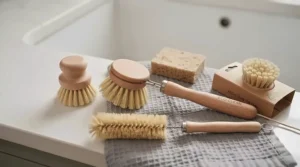
The standout advantage is right there in the name: when the tampico fibre bristles eventually wear down, you unscrew the head and fit a fresh one rather than throwing the whole brush away. Made from untreated beechwood by a German brush-maker operating since 1935, this is about as far from disposable as a washing-up brush gets.
Key specs with real-world meaning: the roughly 4cm or 5cm head sizes available mean you can pick stiffer bristles for scrubbing pans or softer ones for glassware, and because every replacement head is designed to fit every handle size, you’re not locked into a single configuration once you’ve bought in. On paper this means a genuinely lower long-term cost and less plastic waste than any brush on this list — over several years of replacement heads, you’ll spend a similar amount to buying two or three disposable plastic brushes, but generate a fraction of the landfill plastic. Aggregated feedback from UK eco-homeware retailers consistently praises the natural bristle’s scrubbing power on stubborn, dried-on food, with the main criticism being that untreated wood needs to be kept out of standing water to avoid warping over time.
Pros:
- ✅ Replaceable head avoids binning the whole brush
- ✅ Sustainable beechwood and natural fibre construction
- ✅ Stiff bristles handle dried-on food well
Cons:
- ❌ No built-in soap dispenser
- ❌ Wood needs drying care to avoid warping
Handles run around £8–£14, with replacement heads typically £4–£6 — genuinely good long-term value for a plastic-free kitchen.
3. Scrub Daddy Dish Daddy Wand — the soap-dispensing brush with a texture-changing twist
The standout feature is Scrub Daddy’s signature FlexTexture material fitted to a soap-dispensing wand: the scrubbing head softens in warm water for gentler jobs and firms up in cold water for tackling baked-on grime, essentially giving you two brushes in one depending on tap temperature.
Here’s what to weigh: like the OXO, this dispenses washing-up liquid on demand through the handle, but it pairs that with a genuinely detachable, replaceable scrubbing head rather than committing you to one fixed brush for life. That combination — dispenser plus replaceable head — is relatively rare on this list and makes it a strong middle-ground pick for anyone torn between convenience and repairability. Reviewers frequently highlight the non-scratch, non-abrasive properties as reassuring for non-stick pans and delicate glassware, and the odour-resistant claim tends to hold up well compared with traditional sponges, which is consistent with the wider research on brushes drying faster than sponges and harbouring less bacteria as a result.
Pros:
- ✅ Temperature-reactive FlexTexture scrubbing head
- ✅ Soap dispenser plus replaceable head combined
- ✅ Non-scratch, safe for non-stick cookware
Cons:
- ❌ Replacement heads cost more than basic bristle brushes
- ❌ Bright colourways won’t suit every kitchen
Typically priced around £8–£13, this is the pick for households wanting dispenser convenience without giving up on repairability.
4. Joseph Joseph Palm Scrub — the compact one-handed brush for tight spaces
The standout feature is the palm-held form factor: rather than a long-handled wand, this sits directly in your hand with a push-button soap reservoir on top, giving noticeably more control for detailed scrubbing around cutlery, glass rims and awkward pan corners.
What most buyers overlook about this shape is that it isn’t simply a style choice — the compact size makes it genuinely easier to manoeuvre inside narrow glasses or mugs than a long-handled brush, where the extra length can work against you. It comes with its own storage stand, letting the brush drip-dry upright rather than sitting in a puddle on the draining board, which is a small but consistently appreciated detail in aggregated customer feedback. The trade-off is reach: for scrubbing the inside of a deep stockpot or reaching into a full washing-up bowl without wetting your knuckles, a longer-handled brush like the OXO has the edge.
Pros:
- ✅ Compact palm design for detailed scrubbing
- ✅ Easy-fill soap reservoir with simple push button
- ✅ Includes matching drip-dry storage stand
Cons:
- ❌ Less reach than long-handled brushes
- ❌ Smaller reservoir needs refilling more often
Priced around £8–£12, this suits smaller kitchens and anyone who prefers close-up control over reach.
5. Joseph Joseph SinkTech Soap Dispensing Brush with Replacement Head — the premium system with genuinely swappable parts
The standout advantage is the full SinkTech system: a refillable soap-dispensing handle paired with interchangeable heads — including a standard bristle head, a scourer head, and a wire head for stubborn cookware — plus a stainless-steel stand with an integrated drip tray for storage.
Based on the spec comparison, this is the most modular brush on this list by some distance, letting one handle serve multiple cleaning jobs rather than buying separate tools. Here’s what to weigh honestly, though: aggregated review data on this exact range shows a real split — Joseph Joseph’s own published rating sits at roughly 3.7 out of 5 from close to 80 reviews, with a recurring theme in the feedback being that interchangeable heads can work loose or detach during firm scrubbing, even though buyers who’ve stuck with it often praise the flexibility of having three head types on one dispensing handle. That’s a genuinely useful data point rather than marketing gloss: this is a brush that rewards gentle-to-moderate scrubbing more than aggressive pan-scouring.
Pros:
- ✅ Three interchangeable head types on one handle
- ✅ Stainless-steel stand with drip tray included
- ✅ Refillable soap dispenser built into handle
Cons:
- ❌ Interchangeable heads can loosen under firm scrubbing
- ❌ Priciest bristle brush in this comparison
At around £14–£20, the value case rests on genuinely using the multi-head system rather than defaulting to a single head permanently.

6. Brabantia Sinkside Washing Up Brush with Suction Cup Holder — the classic bristle brush that sorts its own storage
The standout feature is the suction cup holder built into the design, which sticks the brush to the inside of your sink or splashback rather than leaving it to drip onto the worktop or sit in a puddle at the bottom of the washing-up bowl. It’s a genuinely simple fix to a mildly annoying everyday problem.
Key specs with real-world meaning: the polyester bristles are chosen specifically to hold their shape rather than splaying out with use, and a built-in scraper edge on the head handles baked-on spots that bristles alone struggle with. There’s no soap dispenser here — this is a straightforward, no-frills bristle brush — but the ergonomic handle grips reliably even when wet, and Dutch manufacturer Brabantia has built its reputation since 1919 on exactly this kind of unglamorous, well-engineered household basic. Aggregated reviews describe this as a genuine step up from supermarket own-brand brushes, with the suction holder specifically called out as more useful in practice than buyers initially expected.
Pros:
- ✅ Suction cup holder keeps sink tidy
- ✅ Built-in scraper for baked-on food
- ✅ Shape-retaining polyester bristles
Cons:
- ❌ No soap dispenser included
- ❌ Suction grip can weaken on textured sinks
Sitting around £7–£11, this is a strong value pick for anyone who wants a proper bristle brush without paying for dispenser mechanics.
7. Holikme 3-Pack Bamboo Dish Brush Set — the budget multi-brush option for busy kitchens
The standout feature is simply getting three brushes for one modest price, each with a bamboo handle and a mix of natural sisal and palm fibre bristles — useful for households that want a dedicated brush for pans, another for delicate glassware, and a spare on standby.
Here’s what to weigh against the pricier options on this list: build quality reviews are honestly more mixed than for established brands like Redecker or Brabantia, with the natural fibre bristles softening faster under daily heavy use than tampico or nylon equivalents. That’s the realistic trade-off of a genuinely low price point, and it doesn’t make this a poor purchase — it makes it a sensible way to try wooden, plastic-free brushes across multiple sink tasks before committing to a premium single brush, or a practical option for a shared house where brushes tend to go missing or get commandeered for the wrong job.
Pros:
- ✅ Three brushes for a genuinely low price
- ✅ Natural bamboo and plant-fibre construction
- ✅ Useful variety for different cleaning tasks
Cons:
- ❌ Bristles soften faster than premium equivalents
- ❌ No soap dispenser or replaceable heads
Around £9–£13 for the full set of three, this is the pick for cost-conscious, multi-brush households.
Setting Up and Maintaining Your Washing-Up Brush: A Practical Guide
A washing-up brush earns its keep over months and years, not days, so a handful of small habits from week one genuinely extend its useful life — and this is exactly the detail an Amazon product listing skips over entirely.
If your brush has a soap dispenser, fill it roughly two-thirds full rather than right to the top; overfilling tends to cause dribbling around the seal, which is the single most common early complaint across soap-dispensing brushes of every brand. After each use, give the head a firm shake over the sink and stand the brush bristle-down (or on its dedicated stand, if it has one) so water drains away rather than pooling at the base — pooled water is what shortens the life of both plastic and wooden handles alike.
For ongoing maintenance, a weekly soak in hot water with a splash of white vinegar keeps bristles genuinely fresh and helps prevent the slight sour smell that builds up in any brush used daily. Wooden brushes like the Redecker need slightly different care: avoid leaving the head submerged in the washing-up bowl for extended periods, and let it air-dry fully between uses rather than storing it head-down in a closed caddy, which traps moisture against the wood.
The most common first-month mistake is treating a soap-dispensing brush as a full substitute for a proper washing-up liquid bottle — for genuinely greasy loads, most reviewers find topping up with a squirt of liquid directly onto plates still gets better results than relying on the dispenser alone. Reserve the built-in dispenser for the bulk of everyday scrubbing, and keep a bottle nearby for the occasional heavily soiled roasting tin.
Real-World Scenarios: Which Washing-Up Brush Actually Suits Your Kitchen?
Specs only tell half the story, so here are three genuine household profiles matched to the products above, with the reasoning spelled out.
The busy family kitchen with school-night pan duty. Multiple meals a day, frequently burnt-on food, and little patience for fiddly gadgets. The OXO Good Grips Soap Dispensing Dish Brush or Scrub Daddy Dish Daddy Wand both make sense here: reliable dispensers that speed up repetitive daily washing-up, paired with bristles genuinely tough enough for baked-on grime without scratching non-stick pans.
The eco-conscious household trying to cut kitchen plastic waste. Already using refillable cleaning products and keen to reduce what goes in the bin. The Redecker Wooden Dish Brush with Replaceable Head is the obvious fit: sustainable materials, a head that can be swapped rather than binned, and genuinely lower long-term plastic waste than any dispensing brush on this list.
The small flat or shared house on a tight budget. Limited storage, several housemates, and brushes that have a habit of disappearing or getting misused. The Holikme 3-Pack Bamboo Dish Brush Set solves this cleanly — enough brushes to go around, low enough cost that losing one isn’t a disaster, and no dispenser mechanism to argue over refilling.

How to Choose a Washing-Up Brush: 6 Expert Criteria
- Soap dispenser versus standalone bristle brush. Dispensing brushes genuinely speed up daily washing-up, but standalone bristle brushes like the Brabantia Sinkside Washing Up Brush avoid the maintenance and eventual wear of a dispensing mechanism.
- Bristle material for your typical washing-up load. Stiff tampico or sisal fibre, as used on the Redecker Wooden Dish Brush, suits scrubbing dried-on food; softer nylon, as on the OXO Good Grips, is gentler on non-stick and glassware.
- Replaceable head versus whole-brush replacement. A replaceable-head design, like the Redecker or Joseph Joseph SinkTech, spreads cost over years and reduces plastic waste compared with binning a full brush every few months.
- Handle length for your sink depth and washing-up bowl. Long-handled brushes reach the bottom of a full washing-up bowl without wetting your hands; palm brushes like the Joseph Joseph Palm Scrub trade reach for close-up control.
- Storage method already available at your sink. A brush with a suction holder, like the Brabantia, needs a smooth surface to grip; a brush without one will need a sink tidy or caddy nearby instead.
- Number of brushes your household actually needs. A single premium brush suits one or two people; busy or shared kitchens often do better with a multi-pack like the Holikme 3-Pack Bamboo Dish Brush Set.
Common Mistakes When Buying a Washing-Up Brush
The most frequent mistake is buying purely on soap-dispenser novelty without checking bristle stiffness — a dispenser is genuinely convenient, but if the bristles are too soft for your typical washing-up load (heavy roasting tins, cast iron, baked-on casserole dishes), you’ll still reach for a scourer alongside it anyway, undermining the point of the purchase.
A second common error is ignoring replacement head availability before buying. Some systems, like Redecker’s, make replacement heads widely available from UK independent retailers years after purchase; others are harder to source once a specific model is discontinued, effectively turning a “replaceable head” brush into a disposable one anyway.
Thirdly, buyers frequently underestimate storage. A brush with a suction cup, like the Brabantia, needs a genuinely smooth, non-textured surface to grip reliably — buying one for a heavily textured stainless-steel sink often leads to disappointment and a brush that ends up loose on the draining board regardless.
Finally, don’t overlook material safety for your specific cookware: nylon and softer bristle brushes are generally the safer default for non-stick pans, while stiffer natural fibre brushes, though excellent on stainless steel and cast iron, can mark delicate coated surfaces over time if used indiscriminately.
Dish Brush vs Sponge: What the Evidence Actually Shows
It’s worth addressing this directly, because plenty of households still default to a sponge out of habit rather than genuine preference. Peer-reviewed research examining consumer washing-up practices across several European countries — including the UK — found that used dish brushes generally carried lower bacterial loads than sponges collected from the same households, with brushes’ open bristle structure allowing them to dry faster between uses than the dense, water-retaining structure of a sponge.
That doesn’t mean a dish brush is a sterile object — no kitchen tool fully is — but it does support switching from sponge to brush as a genuinely sensible hygiene upgrade rather than just a stylistic preference. Reviewers across nearly every product in this comparison specifically mention that brushes feel less “grim” day to day than sponges, and the faster drying time is the practical reason why.
The takeaway for choosing between the seven brushes above: whichever you pick, letting it dry fully between uses (ideally on a stand or via suction holder, off the wet worktop) matters more for hygiene than which specific brand or bristle type you choose.
Washing-Up Brush for Different Households and Cooking Styles
Solo or couple households, mostly light washing-up: a single mid-range dispensing brush like the Joseph Joseph Palm Scrub covers daily mugs, plates and cutlery comfortably without needing a second brush in rotation.
Families cooking from scratch most nights: heavier, more frequent pan duty benefits from a genuinely stiff-bristled brush — the OXO Good Grips or Brabantia Sinkside Washing Up Brush both handle baked-on food more confidently than softer, palm-style alternatives.
Shared houses and student kitchens: multiple brushes reduce arguments over hygiene and ownership; the Holikme 3-Pack Bamboo Dish Brush Set is a straightforward, low-cost way to give everyone their own without overspending.
Eco-conscious and low-waste kitchens: the Redecker Wooden Dish Brush with Replaceable Head remains the standout, particularly for anyone already avoiding single-use plastics elsewhere in the kitchen.
Sink Tidy Guide: Keeping Brushes, Sponges and Soap Actually Organised
A good washing-up brush is only half the picture — where it lives between uses matters just as much, which is exactly why a sink tidy is worth genuine consideration rather than an afterthought purchase.
A basic sink tidy or caddy, such as the widely available simplywire Sink Tidy/Caddy, splits the space beside your taps into dedicated compartments: one for a washing-up liquid bottle, one for brushes and scourers, and often a small rail for hanging a dishcloth to dry. The genuine benefit over simply leaving items loose on the draining board is drainage — most sink tidies use a removable, ventilated tray that lets excess water drip away from brushes and sponges rather than pooling underneath them, which ties directly back to the hygiene point above about faster drying reducing bacterial growth.
For a slightly more premium option, ranges like the Joseph Joseph Caddy Kitchen Sink Area Organiser add a magnetic or clip-on design that fastens to the side of the sink rather than sitting loose, which is worth considering if worktop space is tight or if a loose caddy tends to get knocked around during busy cooking.
Problem-to-solution quick reference: a mouldy-smelling caddy usually means the drip tray isn’t being removed and cleaned often enough — most are dishwasher safe or wipe clean with hot soapy water; a caddy that won’t stay put on a curved or textured sink edge needs a non-slip pad or a clip-on design rather than suction alone; and an overcrowded caddy is usually a sign it’s time to retire an old, worn-out brush rather than squeezing in yet another item.
Washing-Up Bowl Guide: Do You Actually Need One?
It’s a genuinely reasonable question, especially with more modern kitchens fitted with single, deep sinks. The honest answer is that a washing-up bowl still earns its place for one specific reason: water saving. According to Waterwise’s guidance on reducing household water use, using a washing-up bowl to catch water rather than running the tap continuously can cut water wastage during washing-up by as much as half.
A rectangular plastic bowl like the widely stocked Addis Rectangular Washing Up Bowl, typically around 9.5 litres, holds a standard UK dinner plate comfortably and includes raised feet that let water drain away underneath when it’s tipped to dry, plus carry handles for emptying it without slopping water across the floor. Reviewers consistently mention that the size is well judged for everyday family plates, and that the bowl fits neatly into most standard single or double kitchen sinks without overhanging awkwardly.
Here’s what to weigh honestly: a washing-up bowl adds one more item to store when not in use, and some people simply find it easier to wash up directly in a plugged sink. But for anyone on a water meter, or simply trying to reduce household water use, the bowl remains one of the cheapest, lowest-effort changes available — and pairs naturally with a stiff-bristled brush like the Brabantia Sinkside Washing Up Brush for scrubbing dishes efficiently within a smaller volume of water.
Long-Term Cost, Sustainability and Maintenance
Cost per use is a more useful measure than upfront price for a washing-up brush, because the cheapest option isn’t always the cheapest over time. A basic plastic brush at the very bottom of the market might need full replacement every two to three months under daily use, while a Redecker Wooden Dish Brush with Replaceable Head or Joseph Joseph SinkTech system spreads that cost across replacement heads instead of full units, often working out similar or cheaper over a year or two while generating noticeably less plastic waste.
That waste angle is worth taking seriously. Standard mixed plastic dish brush heads and handles are not universally accepted in UK kerbside recycling collections, and guidance from Recycle Now on how different household plastics are processed makes clear that not all plastic items are equally easy to recycle at home — small mixed-material items like brush heads, with bristles bonded into a plastic base, are a particularly awkward case for most local authority collections. A genuinely replaceable-head brush sidesteps that problem to a meaningful degree, since only the smaller head needs disposing of rather than the entire handle and reservoir.
Practical maintenance that extends any brush’s life regardless of type: rinse thoroughly after every use to prevent detergent residue building up and hardening bristles, avoid leaving any brush permanently wet at the base of a washing-up bowl, and retire a brush the moment bristles start splaying outward and losing their scrubbing shape rather than pushing on with a genuinely worn-out tool.
What to Expect: Real-World Performance
On paper, most washing-up brushes look broadly similar — bristles, handle, maybe a dispenser. In practice, the differences show up within the first week of daily use. Soap-dispensing brushes like the OXO Good Grips and Scrub Daddy Dish Daddy Wand genuinely speed up routine washing-up by removing the need to keep reaching for a separate bottle, which matters more than it sounds across a busy week of cooking.
Bristle stiffness becomes obvious fast, too: a brush like the Brabantia Sinkside Washing Up Brush, with its firmer polyester bristles and built-in scraper, handles baked-on roasting tin residue with noticeably less elbow grease than the softer nylon on palm-style brushes, which are better suited to glassware and delicate items instead.
Expect a short adjustment period with any soap-dispensing brush — getting the fill level and press pressure right takes a few uses to dial in, and overfilling in the first week is a genuinely common early mistake that resolves itself quickly once you’ve found the right amount.

FAQ
❓ What's the difference between a washing-up brush and a dish brush?
❓ Are washing-up brushes more hygienic than sponges?
❓ How often should I replace a washing-up brush head?
❓ Do I need a sink tidy if I already have a washing-up bowl?
❓ Can a wooden washing-up brush go in the dishwasher?
Conclusion
There’s no single “best” washing-up brush, and this comparison has hopefully made the reasons clear: a busy family scrubbing pans every night has genuinely different needs from a plastic-conscious flat-share or a couple mostly washing mugs and cutlery. The OXO Good Grips Soap Dispensing Dish Brush remains a sensible, reliable default for most kitchens, while the Redecker Wooden Dish Brush with Replaceable Head is the clear pick for anyone prioritising sustainability over convenience, and the Holikme 3-Pack Bamboo Dish Brush Set solves budget and shared-household needs in one go.
Whichever brush ends up by your sink, pairing it with proper drainage — a sink tidy or suction holder rather than a soggy heap on the draining board — and a washing-up bowl if water use matters to you, rounds out a genuinely well-thought-through sink setup rather than just a single good purchase.
✨ Don’t Miss These Exclusive Deals!
🔍 Take your kitchen sink setup to the next level with these carefully compared brushes, caddies and bowls. Click through on any highlighted product to check current pricing and availability before making your final choice. A few pounds spent wisely here means genuinely easier washing-up for years to come!
Recommended for You
- Best Food Waste Disposer UK 2026: 7 Top Picks
- How to Clean a Smelly Kitchen Bin: 7 Fixes That Work (2026)
- Best Kitchen Bin Cleaner UK: 7 Top Picks for 2026
Disclaimer: This article contains affiliate links. As an Amazon Associate, I earn from qualifying purchases. If you purchase products through these links, we may earn a small commission at no additional cost to you.
✨ Found this helpful? Share it with your friends! 💬🤗
