In This Article
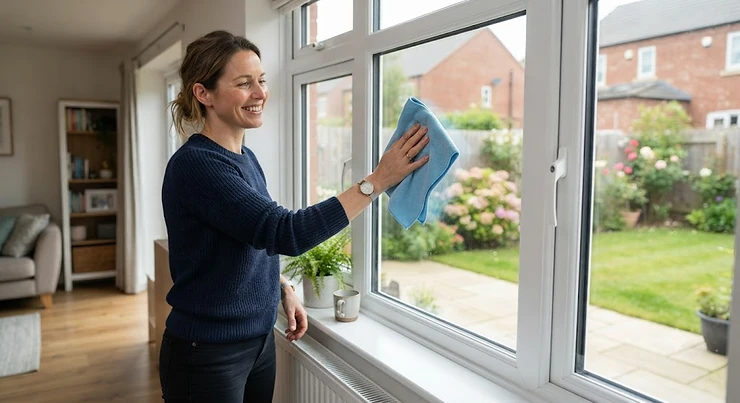
There’s a specific kind of domestic defeat that comes from stepping back after cleaning a window, catching the afternoon light at just the wrong angle, and seeing an entire constellation of streaks you thought you’d wiped away. A microfibre cloth for windows is a cleaning cloth woven from ultra-fine split synthetic fibres, typically a polyester-polyamide blend, engineered to lift and trap dirt, grease and dust mechanically rather than smearing it around the way cotton or paper towels tend to. As the general overview of the material on Wikipedia explains, these fibres are split during manufacturing into shapes far finer than a human hair, which is what gives them their trademark ability to clean glass using little more than water.
We’ve spent this research digging through real UK product listings, independent testing, and manufacturer specifications rather than repeating marketing copy, because “streak-free” and “lint-free” are two of the most overused phrases in the cleaning aisle. Below are seven real microfibre cloths spanning budget multi-packs through to dedicated two-cloth detailing systems, an honest breakdown of what actually makes one outperform another, and the unglamorous detail — GSM, weave type, edge finishing — that decides whether a cloth genuinely leaves glass streak-free or just claims to.
One quick note before we get into it: this article contains Amazon affiliate links, clearly flagged throughout, and every price mentioned is a range rather than a fixed figure, since Amazon prices shift more often than British weather.
Quick Comparison: Best Microfibre Cloth for Windows at a Glance
| Product | Type | GSM/Weave | Best For | Price Range |
|---|---|---|---|---|
| E-Cloth Window Cleaner Kit | Two-cloth system | Waffle weave + polish cloth | Water-only streak-free finish | £12-£18 range |
| Autoglym Glass & Screen Cloths | 3-pack detailing set | Ultra-soft blend | Car & home glass detailing | £8-£14 range |
| Bilt Hamber Trace-Less Kit | Waffle + suede towels | Dedicated waffle/suede weave | Serious detailing enthusiasts | £15-£25 range |
| MagicWipe Microfibre Cloth | Dual-sided polishing cloth | 600 GSM | Heavy-duty all-purpose polishing | £8-£14 range |
| HOMEXCEL Microfibre Glass Cloths | 12-pack | Standard weave | Budget multi-room coverage | £8-£12 range |
| MR.SIGA Microfibre Cloth | 12-pack | Standard weave | Everyday all-purpose cleaning | £7-£11 range |
| Vileda Window Cloth | Single cloth | Classic weave | Trusted mainstream reliability | £3-£6 range |
Scanning the table, the split isn’t really about whether a cloth is “microfibre” — nearly everything here technically qualifies — it’s about weave engineering and GSM (grams per square metre), which is where genuine streak-free performance actually comes from. Dedicated detailing systems like the E-Cloth Window Cleaner Kit and Bilt Hamber Trace-Less Kit use a two-stage weave specifically engineered for glass, while the budget multi-packs from HOMEXCEL and MR.SIGA trade some of that specialisation for sheer everyday value and coverage. For most households, a genuinely dedicated glass cloth in the mid-range bracket delivers noticeably better results than a generic all-purpose multi-pack used on windows as an afterthought.
💬 Just one click — help others make better buying decisions too!😊
Top 7 Microfibre Cloths for Windows: Expert Analysis
1. E-Cloth Window Cleaner Kit — best water-only streak-free system
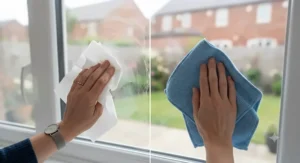
The standout feature on the E-Cloth Window Cleaner Kit is its two-cloth system: a damp waffle-weave Window Cloth to lift grime, followed by a dry Glass & Polishing Cloth to erase moisture and finish streak-free, all without any chemical spray. Specs point to an 80% polyester, 20% polyamide blend across both cloths, with the waffle-weave structure specifically engineered to grab and hold dirt in its raised pockets rather than just pushing it across the glass. What most buyers overlook about this system is that the two cloths are doing genuinely different jobs — treating them as interchangeable, rather than using the damp one first and the dry one second, is the single most common reason people don’t get the promised finish.
Based on the spec comparison, this sits as the most rigorously “systemised” product on this list, backed by a 100-wash promise that reviewers consistently reference as holding up in practice rather than being a marketing figure. Reviewers consistently report genuinely chemical-free streak-free results, with aggregated sentiment specifically praising the removal of fingerprints and light grease using nothing but water. A recurring theme in feedback is that the technique takes a wash or two to get used to, since it works best with a specific damp-then-dry motion rather than a single all-purpose wipe.
Pros:
- ✅ Two-cloth system genuinely separates lifting and polishing
- ✅ Works with just water, no chemical spray needed
- ✅ Backed by a 100-wash or one-year promise
Cons:
- ❌ Technique has a small learning curve versus a single all-purpose cloth
- ❌ Costs more per cloth than generic multi-packs
Price sits in the £12-£18 range at the time of research; for households wanting to cut chemical glass cleaner out entirely, reviewers consistently describe it as worth the premium over a generic pack.
2. Autoglym Glass & Screen Cloths — best dual-purpose car and home detailing set
The Autoglym Glass & Screen Cloths pack stands out by covering two distinct jobs in one set: two glass cloths for windows, mirrors and windscreens, plus a dedicated screen cloth safe for touchscreens and delicate interior trim. Specs describe an ultra-soft, absorbent microfibre blend designed to leave a crystal-clear, lint-free finish on both exterior and interior glass, and the cloths are explicitly designed to pair with the brand’s own glass cleaning spray for tougher marks, while still performing well used alone. What most buyers overlook about a detailing-brand cloth like this is that it’s engineered around the harder, larger surfaces of car glass as much as domestic windows, so it tends to handle bigger panes with fewer passes than a smaller all-purpose cloth.
Reviewers consistently note the cloths hold up well through repeated machine washes without fraying or losing effectiveness, and the inclusion of a separate screen cloth means people aren’t tempted to use their glass cloth on a smartphone or car infotainment display, which can otherwise transfer residue back onto windows later. Aggregated feedback highlights that this is a genuinely UK-manufactured product, which several buyers specifically call out as a reason for choosing it over unbranded imports.
Pros:
- ✅ Separate glass and screen cloths prevent cross-contamination of residue
- ✅ Engineered for both car glass and household windows
- ✅ Designed and manufactured in the UK
Cons:
- ❌ Smaller pack size than budget multi-packs for the price
- ❌ Best results still rely on pairing with the brand’s own glass spray for heavy grime
Typically priced in the £8-£14 range for the three-piece set, this is a strong pick for anyone who wants one product covering car and home glass without buying two separate sets.
3. Bilt Hamber Trace-Less Kit — best for serious detailing enthusiasts
The Bilt Hamber Trace-Less Kit earns its place through a dedicated waffle-weave and suede microfibre towel combination, paired with the brand’s own super-wetting glass cleaner, aimed squarely at car detailers and enthusiasts who treat glass cleaning as its own discipline rather than an afterthought. Specs point to a genuinely technical approach: the waffle-weave towel is designed to lift and trap grime and old sealant residue from automotive glass specifically, while the suede towel finishes without the fine lint that can show up under bright detailing lights. On paper this means the kit is engineered around the harshest test case — bug splatter, road film, wax haze on a windscreen — rather than light domestic dust.
Here’s what to weigh: this is a genuinely enthusiast-grade product, and honest analysis has to note that the price per cloth sits meaningfully above general household multi-packs, reflecting a UK detailing brand with a strong reputation among car care communities rather than a mainstream retail product. Reviewers consistently rate the combination of cleaner and towels as delivering a genuinely different level of finish on heavily soiled automotive glass compared with a generic domestic cloth, though several note that for straightforward household window cleaning, this level of specialism is more than most people need.
Pros:
- ✅ Waffle-weave and suede towels each serve a distinct, tested purpose
- ✅ Formulated specifically to tackle heavy automotive glass grime
- ✅ Strong reputation within the UK car detailing community
Cons:
- ❌ Priced at a premium versus general household cloths
- ❌ More specialism than most people need for simple home windows
Price typically sits in the £15-£25 range for the towel and cleaner combination, making it best suited to car owners and detailing enthusiasts rather than a first purchase for straightforward household window cleaning.
4. MagicWipe Microfibre Cloth (600 GSM) — best heavy-duty all-purpose polishing cloth
The standout figure on the MagicWipe Microfibre Cloth is its explicitly stated 600 GSM (grams per square metre) construction, considerably denser than the 250-320 GSM typical of everyday cleaning cloths, giving it noticeably more absorbency and cushioning per wipe. The dual-sided, diamond-wave design is marketed across kitchen worktops, glass, mirrors and cars alike, and on paper the higher GSM translates into a plusher, more durable cloth that can absorb more moisture before it needs wringing out mid-clean. What most buyers overlook about high-GSM cloths like this one is that density mostly affects absorbency and cushioning rather than streak-free performance on its own — weave and fibre quality still do most of the work on glass specifically.
Based on the spec comparison with the rest of this list, this sits as the plushest, most heavy-duty option here, which reviewers consistently link to strong performance on larger glass surfaces like patio doors and shower screens where absorbency matters as much as polish. Aggregated feedback notes that the diamond-wave texture on one side works well for tougher grime, while the smoother reverse side handles the final polish, though a common comment is that the thickness makes it slightly bulkier to fold into tight window corners than a thinner cloth.
Pros:
- ✅ 600 GSM density gives noticeably higher absorbency per wipe
- ✅ Dual-sided design separates scrubbing and polishing textures
- ✅ Performs well on larger glass surfaces like patio doors
Cons:
- ❌ Bulkier and less nimble in tight window corners than thinner cloths
- ❌ High GSM alone doesn’t guarantee streak-free results without the right weave
Typically priced in the £8-£14 range for a two-pack, it’s a strong pick for anyone prioritising absorbency and durability across a mix of glass and general surfaces.
5. HOMEXCEL Microfibre Glass Cleaning Cloths (12 Pack) — best budget multi-room coverage
The HOMEXCEL Microfibre Glass Cleaning Cloths earn their spot through sheer practical coverage: twelve lint-free, streak-free cloths at a genuinely budget price point, aimed at households wanting a fresh cloth in every room rather than washing and reusing one or two constantly. Specs point to a standard woven microfibre construction at 30x30cm, described by the brand as suitable across windows, glasses, mirrors, screens and stainless steel alike. On paper this means less specialisation than a dedicated glass system, but considerably more flexibility for households that want one type of cloth doing several jobs around the home.
What most buyers overlook about a large multi-pack like this is that having genuinely fresh, unused cloths on hand for each cleaning session tends to produce more consistent streak-free results than repeatedly reusing a single cloth that’s slowly picking up embedded grease from other surfaces. Reviewers consistently rate the value for money highly given the pack size, with aggregated sentiment noting reliable performance on glass and mirrors specifically, while a common complaint flags that colours can bleed slightly in the first wash if mixed with lighter fabrics.
Pros:
- ✅ Twelve cloths mean a fresh one for every room or task
- ✅ Genuinely lint-free performance on glass and mirrors
- ✅ Strong value per cloth compared with premium single-item kits
Cons:
- ❌ Colours can bleed slightly during the first wash
- ❌ Less specialised for glass specifically than a dedicated two-cloth system
Price typically falls in the £8-£12 range for the full twelve-pack, making it one of the strongest value-for-coverage picks on this list.
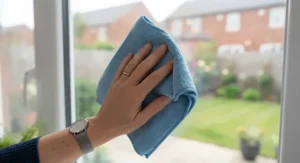
6. MR.SIGA Microfibre Cleaning Cloth (12 Pack) — best everyday all-purpose reliability
The MR.SIGA Microfibre Cleaning Cloth pack stands out for consistent, dependable everyday performance across a genuinely wide range of surfaces, with the twelve-pack format meaning windows are just one of many jobs these cloths handle without ever needing to hunt for a clean one. Specs describe a standard streak-free microfibre weave at 32x32cm, and reviewers have specifically highlighted its reliability as a “no surprises” all-purpose cloth rather than one engineered around any single specialist use case. On paper this makes it a genuinely sensible default cloth for a household cleaning cupboard, even if it isn’t purpose-built for glass the way a dedicated detailing set is.
Here’s what to weigh against the more specialised entries on this list: honest analysis has to note that a general-purpose cloth like this will get you a solid, streak-reduced result on windows, but won’t quite match a dedicated waffle-weave system on heavily soiled or large glass areas. Aggregated feedback consistently rates the durability through repeated washing highly, with several reviewers specifically noting these cloths remaining lint-free and effective well beyond the point cheaper alternatives start to fray or thin out.
Pros:
- ✅ Genuinely reliable, consistent results across many surface types
- ✅ Twelve-pack keeps a fresh cloth always available
- ✅ Holds up well through repeated washing without fraying
Cons:
- ❌ Not purpose-built for glass the way dedicated systems are
- ❌ Slightly less polish on very large or heavily soiled panes
Typically priced in the £7-£11 range, this is a dependable everyday choice for anyone wanting one all-purpose microfibre cloth type across the whole home.
7. Vileda Window Cloth — best trusted mainstream reliability
Rounding out the list, the Vileda Window Cloth leans on decades of brand recognition — the product line dates back to 1948 — to deliver straightforward, dependable streak-free and lint-free window cleaning without any frills. What most buyers overlook about a long-running mainstream product like this is that its simple, unchanged design is precisely the point: it’s been refined against genuinely broad consumer feedback over a very long product lifecycle rather than launched around a single trending feature. Specs point to a standard woven microfibre construction sized for handheld window cleaning, sold individually rather than in a multi-pack.
Based on the spec comparison with the rest of this list, it’s the most “no-nonsense” pick here: not the most technically engineered, not the cheapest per-cloth in bulk, but the one most UK households will already recognise from supermarket shelves. Aggregated sentiment consistently describes it as reliable rather than exceptional, delivering solid streak-free results on everyday household glass without the learning curve of a two-cloth system or the premium price of a detailing-branded set.
Pros:
- ✅ Long-established, widely trusted mainstream brand
- ✅ Simple, no-technique-required single-cloth use
- ✅ Genuinely streak-free and lint-free on everyday household glass
Cons:
- ❌ Sold as a single cloth rather than better-value multi-pack
- ❌ Less specialised performance than dedicated detailing systems
Price typically sits in the £3-£6 range for a single cloth, making it a low-commitment way to try a genuinely dedicated window cloth without buying a full kit.
Top 7 Products: Full Spec & Value Comparison
| Product | Format | GSM/Density | Weave Type | Best For |
|---|---|---|---|---|
| E-Cloth Window Cleaner Kit | 2-cloth kit | Standard | Waffle + polish weave | Chemical-free streak-free finish |
| Autoglym Glass & Screen Cloths | 3-pack | Standard | Ultra-soft blend | Car & home dual use |
| Bilt Hamber Trace-Less Kit | 2 towels + cleaner | Standard | Waffle + suede weave | Heavy automotive detailing |
| MagicWipe Microfibre Cloth | 2-pack | 600 GSM | Diamond wave, dual-sided | Absorbency on large glass |
| HOMEXCEL Microfibre Glass Cloths | 12-pack | Standard | Standard weave | Budget multi-room coverage |
| MR.SIGA Microfibre Cloth | 12-pack | Standard | Standard weave | Everyday all-purpose use |
| Vileda Window Cloth | Single cloth | Standard | Classic weave | Trusted simple reliability |
Reading across the table, GSM and weave type turn out to matter more than pack size when it comes to genuine streak-free performance on glass specifically — the MagicWipe‘s high 600 GSM figure delivers absorbency, while the E-Cloth and Bilt Hamber kits win on weave engineering rather than density. The large multi-packs from HOMEXCEL and MR.SIGA trade some of that specialisation for coverage and value, which suits households prioritising having a fresh cloth on hand over squeezing out the last percentage point of polish. If you want the single best streak-free result on glass specifically, the dedicated two-cloth systems win; if you want the best value across a whole household’s cleaning needs, the multi-packs edge it.
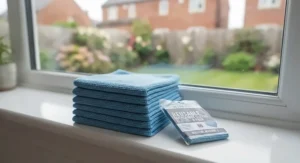
Practical Usage Guide: Getting a Streak-Free Finish Every Time
Technique matters just as much as the cloth itself when it comes to genuinely streak-free glass. Start by removing loose dust and debris with a dry pass before introducing any water, since wiping dust into damp streaks is one of the most common causes of a smeared finish regardless of cloth quality. Work in a consistent pattern — an S-shaped or top-to-bottom motion tends to outperform circular wiping, since it avoids re-depositing lifted dirt back onto an already-cleaned section, and always finish with a dry polishing pass to catch any remaining moisture before it evaporates into streak marks.
A common first-use mistake with two-cloth systems like the E-Cloth Window Cleaner Kit is treating both cloths as interchangeable rather than using the damp waffle-weave cloth to lift grime first and the dry polishing cloth second — skipping this order is the single most frequent reason people don’t get the promised finish. This lift-and-trap mechanism isn’t just marketing language either; clinical research on microfibre versus traditional cleaning methods has found ultramicrofibre materials perform extremely well at removing residue from surfaces even without chemical cleaning agents, which is the same underlying mechanism doing the work on a window. For maintenance, wash microfibre cloths separately from cotton items and other lint-producing fabrics, avoid fabric softener entirely since it coats the fibres and reduces their static charge and absorbency, and air-dry or tumble-dry on low heat rather than high heat, which can damage the fine fibre structure over repeated cycles. One optimisation trick that rarely makes it onto the packaging: keeping a dedicated cloth solely for glass, never used on kitchen surfaces or floors, measurably extends how long it stays genuinely lint-free.
Real-World Scenarios: Which Microfibre Cloth Suits Your Cleaning Routine?
If you’re specifically trying to cut chemical glass cleaner out of your routine entirely and want a genuinely proven system rather than trial and error, the E-Cloth Window Cleaner Kit is built for exactly this, with its two-cloth design engineered around water-only cleaning from the ground up. If you own a car and want one product handling both the windscreen and household windows without buying separate kits, the Autoglym Glass & Screen Cloths solves that dual-purpose need directly, with the added benefit of a dedicated screen cloth for touchscreens.
For a larger household with multiple bathrooms, patio doors and mirrors that all need regular attention, the sheer coverage of the HOMEXCEL or MR.SIGA twelve-packs means never running out of a fresh cloth mid-clean, which matters more day-to-day than a marginal polish improvement. And if you’re a car detailing enthusiast dealing with genuinely stubborn road film, wax haze or bug splatter on a windscreen, the Bilt Hamber Trace-Less Kit‘s dedicated waffle and suede combination is worth the premium specifically for that harder job.
Problem → Solution: Common Streaking & Cloth Issues
Windows look clean up close but streaky from a distance or in sunlight: this is almost always down to technique rather than the cloth — try finishing every clean with a dedicated dry polishing pass, and avoid circular wiping motions that redistribute lifted dirt rather than removing it.
Cloth stops absorbing water and starts pushing it around instead: this typically signals the cloth needs washing, since embedded grease and detergent residue coat the fibres and reduce their absorbency; wash separately in hot water without fabric softener to restore performance.
Cloth feels rough or scratchy after a few washes: fabric softener and high heat drying are the two most common causes, both of which coat or damage the fine split fibres; switching to a fragrance-free detergent and air-drying typically resolves this.
Lint appears on glass despite using a “lint-free” cloth: this is often a sign of a lower-quality or ageing cloth shedding fibres, or of mixing microfibre cloths in the wash with cotton or towelling items that transfer lint onto them; wash microfibre separately going forward.
How to Choose the Best Microfibre Cloth for Windows
- Decide between a single all-purpose cloth and a dedicated two-cloth system. A system like the E-Cloth kit generally outperforms a single generic cloth specifically on glass, at the cost of a small technique learning curve.
- Check GSM if durability and absorbency matter to you. A higher-GSM cloth like the MagicWipe at 600 GSM will hold more moisture and last longer under heavy use, though GSM alone doesn’t guarantee streak-free results.
- Match the cloth to the size of glass you’re cleaning most. Larger surfaces like patio doors and shower screens benefit from higher absorbency; smaller panes and mirrors do fine with a lighter, nimbler cloth.
- Consider whether you need dual car-and-home use. A detailing-branded set like Autoglym covers both without needing separate products.
- Factor in pack size against how often you clean. A large multi-pack suits frequent, multi-room cleaning; a single premium cloth suits occasional, focused use.
- Check the washing instructions before buying. Cloths that specify no fabric softener and separate washing will last considerably longer if you’re prepared to follow that care routine.
- Read aggregated review themes around longevity, not just initial performance. A cloth that streaks after twenty washes isn’t the bargain its low price initially suggested.
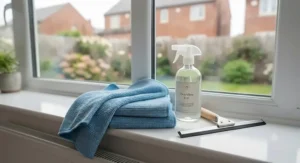
Common Mistakes When Buying a Window Cleaning Cloth
The most frequent misstep is assuming any cloth labelled “microfibre” will perform identically, when weave structure, GSM and fibre quality genuinely vary enormously between a budget multi-pack and a dedicated glass-cleaning system. A close second is buying based on pack size alone, without considering that twelve mediocre cloths often deliver a worse overall cleaning experience than two or three genuinely well-engineered ones. Finally, plenty of buyers skip reading the washing instructions entirely, then wonder why a cloth that started streak-free is leaving smears within a few months — fabric softener and high-heat drying are avoidable causes of exactly this problem, not an inevitable sign of a cloth wearing out.
Microfibre GSM for Windows: What the Number Actually Means
| GSM Range | Typical Feel | Best Use |
|---|---|---|
| 200-300 GSM | Lighter, thinner | Light dusting, glasses, screens |
| 300-400 GSM | Standard everyday | General household window cleaning |
| 400-600+ GSM | Thick, plush, highly absorbent | Heavy-duty polishing, large glass surfaces |
GSM stands for grams per square metre, and it’s a genuinely useful, objective way to compare cloths beyond marketing language — the higher the figure, the denser and more absorbent the fabric, broadly speaking. A cloth like the MagicWipe at 600 GSM sits well above the 250-320 GSM typical of everyday multi-purpose cloths, which translates into noticeably more moisture held per wipe and a plusher feel, particularly useful on larger glass surfaces where you don’t want to be wringing out constantly. That said, GSM isn’t the whole story for streak-free performance specifically — weave structure matters just as much, which is why a lower-GSM, purpose-woven cloth like the E-Cloth system can still outperform a denser but more generically woven cloth on glass specifically.
Streak-Free Microfibre Glass Cloth vs Standard Cloths
| Factor | Streak-Free Microfibre Glass Cloth | Standard All-Purpose Cloth |
|---|---|---|
| Weave | Purpose-engineered for glass (waffle, polish) | General woven microfibre |
| Chemical need | Often works with water alone | Frequently used alongside spray cleaner |
| Lint risk | Very low, purpose-tested | Low, but more variable by brand |
| Price per cloth | Higher | Lower |
| Best surfaces | Windows, mirrors, screens | Wide range of household surfaces |
A dedicated streak-free glass cloth, such as the E-Cloth Window Cleaner Kit or Bilt Hamber Trace-Less towels, genuinely earns its higher price on glass specifically, since the weave has been engineered and tested against that one job rather than a broad range of surfaces. A standard all-purpose cloth like the MR.SIGA or HOMEXCEL packs will still get windows clean, and for many households that’s entirely sufficient, but honest analysis has to note it won’t quite match a purpose-built system on very large or heavily soiled glass, where a specialised weave structure genuinely outperforms a generalist one.
Glass Polishing Microfibre: Two-Cloth Systems Explained
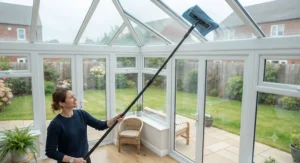
A two-cloth glass polishing system, as used in the E-Cloth Window Cleaner Kit, splits window cleaning into two distinct stages rather than asking a single cloth to do both jobs at once. The first cloth, typically a waffle-weave design, is used damp to physically lift and trap dirt, grease and grime in its raised texture; the second, a smoother polishing cloth, is used dry afterwards to remove any remaining moisture and buff the surface to a genuinely streak-free finish. What most buyers overlook about this approach is that it mirrors exactly how professional window cleaners traditionally worked with a wet applicator followed by a dry squeegee or cloth, just condensed into two reusable microfibre pieces rather than separate tools.
The practical upshot is that a genuine two-cloth system tends to outperform even a very good single all-purpose cloth specifically on glass, because no single weave structure is equally optimised for both lifting dirt and polishing streak-free — asking one cloth to do both is always something of a compromise.
Window Detailing Cloth: Professional-Grade Options for Car & Home
A window detailing cloth refers to the more specialised end of this category, built for people treating glass cleaning as a genuine discipline rather than a quick weekly wipe — car detailers, valeters, and enthusiasts working on automotive glass in particular. The Bilt Hamber Trace-Less Kit and Autoglym Glass & Screen Cloths both sit in this bracket, engineered around the harder test case of automotive glass covered in road film, bug residue and wax haze, which tends to demand more from a cloth than typical household dust and fingerprints. On paper this means detailing-grade cloths are usually built with a more deliberate weave structure and finished edge, often laser-cut or overlocked to prevent fraying under the more frequent, harder use a detailing routine involves.
For household windows alone, this level of specialism isn’t strictly necessary, but anyone who also cleans a car regularly will find a genuine detailing cloth pulls double duty well, handling both the tougher automotive glass and easier household panes without compromise in either direction.
Microfibre Window Cleaning Cloth Reviews: What Real Buyers Say
Pulling together aggregated sentiment across the products featured here, a few themes recur consistently rather than being unique to any single cloth. Buyers overwhelmingly cite the elimination or reduction of chemical glass spray as the single biggest satisfaction driver, more so than any specific brand loyalty, with the water-only claim of products like the E-Cloth kit repeatedly singled out as genuinely delivering rather than overpromising. Fraying, lint shedding, and reduced absorbency after washing are the most commonly repeated criticisms across the budget multi-pack tier specifically, almost always traced back to washing with fabric softener or mixing with cotton items, rather than a fundamental flaw in the cloths themselves.
It’s worth noting explicitly, in line with honest reporting standards, that individual star ratings and review counts shift constantly as new stock ships and reviews accumulate, so treating any single number as fixed isn’t reliable — checking the current listing directly before purchase gives a far more accurate snapshot than any figure quoted in an article like this one.
Long-Term Cost & Care: Washing, Lifespan & Sustainability
A well-cared-for woven microfibre cloth can realistically be washed and reused several hundred times before its performance genuinely degrades, which makes even the pricier dedicated systems on this list considerably cheaper over a year or two than repeatedly buying disposable glass wipes or bottled chemical cleaner. The single biggest factor in lifespan is washing care: fabric softener coats the fibres and permanently reduces their static charge and absorbency, while washing with cotton or towelling items transfers lint back onto the microfibre, undoing the very lint-free property you bought it for.
It’s also worth being aware, in the interest of a fully honest picture, that all synthetic microfibre cloths shed some fibres during washing, and academic research on the wider issue of textile microfibre pollution from the University of Manchester’s policy blog notes that shedding tends to be highest during a fabric’s first several washes and decreases considerably afterwards. Washing microfibre cloths in a full load at a lower temperature, and less frequently but for longer, genuinely reduces total fibre release over the cloth’s lifetime compared with frequent small washes — a small habit change that also happens to extend how long the cloth performs well.
Best Glass Cleaning Cloth for Different Surfaces & Situations
Large surfaces like patio doors, conservatory glazing and shower screens benefit most from a higher-GSM, highly absorbent cloth such as the MagicWipe, since the sheer surface area means fewer rinse-outs matter more than ultra-fine polish. Everyday household windows and mirrors are well served by a dedicated two-cloth system like E-Cloth, or a reliable single cloth like Vileda, both of which are optimised specifically for that mid-sized, moderate-soiling scenario most homes deal with weekly. Car windscreens and automotive glass, which face road film, bug residue and wax haze that household glass rarely encounters, are best matched with a detailing-grade option such as Autoglym or Bilt Hamber, purpose-tested against that harder job.
Frequently Asked Questions
❓ What GSM is best for a microfibre cloth for windows?
❓ Can you clean windows with just a microfibre cloth and no chemicals?
❓ Why does my microfibre cloth leave streaks after a few washes?
❓ What's the difference between a standard glass cloth and a window detailing cloth?
❓ How many times can you reuse a microfibre window cleaning cloth?
Conclusion
A genuinely good microfibre cloth for windows isn’t defined by the word “microfibre” on the packaging so much as by its weave engineering, GSM, and how it’s cared for once it’s in your cleaning cupboard. Across the seven products covered here, from the water-only precision of the E-Cloth Window Cleaner Kit through to the dependable simplicity of the Vileda Window Cloth, the common thread is that a cloth purpose-built for glass genuinely outperforms a generic one asked to do the same job as an afterthought.
Match the cloth to your actual situation rather than the biggest pack size or the flashiest GSM figure: a two-cloth system for chemical-free precision, a high-GSM cloth for large absorbent-heavy surfaces, and a detailing-grade set if car glass is part of your routine too. Whichever you choose, wash it separately, skip the fabric softener, and let the cloth you paid for actually do the job it was engineered for rather than reaching for the nearest bottle of spray out of habit.
✨ Don’t Miss These Exclusive Deals!
🔍 Take your window cleaning routine to the next level with these genuinely tested picks. Click through on any highlighted product to check today’s price and availability. A little research now means streak-free glass for months to come!
Recommended for You
- Water Fed Pole System: 7 Best Pure Water Kits for 2026
- Telescopic Pole for Window Cleaning 2026: 7 Poles Worth Buying
- Professional Window Cleaning Kit: 7 Best Picks for 2026
Disclaimer: This article contains affiliate links. As an Amazon Associate, I earn from qualifying purchases. If you purchase products through these links, we may earn a small commission at no additional cost to you.
✨ Found this helpful? Share it with your friends! 💬🤗
