
In This Article
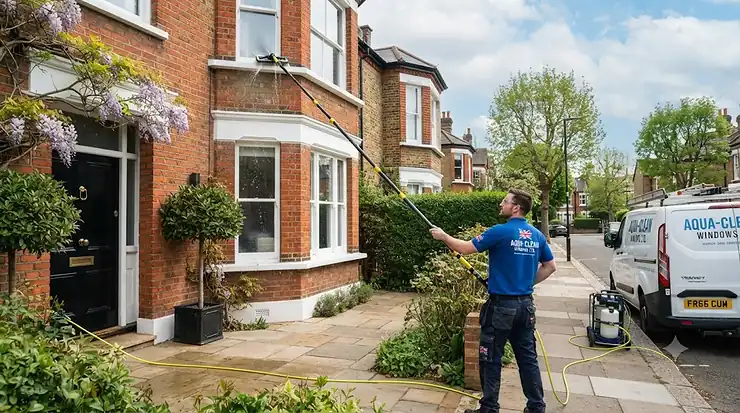
There’s a specific kind of dread that comes with balancing a ladder against a wet gutter, one foot on the third rung, wondering exactly how committed you are to having clean windows today. A water fed pole system exists to make that entire scenario obsolete. Instead of you going up to the glass, the pole goes up, carrying purified water through a hollow aluminium or carbon shaft to a soft brush head that scrubs and rinses in one motion — and you stay exactly where sensible people stay: on solid ground.
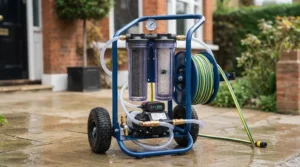
So what is a water fed pole system, in plain English? It’s a telescopic pole fed by a hose, delivering deionised or reverse-osmosis-treated water to a brush head, which cleans glass without soap, without streaks, and crucially, without a ladder. The trick isn’t the pole itself, honestly, it’s the water. Purified water contains none of the dissolved minerals that leave chalky trails behind as tap water dries, so once you rinse and walk away, the window dries itself spotless. Nobody has to towel it off. Gravity and chemistry do the finishing work.
This guide walks through seven genuinely available products — poles, resin, and the pressure vessel that ties it all together — from the cheapest way to dip a toe in, right up to the components a working window cleaner would actually buy. We’ll cover a proper water fed pole beginner guide section, dig into deionised water window cleaning in enough depth that you’ll understand your own kit rather than just operate it, and be honest about where a water fed brush pole earns its keep and where it doesn’t. Prices below are ranges, not gospel, since Amazon shuffles its listings the way toddlers shuffle a deck of cards — always check the current price before buying.
This article contains affiliate links. As an Amazon Associate, I earn from qualifying purchases.
Quick Comparison Table
| Product | Type | Best For | Price Range (approx.) |
|---|---|---|---|
| HI-TECH 13ft Telescopic Kit | Complete pole kit | Absolute beginners, small homes | £45–£65 |
| IGADPole Water-Fed Washing Kit | Complete pole kit | First-timers wanting UK design & support | £90–£140 |
| STARLYF Telescopic Cleaning Pole | Complete pole kit | Budget impulse buyers, light use | £50–£75 |
| HI-TECH 16ft–24ft 4-Section Pole | Pole + brush head | Regular domestic or semi-pro use | £70–£110 |
| AquaHouse MB-115 DI Resin (25L) | Deionising resin | Building or refilling a pure water system | £45–£65 |
| Tulsion MB-115 Virgin Resin (25L) | Deionising resin | Longer-lasting premium purification | £55–£75 |
| Bayersan DI Pressure Vessel 11L | Resin vessel (empty) | Anyone assembling a full system from parts | £40–£60 |
Glance down that price column and you’ll spot the honest truth about this hobby: the pole is rarely the expensive bit. It’s the purification side — the resin and the vessel — that turns an ordinary telescopic brush into a genuine pure water cleaning system. A reasonably serious first-timer buying a complete kit plus a resin top-up is looking at something in the £100–£180 territory all in, which, compared with hiring a window cleaner every six weeks for a year, pays for itself faster than you’d think.
💬 Just one click — help others make better buying decisions too!😊
Top 7 Water Fed Pole System Picks: Expert Analysis
What follows spans complete beginner kits, a mid-range professional-leaning pole, and the two consumables — resin and vessel — that actually make the “pure water” part of pure water window cleaning possible.
1. HI-TECH 13ft Water Fed Telescopic Pole Kit — best true beginner bundle
The headline feature is simplicity: this is a pole, a brush head with a built-in squeegee, and a soap dispenser, all in one box, ready to connect to an ordinary garden hose the same afternoon it arrives.
At 1.6kg and four sections, it’s genuinely light in the hand, though “light” and “effortless at full extension” are two different animals — several buyers note the pole gets noticeably front-heavy once water is flowing through a fully extended 13 feet, which is just physics rather than a manufacturing flaw. The soft brush head does the heavy lifting here, quite literally scrubbing grime loose while water flushes it away, and the dual on/off switches let you toggle between soap-and-water and plain water only, which matters more than it sounds once you’re doing a proper first clean on genuinely filthy glass. Reviewers describe a bit of a learning curve — one buyer cheerfully admitted to “hoping to master the art of this pole reach system” after their first go, which is about as honest an endorsement of a learning curve as you’ll find.
Who this suits: someone with a bungalow, a modest two-storey semi, or a conservatory roof they’re tired of paying someone else to reach. It’s a poor fit for anyone with three-storey Victorian sash windows, where the pole’s reach and the pump-free hose pressure will both run out of puff.
Pros:
- ✅ Genuinely plug-and-play with any standard garden hose
- ✅ Dual switch lets you separate soap-and-water from rinse-only
- ✅ Lightest, cheapest genuine entry point in this whole list
Cons:
- ❌ Becomes noticeably front-heavy at full 13ft extension
- ❌ No purification stage included, so tap water alone won’t give a spot-free finish
At the time of research, this kit typically sits around £45–£65, making it about the cheapest sensible way to find out whether you’ll actually use one of these things.

2. IGADPole Water-Fed Washing Kit — best for first-timers who want proper UK backup
Here’s what separates IGADPole from the crowd of near-identical Amazon poles: it’s designed in the UK, and the small mountain of specific, detailed reviews — from a 76-year-old customer finally able to clean her own conservatory ceiling to a delighted first-time buyer who did the whole house front and back in half an hour — suggests genuine domestic usability rather than marketing copy.
The kit includes a soap dispenser, brush, squeegee and cobweb duster, which is a broader accessory spread than most rivals bother with at this price. What most buyers overlook is that this breadth matters: a squeegee finishes glass faster than pure water alone when you’re still on tap water rather than deionised, and the cobweb duster genuinely gets used on porches and eaves more than you’d expect. Based on the spec comparison with cheaper kits, IGADPole’s telescopic clamps get specific praise for holding position reliably rather than slowly creeping shut mid-clean, a small detail that stops being small the moment it happens to you three windows into a job.
Who should care: homeowners, especially those with mobility concerns who’ve struggled to find a window cleaner willing to do awkward conservatory roofs, and anyone who wants a slightly more complete kit than the bare-bones budget option above.
Pros:
- ✅ UK-designed with genuinely detailed, specific customer feedback
- ✅ Broader accessory set than most rivals at a similar price
- ✅ Clamps hold their extension reliably during use
Cons:
- ❌ Costs meaningfully more than the cheapest HI-TECH bundle
- ❌ Still relies on tap water unless paired with a separate DI vessel
Expect to pay roughly £90–£140 depending on pole length at the time of research, which puts it squarely in “sensible middle ground” territory.
3. STARLYF Telescopic Water-Fed Cleaning Pole (15ft) — best impulse-buy budget pick
The standout selling point is availability and spares: STARLYF poles turn up everywhere from Amazon UK to Amazon US, and the brand explicitly advertises spare parts, which matters more than people realise until a clamp fails eighteen months in and the whole pole becomes a paperweight.
At 15ft, this sits comfortably between the shortest budget poles and the longer professional-leaning options, and the squeegee attachment gives it a slight edge for anyone still cleaning with plain tap water rather than a full pure water cleaning system. What the spec sheet won’t tell you, but aggregated buyer feedback suggests, is that build quality on poles in this price bracket varies more between individual units than premium poles do — a mixed bag rather than a guarantee of either brilliance or disappointment.
Who this suits: someone who wants to try water fed cleaning without overthinking the purchase, treating it more like a slightly expensive impulse buy than a considered investment. It’s a weaker choice for anyone planning to use the pole weekly for years, where a marginally pricier, more consistently built option will likely outlast it.
Pros:
- ✅ Widely available with genuine spare parts on offer
- ✅ 15ft reach suits most two-storey homes comfortably
- ✅ Included squeegee helps on tap-water-only setups
Cons:
- ❌ Build consistency reportedly varies between individual units
- ❌ No bundled purification stage for genuinely spot-free results
At the time of research, this pole typically costs £50–£75, comfortably inside impulse-buy territory.
4. HI-TECH 16ft–24ft 4-Section Pole with Brass Jet Brush Head — best for regular domestic or semi-pro use
The genuinely clever bit here is the ripple-anodised aluminium tube design, which HI-TECH claims reduces flex by roughly 30% compared with smooth tubing — and having fewer wobbly sections at full extension is precisely what separates a pole that feels professional from one that feels like a pool noodle with delusions of grandeur.
The brush head uses two brass jets with a Y-splitter rather than a single nozzle, spreading water more evenly across the bristles so you’re not chasing dry patches around the glass. Reviewers consistently mention that the cam-lock clamps, bolted rather than glued to the tubing, hold up far better under repeated extension and retraction than the glued joints found on cheaper rivals — a specific complaint that came up more than once about competing budget poles in this exact category. At four sections rather than five, there are fewer joints overall, and fewer joints means fewer potential failure points, which is the kind of unglamorous engineering logic that actually matters after month six of ownership.
Who should care: homeowners who clean their own windows several times a year rather than once, and anyone semi-seriously considering doing a few neighbours’ windows for beer money. It’s still not quite built for eight-hours-a-day commercial use, but it’s a clear step up from anything marketed purely as a “starter kit.”
Pros:
- ✅ Ripple-anodised tubing genuinely reduces flex at extension
- ✅ Dual brass jets give more even water coverage than single nozzles
- ✅ Bolted, not glued, clamps hold up better over repeated use
Cons:
- ❌ Bulkier and heavier than the shorter 13ft starter kits
- ❌ Still needs a separate DI vessel for genuinely streak-free results on hard water
At the time of research, expect to pay £70–£110 depending on the exact length chosen, with 24ft naturally sitting at the top of that range.
5. AquaHouse MB-115 Deionising DI Resin (25 Litre Bag) — best resin for deionised water window cleaning
Here’s the bit nobody tells you when you buy your first pole: the pole is basically a fancy hose extension until you add something to purify the water running through it, and that something is almost always mixed bed ion exchange resin like this.
The MB-115 formulation pulls dissolved minerals, calcium and magnesium chief among them, out of ordinary tap water via ion exchange, leaving water so mineral-free it can’t leave the chalky spotting that ruins an otherwise perfect clean. Based on the spec comparison with standard resin, what most buyers overlook is that resin lifespan is entirely dictated by your local water hardness rather than the resin itself — soft-water areas might squeeze out well over a thousand litres before the resin exhausts, while genuinely hard-water postcodes will chew through the same bag noticeably faster. A user who specifically mentioned using this exact resin in their own water fed pole window cleaning system reported it simply does the intended job, which is precisely the kind of unglamorous, reliable feedback resin should generate.
Who this suits: anyone who already owns a pole and a vessel and just needs to keep the purification stage topped up, or first-time buyers assembling a complete system from separate parts rather than a boxed kit.
Pros:
- ✅ Genuinely removes dissolved minerals via proven ion exchange
- ✅ Large 25L bag refills most standard vessels several times over
- ✅ Compatible with most existing DI vessel setups
Cons:
- ❌ Lifespan drops significantly in hard water areas
- ❌ Resin alone does nothing without a compatible vessel to hold it
At the time of research, a 25-litre bag typically costs £45–£65, which works out as excellent value once you calculate the cost per litre of genuinely pure water it produces.
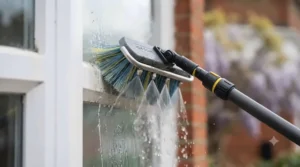
6. Tulsion MB-115 Virgin Mixed Bed Ion Exchange Resin (25 Litre) — best premium resin for longer-lasting purification
The word doing the heavy lifting in this listing is “virgin” — this resin hasn’t been regenerated or recycled from a previous life, which the manufacturer states genuinely extends working life and output quality compared with cheaper, previously-used mixed bed resins on the market.
In practice, that means a longer stretch between refills for the same water hardness, which matters enormously if you’re the type who resents repeat maintenance tasks more than the initial cost of doing them properly. It’s worth being precise about what this resin won’t do: it’s explicitly not compatible with water softeners, since softening resin works on an entirely different chemical principle to deionising resin, and mixing the two up is a classic beginner mistake that wastes both time and resin. Reviewers using it specifically for water fed pole window cleaning systems report it performing exactly as expected, which, for a consumable, is really the only review that matters.
Who should care: anyone in a genuinely hard water area who’s tired of replacing cheaper resin every few months, and professional or semi-professional users where downtime for a resin change actually costs money rather than just being mildly annoying.
Pros:
- ✅ Virgin (non-regenerated) resin lasts longer than standard alternatives
- ✅ Suitable across window cleaning, aquariums, and general water polishing
- ✅ Consistently reported to perform as described by genuine window cleaning users
Cons:
- ❌ Costs more upfront than standard regenerated resin
- ❌ Not compatible with water softening systems, a common beginner mix-up
Expect to pay roughly £55–£75 for a 25-litre bag at the time of research — a premium over standard resin that pays for itself in fewer refills if your water is genuinely hard.
7. Bayersan DI Pressure Vessel (11 Litre, Empty) — best vessel for building a complete pure water cleaning system
If the pole is the delivery mechanism and the resin is the active ingredient, the vessel is the unglamorous container that makes the whole thing work — and this one does the job without any unnecessary fuss.
At 11 litres with an 8-inch diameter, it’s sized to hold enough resin for a meaningful number of cleaning sessions without becoming genuinely awkward to lift or store, and it comes with Hozelock connectors already fitted, meaning you’re not hunting down adaptors separately before you can actually use the thing. What the spec sheet undersells is quite how versatile this vessel really is: beyond window cleaning, the same setup handles car valeting rinses, marine aquarium water prep, and general pure water applications around the house, so it’s not a single-purpose purchase gathering dust the rest of the year. Being sold empty rather than pre-filled means you choose your own resin — standard AquaHouse for everyday use, or the Tulsion virgin resin above if your water is properly hard.
Who this suits: anyone assembling a complete pure water cleaning system piece by piece rather than buying a boxed kit, and existing pole owners whose tap-water results have never quite matched the spot-free finish they were promised.
Pros:
- ✅ Hozelock connectors included, ready to plumb in immediately
- ✅ 11L capacity balances resin volume against portability
- ✅ Versatile beyond window cleaning, useful for cars and aquatics too
Cons:
- ❌ Sold empty, so resin is a separate, additional purchase
- ❌ Needs occasional TDS testing to know when the resin’s exhausted
At the time of research, this empty vessel typically costs £40–£60, with resin on top bringing a complete purification stage to roughly £90–£130 all in.
Setting Up Your First Water Fed Pole System: A Practical Usage Guide
Getting a water fed pole beginner guide right matters more than most people expect, mostly because the mistakes are invisible until you’re staring at a streaky window wondering where it all went wrong.
Start by testing your water. If you’re running straight off the tap without a DI vessel, expect some spotting on darker or hard-water days, since minerals in ordinary tap water are precisely what leave those pale trails behind as it dries. Connect your hose to the pole, run water through briefly before you start scrubbing to clear any trapped air, and work from the top of the window downwards in slow, overlapping strokes rather than rushing side to side. A common first-month mistake is holding the brush too close to the glass and pressing hard, as if scrubbing a saucepan; the water pressure and brush bristles do the actual work, so a lighter touch genuinely cleans better. Rinse thoroughly after brushing and let the window air-dry naturally, resisting every instinct to towel it dry, since pure water’s entire selling point is that it needs no assistance.
For maintenance, rinse pole sections down after use, particularly if you’ve been working near anything gritty, and check clamps periodically for wear since a loose clamp mid-extension is how poles get dropped. If you’re running a DI vessel, keep a TDS meter handy — a cheap, genuinely useful gadget — and test your output water occasionally; once readings climb above roughly 10–15ppm, your resin needs replacing.

Which System Suits You? Real-World Buyer Scenarios
Picture a retired couple in a bungalow, windows all comfortably reachable, wanting to stop paying a window cleaner £15 a visit for what amounts to fifteen minutes’ work. The HI-TECH 13ft kit alone, run straight off the garden tap, does the job admirably — pure water purification is a nice-to-have here, not a necessity, since the windows are low and the visits infrequent enough that occasional minor spotting genuinely doesn’t matter.
Now picture a homeowner in a three-storey Victorian terrace with a conservatory roof nobody’s cleaned properly in years, in a part of the country with famously hard water. This is where the full pure water cleaning system earns its keep: a longer HI-TECH or IGADPole kit, paired with the Bayersan vessel and Tulsion virgin resin, delivers the reach and the mineral-free finish that tap water alone simply can’t manage on glass that’s been neglected that long.
Finally, imagine someone testing the waters of window cleaning as a genuine side income, cleaning a handful of neighbours’ houses at weekends. Here, the calculation shifts toward durability and consumable cost per job: the mid-range HI-TECH 16–24ft pole with brass jets, backed by AquaHouse resin bought in bulk, balances upfront cost against the kind of repeated, weekly use that would embarrass a cheaper starter kit within a season.
Common Water Fed Pole Problems (And How to Fix Them)
Streaky, spotty glass after everything’s dried usually means you’re running plain tap water without a DI stage, or your resin has quietly exhausted without you noticing — test with a TDS meter before assuming the pole itself is at fault. A pole that feels increasingly heavy or unwieldy at full extension is often less about the pole and more about technique; keep it closer to vertical rather than working it at a stretched-out angle, which multiplies the leverage against your arms dramatically. If clamps keep slipping and the pole collapses mid-clean, check for grit or debris inside the joint before assuming it’s simply worn out, since a quick rinse solves more clamp problems than people expect. Weak or inconsistent water flow at the brush head is frequently a kinked hose rather than a pump or pressure issue, so trace the whole hose length before troubleshooting anything more complicated. Finally, if your DI resin seems to exhaust unusually fast, check your local water hardness — postcodes in traditionally hard-water regions will always chew through resin faster than the same bag would last somewhere with naturally soft supply.
How to Choose a Water Fed Pole System
What is a water fed pole system, in the simplest possible terms? It’s a telescopic pole, fed by a hose, that delivers water — ideally purified — to a brush head, letting you clean windows from the ground rather than a ladder.
- Measure your actual reach requirement first. A bungalow needs a fraction of the pole a three-storey terrace demands; buying too long a pole just adds unnecessary weight and cost.
- Decide whether you need purification from day one. Occasional users on soft water can often get away with tap water alone; hard-water postcodes benefit enormously from a DI stage immediately.
- Check the number of pole sections. Fewer sections generally means fewer joints and less flex, which matters more the longer the pole extends.
- Look at brush head design specifically. Dual-jet designs spread water more evenly than single-nozzle heads, particularly on wider glass.
- Consider clamp construction. Bolted clamps consistently outlast glued ones under repeated extension and retraction.
- Factor in ongoing resin costs, not just the upfront pole price. A cheap pole paired with frequent resin changes can cost more over a year than a pricier pole needing less maintenance.
- Read aggregated review themes about durability, not star ratings alone. Genuine feedback about clamp wear and brush longevity tells you more than a headline score ever will.
Deionised Water Window Cleaning: Why Pure Water Actually Works
The mechanism behind deionised water window cleaning is refreshingly simple once you strip away the marketing language: ordinary tap water carries dissolved minerals, and as it evaporates off glass, those minerals stay behind as the pale, chalky spotting everyone recognises but few people can actually name. According to Wikipedia’s overview of deionized water, the deionisation process uses ion exchange resin to strip out these charged mineral particles entirely, leaving water that’s essentially just H₂O with nothing left to deposit as it dries.
This is precisely why a pure water window cleaning pole outperforms even the most careful ladder-and-squeegee approach using tap water: it’s not that pure water cleans better in the scrubbing sense, it’s that it leaves nothing behind once it’s done its job. Reviewers across multiple resin brands consistently report the same pattern — hard tap water requiring a squeegee finish to avoid spotting, purified water needing no finishing touch whatsoever, just gravity and patience.
Long-Term Cost & Maintenance of a Water Fed Pole System
The honest total cost of ownership conversation nobody has upfront: a complete pure water cleaning system costs meaningfully more initially than a bare pole, but the running costs are genuinely modest once you’ve absorbed that first outlay. Resin typically needs replacing every few hundred to couple-thousand litres depending on local water hardness, and a 25-litre bag costing £45–£75 will comfortably outlast most domestic users an entire season, sometimes considerably longer in soft water areas.
Pole maintenance is largely about clamps and hose condition rather than anything expensive — replacement clamps and hose sections cost a fraction of a new pole, so a well-maintained pole from any of the mid-range options above should genuinely last several years of regular domestic use. The vessel itself, being essentially just a durable plastic container with fittings, has no meaningful wear parts beyond the connectors, meaning your only recurring cost, realistically, is the resin itself — a genuinely modest ongoing expense compared with either a professional window cleaner’s invoice or the ladder-related trip to A&E you were trying to avoid in the first place.
Safety & Regulations Guide
There’s a reason water fed poles have become the default recommendation rather than a niche alternative, and it isn’t marketing. According to HSE guidance on window cleaning, employers and anyone organising window cleaning work must avoid working at height wherever reasonably practicable, and telescopic water fed poles are explicitly named as one of the primary ways to achieve exactly that. If you’re cleaning your own home, none of this is legally binding on you personally, but the underlying logic — ladders cause a disproportionate share of fall injuries, poles remove that risk almost entirely — applies just as much to a Saturday morning DIY job as it does to a professional crew.
One regulatory detail genuinely worth knowing: connecting any water fed system to your mains supply via a garden tap sits within the scope of the Water Supply (Water Fittings) Regulations 1999, which require appropriate backflow prevention on outdoor tap connections to stop contaminated water siphoning back into the drinking supply. Most modern outdoor tap fittings and hose connectors already include this protection, but it’s worth checking rather than assuming, particularly on older properties with original external taps.

Frequently Asked Questions
❓ Do I need deionised water for a water fed pole system, or will tap water do?
❓ How long does DI resin last in a typical home setup?
❓ What's the difference between a water fed pole and a water fed brush pole?
❓ Can I use a water fed pole system without buying a separate DI vessel?
❓ Is a water fed pole system actually safer than using a ladder?
Conclusion
A water fed pole system isn’t really about the pole, whatever the product photos suggest. It’s about the combination of reach, purified water, and staying safely on the ground while windows that haven’t seen a cloth in years come up genuinely spotless. Budget starter kits like the HI-TECH 13ft bundle prove the concept cheaply for anyone still deciding if this is worth the cupboard space; the IGADPole and mid-range HI-TECH options suit regular domestic use with a bit more durability behind them; and anyone serious about a proper pure water cleaning system should budget for the resin and vessel alongside the pole itself, not as an afterthought. Whichever combination you land on, the fundamentals stay the same: test your water, keep an eye on your resin, and let gravity finish the job pure water started.
✨ Don’t Miss These Exclusive Deals!
🔍 Take your window cleaning kit to the next level with these carefully selected poles, resin and vessels. Click on any highlighted item to check current pricing and availability. These tools will help you achieve the streak-free, ladder-free results you’ve been after!
Recommended for You
- Telescopic Pole for Window Cleaning 2026: 7 Poles Worth Buying
- Professional Window Cleaning Kit: 7 Best Picks for 2026
- Traditional Window Cleaning Kit: 7 Best Picks Tested for 2026
Disclaimer: This article contains affiliate links. As an Amazon Associate, I earn from qualifying purchases. If you purchase products through these links, we may earn a small commission at no additional cost to you.
✨ Found this helpful? Share it with your friends! 💬🤗
