In This Article
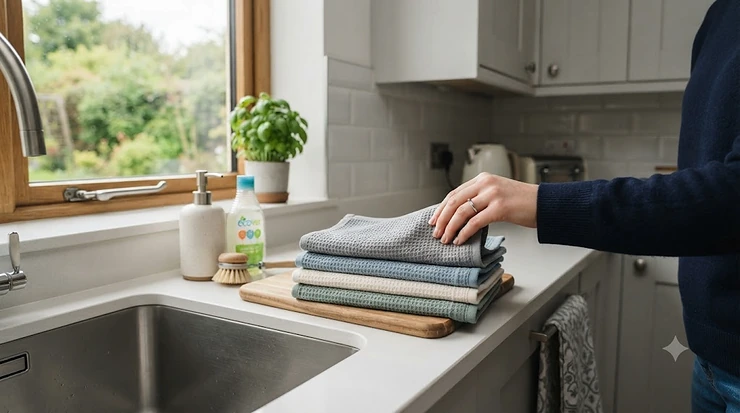
There’s a specific kind of dread that comes from realising the cloth you just used to wipe down the worktop after cutting raw chicken is the same one sitting by the sink, waiting to wash tomorrow’s mugs. Antibacterial kitchen cloths exist to close that gap, but “antibacterial” on a label covers a huge range of actual protection, from a genuine silver-ion treatment to little more than a marketing sticker on an otherwise ordinary cloth.
Here’s the honest starting point: no cloth, however well treated, replaces good technique. Antibacterial treatments slow bacterial growth within the cloth itself between uses; they don’t sterilise a worktop on contact, and they certainly don’t undo the risk of using one cloth for raw meat and then for a chopping board full of salad. Peer-reviewed research on household cleaning cloths has found that antibacterial claims genuinely reduce bacterial regrowth in the cloth fibres, but that real-world effectiveness depends heavily on how the cloth is used, dried and replaced, not on the label alone.
This guide breaks down real, currently available UK products — from a £6 supermarket staple to a certified food-contact-safe professional set — with honest analysis of what each one actually does well, alongside the colour-coding and cross-contamination know-how that matters more than any single cloth you buy.
Quick Comparison Table: What “Antibacterial” Actually Buys You
| Feature | Standard Cotton Cloth | Antibacterial-Treated Cloth | Colour-Coded Antibacterial Set |
|---|---|---|---|
| Bacterial regrowth between uses | Fastest | Slower, cloth-dependent | Slower, plus task separation |
| Cross-contamination risk | Highest if reused across tasks | Reduced but still present | Lowest, by design |
| Typical UK price | £3-£6 | £6-£15 | £10-£25 |
| Best For | Occasional light cleaning | General worktop and washing-up duty | Raw meat prep, shared or busy kitchens |
The real story in that table is the third row. A single antibacterial cloth used for everything — raw meat, worktops, washing up — still creates a cross-contamination risk, because the antibacterial treatment slows bacterial growth in the cloth; it doesn’t stop bacteria transferring the moment you wipe a surface. That’s precisely why the strongest products further down this guide combine an antibacterial treatment with a genuine colour-coded system.
💬 Just one click — help others make better buying decisions too!😊
Top 7 Antibacterial Kitchen Cloths: Expert Analysis
We’ve picked real, currently listed UK products spanning supermarket-shelf basics to certified food-contact-safe catering cloths, covering genuine silver-ion technology, colour-coded sets, and compostable options. Affiliate disclosure: this article contains Amazon Associate links — see the disclaimer at the end.
1. Lakeland Antibacterial Dishcloths (Pack of 5) — best everyday household staple
The Lakeland Antibacterial Dishcloths are the sort of unglamorous kitchen basic most UK households already half-recognise, knitted from 75% cotton and treated with a long-lasting antibacterial finish designed to resist odours between washes rather than just mask them.
Practically speaking, that cotton-knit construction means these cloths are genuinely absorbent for everyday washing-up and surface wiping, and the antibacterial treatment is baked into the fibre rather than sprayed on as a surface coating, which is why Lakeland backs them with a 3-year guarantee. What most buyers overlook is that these are general-purpose cloths rather than a colour-coded system, so they suit worktop and washing-up duty well but shouldn’t be your only line of defence against raw meat cross-contamination.
Based on the spec comparison with more specialised options later in this list, the Lakeland Antibacterial Dishcloths are best treated as the reliable all-rounder rather than the hygiene-critical choice for raw food prep.
Pros:
- ✅ 75% cotton knit is genuinely absorbent for daily use
- ✅ Antibacterial treatment built into the fibre, not just coated on
- ✅ Backed by a 3-year guarantee from an established UK retailer
Cons:
- ❌ Not colour-coded, so no built-in cross-contamination system
- ❌ Antibacterial performance will fade with repeated heavy bleach use
Typically priced in the £6-£9 range for a pack of 5, the Lakeland Antibacterial Dishcloths are a sound, low-risk starting point for general kitchen duty.
2. We Can Source It Antibacterial Multi Purpose Cleaning Cloth (Pack of 50) — best bulk colour-coded pick
Where most antibacterial cloths come in small packs, the We Can Source It Antibacterial Multi Purpose Cleaning Cloth leans into volume, arriving in a pack of 50 split across red, yellow, green and blue — the same four colours used in UK food-safety colour-coding systems for raw meat, cooked food, vegetables and general surfaces respectively.
Here’s what to weigh: buying in this volume only pays off if you actually commit to using each colour for its designated task consistently, because a colour-coded pack used inconsistently offers no more protection than an ordinary cloth. Reasoned through rather than simply asserted, the real value of this product isn’t the antibacterial treatment alone — it’s that having 50 cloths across four colours removes the common excuse of “I ran out of the red one” that quietly breaks a household’s colour-coding habit.
Because this is a medium-weight cloth rather than a premium microfibre, don’t expect the plush feel of pricier options; it’s built for function and volume rather than luxury.
Pros:
- ✅ Four colours support a genuine raw-meat colour-coding system
- ✅ Bulk pack of 50 works out cheapest per cloth in this guide
- ✅ Suits busy, shared or multi-cook households needing frequent swaps
Cons:
- ❌ Medium-weight construction feels less plush than premium microfibre
- ❌ Only pays off if colours are actually used consistently for their task
Priced around £12-£18 for the full pack of 50, the We Can Source It Antibacterial Multi Purpose Cleaning Cloth is one of the strongest value picks for anyone serious about colour-coding at home.
3. Minky Anti-Bacterial Cleaning Cloths (3 Pack) — best trusted UK manufacturer pick
Minky has been manufacturing homecare textiles in the UK since 1941 and holds a Royal Warrant, and the Minky Anti-Bacterial Cleaning Cloths reflect that manufacturing pedigree: long-lasting antibacterial protection built into the cloth to inhibit odour formation and bacterial growth, in a design meant for repeated washing and hard surface duty.
What the spec sheet won’t tell you, but Minky’s own care guidance makes clear, is that these cloths are best hand-washed and reshaped while damp rather than machine washed and tumble dried, which is a small extra step compared with fully machine-washable rivals. On paper this means slightly more day-to-day care commitment, but it’s a trade-off many buyers accept for a cloth from a manufacturer with genuine UK production credentials and decades of consumer trust behind the brand.
Reviewers consistently note the quality and finish compared with cheaper supermarket own-brand alternatives, though the 3-pack size is modest for a kitchen wanting full colour rotation.
Pros:
- ✅ Established British manufacturer with Royal Warrant status
- ✅ Antibacterial treatment built in to resist odour and bacterial growth
- ✅ Reusable design holds shape and finish over repeated washes
Cons:
- ❌ Small 3-pack size limits full colour-coded rotation
- ❌ Hand-wash care guidance is less convenient than machine-washable rivals
At around £4-£7 for the 3-pack, the Minky Anti-Bacterial Cleaning Cloths are a strong mid-range pick for buyers who value brand trust and build quality.
4. e-cloth Antibacterial Wash and Wipe Kitchen Cloths (2 Pack) — best natural silver-ion technology
The e-cloth Antibacterial Wash and Wipe Kitchen Cloths take a different technical route to most of this list: rather than a chemical antibacterial coating, they’re infused with natural silver ions specifically to kill bacteria trapped in the cloth during cleaning, and each cloth is guaranteed for 300 machine washes.
Based on the spec comparison, that 300-wash guarantee is a genuinely long lifespan relative to most antibacterial cloths on UK shelves, and e-cloth’s own testing citation — lab work carried out by Silliker Food Safety & Quality Solutions — is a specific, checkable claim rather than a vague marketing line, though as with any brand-commissioned test, it’s worth treating as a starting point for further reading rather than independent verification. In practice, silver-ion technology is a genuinely different mechanism from a bleach-based antibacterial coating, working through the well-documented antimicrobial action of silver ions on bacterial cell processes.
The trade-off is pack size and price per cloth: this is a premium 2-pack rather than a bulk buy, so it suits buyers prioritising longevity and technology over volume.
Pros:
- ✅ Natural silver-ion infusion rather than a chemical coating
- ✅ Guaranteed for 300 machine washes, genuinely long-lasting
- ✅ Backed by an independent food-safety lab testing citation
Cons:
- ❌ Only a 2-pack, so no built-in colour-coding out of the box
- ❌ Higher price per individual cloth than bulk multipacks
Expect to pay around £8-£12 for the pack of 2, positioning the e-cloth Antibacterial Wash and Wipe Kitchen Cloths as a durability-focused investment rather than an everyday bulk buy.
5. Vileda WIPRO Multipurpose Professional Antibacterial Cloth (Set of 5, Blue) — best professional-grade pick
The Vileda WIPRO Multipurpose Professional Antibacterial Cloth is built for catering and healthcare environments before it’s built for domestic kitchens, and that professional pedigree shows in its stated performance: bacterial growth reduced by up to 1000 times compared with an untreated cloth, with a certified antibacterial effect lasting at least 20 washes.
That 1000-times figure is Vileda’s own certified claim rather than independently reproduced in this research, so it’s worth reading as a strong directional signal of genuine engineering rather than a guaranteed real-world multiplier — the underlying mechanism, silver molecules embedded in the cloth’s relief structure, is consistent with well-established antimicrobial silver chemistry. Reviewers and professional buyers consistently cite the textured latex relief structure as effective for lifting stubborn marks without scratching delicate surfaces, a genuinely useful secondary feature beyond the antibacterial claim itself.
Because this set comes in a single colour (blue), building a full colour-coded kitchen means buying multiple sets in different colours — a real cost consideration worth factoring in upfront.
Pros:
- ✅ Certified antibacterial effect lasting at least 20 washes
- ✅ Textured relief structure lifts marks without scratching
- ✅ Genuine catering and healthcare-grade construction
Cons:
- ❌ Sold in a single colour, so full colour-coding needs multiple sets
- ❌ Professional positioning brings a higher price than supermarket cloths
Typically priced around £10-£15 for the set of 5, the Vileda WIPRO Multipurpose Professional Antibacterial Cloth rewards buyers who want genuinely professional-grade hygiene performance at home.

6. Envirowipe Antibacterial Compostable Food-Safe Cloths (Pack of 25) — best certified food-contact eco pick
The Envirowipe Antibacterial Compostable Food-Safe Cloths carry a specific, checkable credential most cloths on this list don’t: certification to BS EN 1186, the standard covering materials intended for direct food contact, alongside full compostability from their 100% natural rayon fibre construction.
What most buyers overlook is that “food-safe” and “antibacterial” are two separate claims, and this product’s BS EN 1186 certification is specifically about safe direct food contact rather than a measured bacterial-kill rate — a genuinely important distinction when a product markets both terms together. Reasoned through the material science, natural rayon’s open cellular structure gives high absorbency (the brand states up to 10 times its own weight) and quick rinsing, which matters for raw meat prep where thorough, fast cleaning between tasks reduces the time bacteria have to multiply.
Available in the standard four HACCP colours, this is one of the more genuinely commercial-kitchen-oriented products here, and home cooks should expect catering-style packaging and presentation rather than a supermarket-style multipack.
Pros:
- ✅ Certified to BS EN 1186 for direct food contact safety
- ✅ Fully compostable natural rayon fibre reduces landfill waste
- ✅ Available in all four standard HACCP colours
Cons:
- ❌ Natural fibre generally won’t match synthetic microfibre’s wash-count durability
- ❌ Commercial-kitchen packaging and pack size may feel unfamiliar at home
Prices for catering-oriented suppliers vary more than supermarket listings, but expect a pack of 25 to typically fall in the £15-£25 range — check current pricing before ordering, since commercial suppliers often adjust for bulk quantity.
7. Buzz Catering Star Buy Antibacterial All Purpose Cloth Heavy Duty (Pack of 25) — best heavy-duty catering value
The Buzz Catering Star Buy Antibacterial All Purpose Cloth is built for the sustained abuse of a working catering kitchen: a 75gsm heavy-duty weight, impregnated antibacterial solution intended to help prevent bacteria growth on both the cloth and the surfaces it touches, sold in bulk packs of 25.
On paper, that 75gsm weight is noticeably heavier than most household dishcloths, which translates in practice to a cloth that holds up to repeated heavy-duty wiping without disintegrating the way lighter household cloths can under sustained catering-style use. Based on the spec comparison, the trade-off for that durability is texture: a heavy-duty catering cloth generally feels stiffer in the hand than a softer household microfibre, which matters less in a commercial setting but is worth knowing if you’re buying for home use.
Sold in a single blue colourway, this product suits buyers prioritising raw durability and bulk value over an out-of-the-box colour-coded system.
Pros:
- ✅ 75gsm heavy-duty weight suits sustained, demanding use
- ✅ Antibacterial solution protects the cloth and surrounding surfaces
- ✅ Bulk pack of 25 keeps the cost per cloth very low
Cons:
- ❌ Single colourway offers no built-in colour-coding
- ❌ Stiffer catering-grade texture compared with softer household cloths
Catering supplier pricing varies by quantity, but a pack of 25 typically sits in the £10-£16 range — worth checking current price given how bulk catering listings fluctuate.
Practical Usage Guide: Getting the Most from Antibacterial Cloths
An antibacterial cloth only works as well as the habits around it. Start by wringing cloths out fully and hanging them to dry between uses rather than leaving them balled up damp in the sink — bacteria multiply fastest in warm, wet conditions, and a damp cloth left overnight can undo much of an antibacterial treatment’s benefit by morning.
In the first 30 days of using a new antibacterial cloth, the most common mistake is treating the antibacterial claim as a substitute for regular washing. Machine wash cloths at 60°C or above at least twice a week for general household use, and immediately after any raw meat contact — most antibacterial treatments are designed to slow regrowth between washes, not eliminate the need for washing altogether. Replace cloths showing a persistent smell even after washing, since that odour usually signals bacterial colonisation the antibacterial treatment is no longer controlling effectively.
For maintenance, avoid fabric softener on antibacterial cloths, as several manufacturer care instructions specifically warn it can coat the fibres and reduce absorbency and antibacterial contact with surfaces.
Real-World Scenarios: Which Antibacterial Cloth Suits Your Kitchen
The single-cook household with straightforward needs: if you’re cooking mainly for yourself or a partner and want one reliable cloth for general duty, the Lakeland Antibacterial Dishcloths or Minky Anti-Bacterial Cleaning Cloths cover worktops and washing-up without overcomplicating your routine.
The family kitchen handling raw meat regularly: with children, multiple cooks, or frequent meat and poultry prep, colour-coding stops being optional. The We Can Source It Antibacterial Multi Purpose Cleaning Cloth or Vileda WIPRO Multipurpose Professional Antibacterial Cloth (in multiple colours) build in the task separation that generic cloths can’t.
The eco-conscious cook prioritising sustainability: if landfill waste matters as much as hygiene, the Envirowipe Antibacterial Compostable Food-Safe Cloths combine a genuine food-contact safety certification with full compostability, at some cost to raw durability.
The home cook running a small catering or supper-club side hustle: anyone preparing food at volume for others should look toward genuinely commercial-grade products. The Buzz Catering Star Buy Antibacterial All Purpose Cloth or Envirowipe cloths are built for exactly this kind of sustained, higher-stakes use.
How to Choose Antibacterial Kitchen Cloths
- Decide whether you need colour-coding first. If raw meat, fish or poultry feature regularly in your cooking, a colour-coded set like the We Can Source It pack matters more than any single cloth’s antibacterial strength.
- Check whether the antibacterial claim is certified or just stated. Products citing a specific standard or third-party test — like the Vileda WIPRO cloth’s 20-wash certification — carry more weight than an unexplained “antibacterial” label.
- Match fabric weight to your actual use. Heavy-duty 75gsm-plus cloths, such as the Buzz Catering Star Buy pick, suit demanding daily use; lighter cloths suit occasional wiping.
- Factor in your washing habits honestly. A cloth that needs hand-washing, like the Minky Anti-Bacterial Cleaning Cloths, only stays hygienic if you’ll actually follow that care routine consistently.
- Consider cost per wash, not just pack price. The e-cloth‘s 300-wash guarantee can work out cheaper long-term than a larger pack of shorter-lived cloths.
- Don’t treat any cloth as a substitute for good technique. Washing hands, disinfecting surfaces, and separating raw and ready-to-eat food remain the foundation no cloth alone replaces.
Antibacterial Cloths for Worktops: What to Look For
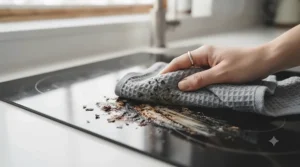
Worktops present a specific hygiene challenge: they’re touched constantly, throughout food prep, and rarely get the thorough disinfection a chopping board or knife gets between tasks. For worktop-specific duty, absorbency and antibacterial durability matter more than raw toughness, since you’re wiping frequently rather than scrubbing hard.
The Lakeland Antibacterial Dishcloths and e-cloth Antibacterial Wash and Wipe Kitchen Cloths are particularly well suited to worktops specifically, both offering genuine absorbency for spills and crumbs alongside antibacterial protection that holds up over repeated daily wiping. What most buyers overlook is that a worktop cloth used immediately after raw meat prep, then left to dry and reused on a clean worktop the next morning, still carries contamination risk regardless of the antibacterial treatment — the treatment slows bacterial growth within the cloth, it doesn’t retroactively clean what the cloth already picked up.
For genuinely thorough worktop hygiene, official guidance from the Food Standards Agency recommends disinfecting work surfaces thoroughly before food preparation and again after handling raw food, which an antibacterial cloth supports but doesn’t replace on its own.
Cloths for Raw Meat Prep: Getting Colour-Coding Right
| Colour | Standard UK Use | Best For |
|---|---|---|
| Red | Raw meat and poultry | We Can Source It or Vileda WIPRO (red set) |
| Yellow | Cooked meat | We Can Source It or Envirowipe (yellow set) |
| Green | Salad and vegetables | We Can Source It or Envirowipe (green set) |
| Blue | General surfaces | Buzz Catering Star Buy or Vileda WIPRO (blue set) |
Reading across that table, the logic is straightforward: a dedicated red cloth touches raw meat and nothing else, ever, until it’s been washed at a temperature high enough to kill pathogens. This isn’t just commercial-kitchen theatre — official Food Standards Agency guidance on cloths specifically flags cloths as one of the most common causes of cross-contamination in a kitchen, recommending reusable cloths be taken away for thorough washing and disinfection immediately after contact with raw meat, poultry, eggs or raw vegetables.
For raw meat prep specifically, the antibacterial treatment on a cloth is a secondary safeguard behind the colour-coding itself. Products like the We Can Source It Antibacterial Multi Purpose Cleaning Cloth, sold across all four colours in one pack, make it genuinely easy to grab the correct colour without hunting through a mixed drawer — which, in practice, is where most home colour-coding systems quietly break down.
Hygienic Kitchen Cloths: Separating Marketing from Real Hygiene
| Cloth Type | Hygiene Mechanism | Genuine Limitation |
|---|---|---|
| Chemical antibacterial coating | Coating inhibits bacterial growth on the cloth surface | Wears down with repeated washing and bleach use |
| Silver-ion treatment | Silver ions disrupt bacterial cell processes | Effectiveness depends on silver concentration and contact time |
| Disposable single-use wipes | New surface every time, no regrowth risk | Higher ongoing cost and environmental waste |
| Untreated cotton/microfibre | None built in | Bacteria multiply freely between washes |
Peer-reviewed research on kitchen cloths, examining consumer usage patterns and bacterial survival, found that antibacterial claims can meaningfully affect bacterial regrowth in cloth fibres, but real-world hygiene outcomes depend heavily on drying speed, washing frequency and how consistently a cloth is used for a single task rather than everything at once — findings summarised in a peer-reviewed study on kitchen cloth hygiene. What most marketing copy won’t tell you is that a “hygienic” cloth used badly — left damp, reused across raw and ready-to-eat tasks, washed too infrequently — can still spread more bacteria than an untreated cloth used well.
The genuinely hygienic approach, based on the evidence, combines a treated cloth (any of the seven featured here) with disciplined drying, frequent hot washing, and task-specific colour assignment — no single purchase substitutes for all three.
✨ Don’t Miss These Exclusive Deals!
🔍 Take your kitchen hygiene routine to the next level with these carefully selected picks. Click on any highlighted product to check current pricing and availability. These cloths will help you build a genuinely safer, more organised prep routine your whole household benefits from!
Cross-Contamination: How It Actually Happens in a Home Kitchen
Cross-contamination happens in two main ways: direct contact, where raw food physically touches ready-to-eat food, and indirect contact, where bacteria travel via hands, cloths, chopping boards or surfaces. Of the two, indirect contamination via a shared cloth is arguably the easier one to fix, because it’s entirely within a household’s control through colour-coding and washing habits — unlike, say, packaging leaks in the fridge.
According to official Food Standards Agency guidance, preventing cross-contamination means using different equipment, including cloths, for raw meat or poultry versus ready-to-eat food, cleaning and disinfecting surfaces thoroughly before and after raw food preparation, and always washing hands thoroughly after handling raw food. What most home cooks overlook is that this guidance, written primarily for food businesses, applies just as directly to a domestic kitchen — the bacteria involved (Salmonella, Campylobacter, E. coli) don’t distinguish between a restaurant and a family dinner.
The single most effective, lowest-cost change most households can make is committing to a colour-coded cloth system and actually following it, rather than relying on memory or “I’ll just rinse it quickly” between tasks.
Worktop Hygiene: Building a Daily Routine That Works
Consistent worktop hygiene comes down to sequencing more than any individual product. Clean surfaces before you start prepping, not just after — a worktop that looks clean can still carry bacteria from the previous use. Wipe down immediately after any raw food contact, using a designated cloth rather than whichever one is nearest to hand, then wash that cloth before it touches anything else.
Reasoning through a typical evening’s cooking: prep vegetables first with a green or general-purpose cloth, move to raw meat with a dedicated red cloth and a thorough surface wipe-down immediately afterwards, then switch to a clean blue or general cloth for any remaining tasks. This sequencing, more than any single antibacterial product, is what actually protects a household from cross-contamination over the course of a normal cooking session.
Worktop hygiene routines also benefit from replacing cloths on a schedule rather than waiting for visible signs of wear — a cloth that looks fine can still be significantly colonised with bacteria, particularly if it’s been left damp between uses.

Common Mistakes When Buying Antibacterial Cloths
The most common mistake is assuming “antibacterial” on the label means a cloth never needs replacing or washing as often. Every antibacterial treatment has a wash-count limit, and beyond it, the cloth performs no better than an untreated one — checking for a specific figure, like the Vileda WIPRO‘s stated 20 washes, gives you a genuine benchmark rather than an open-ended assumption.
The second is buying a single multipurpose cloth and expecting it to safely cover raw meat, vegetables and worktops simultaneously — a mistake this entire guide has tried to steer away from. The third, again drawing on peer-reviewed cloth hygiene research, is assuming price predicts performance; a premium silver-ion cloth used badly (left damp, washed infrequently) can perform worse in practice than a budget cloth used with disciplined habits.
Finally, buyers frequently overlook care instructions entirely, missing details like hand-wash-only guidance or fabric softener warnings that materially affect how long a cloth’s antibacterial treatment actually lasts.
Long-Term Cost & Maintenance
A £6 pack of 5 basic antibacterial cloths, replaced every few months, costs roughly the same over a year as a single £10-£15 premium set that’s built to last considerably longer through a higher wash-count guarantee — the real difference lies in consistency of protection, not just raw arithmetic. The e-cloth‘s 300-wash guarantee, for instance, likely works out as the cheapest genuine cost-per-use across this entire list, even though its upfront price per cloth looks higher than a bulk multipack.
Maintenance costs stay low across every option here: regular hot washing, air-drying between uses, and avoiding fabric softener are free habits that do more for long-term hygiene than any individual product spec. Total cost of ownership should also account for how many colours you actually need — a single-cook household might reasonably need just two cloths in rotation, while a busy family kitchen handling raw meat regularly benefits more from a full four-colour bulk set like the We Can Source It Antibacterial Multi Purpose Cleaning Cloth.
Safety, Regulations & Compliance Guide
UK food safety guidance treats cleaning cloths as a genuine, named risk factor rather than an afterthought. Official Food Standards Agency guidance on cloths specifically recommends using disposable cloths wherever possible, and where reusable cloths are used, taking them away for thorough washing and disinfection immediately after contact with raw meat, poultry, eggs or raw vegetables — advice originally written for food businesses but every bit as relevant to a home kitchen.
Any disinfectant used alongside a cloth should meet recognised standards; UK guidance points to products meeting BS EN 1276 or BS EN 13697. Products claiming direct food-contact safety, such as the Envirowipe Antibacterial Compostable Food-Safe Cloths‘ BS EN 1186 certification, carry a genuinely checkable standard rather than a vague marketing claim, and it’s worth looking for that kind of specific standard reference on packaging before trusting a food-safety claim at face value.
The underlying antimicrobial mechanism behind silver-treated cloths — silver ions disrupting bacterial cell processes — is well documented in peer-reviewed microbiology research, including work on the antibacterial mechanism of silver ions, which supports the general science behind products like the e-cloth and Vileda WIPRO ranges even where individual brand performance claims aren’t independently re-tested here.
Frequently Asked Questions
❓ Do antibacterial kitchen cloths actually work?
❓ How often should I replace an antibacterial kitchen cloth?
❓ Can I use the same antibacterial cloth for raw meat and worktops?
❓ What colour cloth should I use for raw meat prep?
❓ Are silver-ion cloths better than chemically treated antibacterial cloths?
Conclusion
Antibacterial kitchen cloths genuinely help, but the label alone isn’t the full hygiene solution it’s often marketed as. The treatment slows bacterial growth within the cloth between washes; it doesn’t replace thorough surface disinfection, frequent hot washing, or — most importantly for raw meat prep — a genuine colour-coded system that stops cross-contamination before it starts.
Across the seven products covered here, there’s a sensible option for every kitchen: the Lakeland Antibacterial Dishcloths and Minky Anti-Bacterial Cleaning Cloths for straightforward everyday households, the We Can Source It Antibacterial Multi Purpose Cleaning Cloth and Vileda WIPRO Multipurpose Professional Antibacterial Cloth for households serious about raw meat colour-coding, the e-cloth Antibacterial Wash and Wipe Kitchen Cloths for buyers prioritising silver-ion technology and longevity, and the Envirowipe Antibacterial Compostable Food-Safe Cloths and Buzz Catering Star Buy Antibacterial All Purpose Cloth for anyone cooking at genuinely commercial volume. Whichever you choose, pair it with the washing habits and colour-coding logic covered throughout this guide — the cloth does half the job; your routine does the rest.
Recommended for You
- J-Cloths Multipack Value: 7 Best Budget Picks for 2026
- Microfibre Kitchen Cloths: 7 Best Streak-Free Picks 2026 UK
- Multipack Kitchen Sponges Value: 7 Honest 2026 Picks
Disclaimer: This article contains affiliate links. As an Amazon Associate, I earn from qualifying purchases. If you purchase products through these links, we may earn a small commission at no additional cost to you.
✨ Found this helpful? Share it with your friends! 💬🤗
