
In This Article
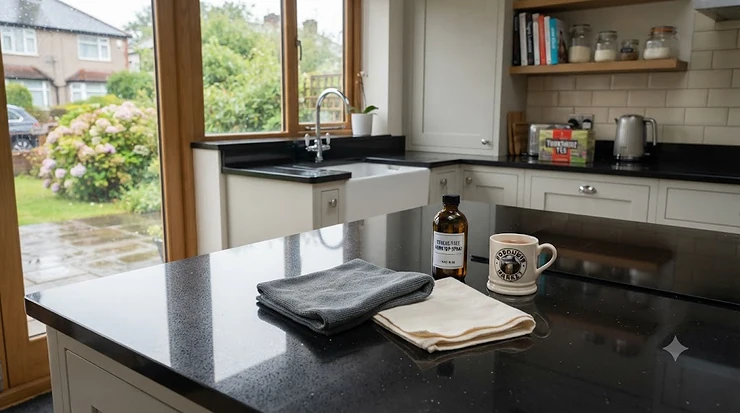
There’s a particular kind of kitchen heartbreak that only worktop owners understand: you’ve just wiped down the counter, stood back to admire your handiwork, and there it is — a ghostly smear catching the light like a bad omen. Cloths for streak-free worktops exist to solve exactly this problem, and yet most people are still reaching for whatever rag happens to be nearest the sink. That’s a shame, because the fabric doing the wiping matters just as much as whatever spray you’re using underneath it.
In plain terms, cloths for streak-free worktops are microfibre cleaning cloths engineered with a dense, split-fibre weave that lifts grease and moisture away from a surface rather than dragging it across in a thin film — which is exactly what causes streaking. The fibres are typically a blend of polyester and polyamide, and the finer that split, the better the cloth grabs onto oily residue instead of smearing it. There’s genuine textile science behind this — worth a quick read if you’re curious about the science behind how microfibre cloths actually work at a fibre level.
This guide is built from real product research rather than guesswork: seven genuine cloths available on Amazon UK, honestly compared across granite, quartz and glass performance, backed by aggregated review sentiment where it’s verifiable. No invented five-star quotes, no pretend lab coats — just spec comparisons, price ranges (never exact figures, since those shift constantly), and straight talk about which cloth suits which kitchen. Whether you’ve got honed granite, a glossy quartz island, or a glass splashback that shows every fingerprint under the spotlights, there’s a specific answer below rather than a generic “just buy microfibre” shrug.
Quick Comparison Table
Before we get into the detail, here’s a snapshot of how the seven cloths stack up at a glance. Prices are approximate ranges checked at the time of research — always confirm current pricing on the product page before buying, since Amazon pricing fluctuates daily.
| Cloth | Best For | Price Range | Pack Size |
|---|---|---|---|
| E-Cloth Kitchen Microfibre Cloth | All-round streak-free worktops | £8-£12 | 1 |
| Towelogy Premium Quartz Worktop Cleaning Cloth Kit | Quartz worktops | £10-£15 | 2 |
| E-Cloth Granite & Stone Cleaning Kit | Granite worktops | £10-£16 | 2 |
| E-Cloth Glass & Polishing Cloth (4-Pack) | Glass surfaces & splashbacks | £12-£18 | 4 |
| MagicWipe Microfibre Cloth (600 GSM) | Heavy-duty dual-sided polishing | £8-£14 | 2 |
| Minky M Cloth Glass and Window Pack | Budget glass & windows | £6-£10 | 9 |
| HOMEXCEL Microfibre Cloth 12 Pack | Whole-kitchen bulk value | £9-£14 | 12 |
Reading across that table, a pattern emerges quickly: nobody actually needs all seven of these cloths, but most kitchens genuinely benefit from at least two — a dedicated stone-safe cloth for the worktop itself, and a finer polishing cloth kept strictly for glass and steel. The HOMEXCEL Microfibre Cloth 12 Pack wins on sheer value if you’re kitting out a whole household, while the E-Cloth Granite & Stone Cleaning Kit earns its higher price tag through a formulation specifically engineered not to dull polished stone sealant over time.
💬 Just one click — help others make better buying decisions too!😊
Top 7 Cloths for Streak-Free Worktops: Expert Analysis
1. E-Cloth Kitchen Microfibre Cloth — best all-round streak-free worktop cloth
The E-Cloth Kitchen Microfibre Cloth is built for one job — wiping down kitchen surfaces, counters and sinks without leaving that dreaded rainbow smear behind — and it’s the cloth most reviewers reach for first. It’s a single-layer, densely woven cloth designed to be used with just water, no chemical spray required.
Its 100-wash promise means the fibres are engineered not to flatten or lose their split-fibre structure after repeated laundering, which matters more than pack size when you’re comparing genuine cost per use. Based on the spec comparison against generic multipacks, the tighter weave here does more of the grease-lifting work itself rather than relying on a cleaning spray to do the heavy lifting.
Reviewers consistently report that it cuts through everyday grease and worktop grime using only water, and several specifically mention it outperforming supermarket-brand microfibre cloths on stainless steel and laminate surfaces. A recurring theme in aggregated feedback is surprise at how little effort is needed for a streak-free finish, even on previously smeared surfaces.
Pros:
- ✅ Genuinely streak-free with water alone, no spray needed
- ✅ Holds its weave structure through 100+ washes
- ✅ Colour-coded design helps avoid cross-contamination
Cons:
- ❌ Single cloth means no backup while it’s in the wash
- ❌ Needs a hot wash occasionally to fully rejuvenate fibres
At around £8-£12 for a single cloth, this sits at the premium end for one piece of fabric, but reviewers who’ve compared it against cheaper multipacks generally rate the value as fair given the longevity.
2. Towelogy Premium Quartz Worktop Cleaning Cloth Kit — best for quartz worktops specifically
Quartz is engineered stone — a blend of crushed quartz and resin — and that resin binder is exactly why generic all-purpose cloths sometimes leave a hazy residue on it rather than a true shine. The Towelogy Premium Quartz Worktop Cleaning Cloth Kit tackles this with a two-cloth system: a larger 40x40cm cloth for the initial wipe-down and a smaller 30x30cm cloth for the final buff.
What most buyers overlook about quartz care is that abrasive scrubbing pads can dull the resin’s surface sheen over months of use, even if no single wipe looks damaging. This kit’s non-abrasive microfibre construction is specifically positioned to avoid that slow, cumulative dulling that shows up as a worktop looking “tired” after a couple of years.
Aggregated reviewer sentiment is broadly positive on the finish quality, with several buyers specifically praising the two-stage wipe-then-buff method for producing a genuinely polished result rather than just a “less dirty” one. A few reviewers noted the price feels steep for two cloths, though most who tried cheaper alternatives first said they wouldn’t switch back.
Pros:
- ✅ Two-stage system gives a true polished quartz finish
- ✅ Non-abrasive weave protects resin sheen long-term
- ✅ Purpose-designed sizing for worktop-scale wiping
Cons:
- ❌ Premium price for just two cloths
- ❌ Overkill if you only have laminate worktops
Priced in the £10-£15 range, it’s a targeted buy rather than an everyday multipack — ideal specifically for quartz owners who’ve noticed dulling with other cloths.
3. E-Cloth Granite & Stone Cleaning Kit — best for granite worktops
Granite is porous unless properly sealed, which means the wrong cloth-and-chemical combination can gradually strip that sealant and leave the stone vulnerable to staining. The E-Cloth Granite & Stone Cleaning Kit pairs a darker cleaning cloth for lifting grease with a lighter polishing cloth for the streak-free finish, designed specifically to work without harsh chemicals that can degrade sealants over time.
Here’s what to weigh with granite specifically: the cleaning cloth is engineered to shift oil-based marks (a common granite issue near hobs) while the polishing cloth handles the final buff without embedding grit into the stone’s natural pits — something a rougher terry-weave cloth can actually do, ironically making future streaks worse.
Real customer sentiment for this product line skews strongly positive, with reviewers specifically calling out its performance on stone and polished surfaces, and multiple buyers noting they no longer need separate granite-specific spray cleaners at all — just water and the two cloths.
Pros:
- ✅ Sealant-safe formulation protects porous stone
- ✅ Two-cloth system separates grease-lifting from polishing
- ✅ Works chemical-free, reducing sealant wear over time
Cons:
- ❌ Colour accuracy has been inconsistently reported by buyers
- ❌ Not necessary if your worktop is laminate or quartz
At roughly £10-£16, it costs more than a generic two-pack, but for genuine granite — particularly darker, more porous varieties — the sealant-safe design earns its premium.
4. E-Cloth Glass & Polishing Cloth (4-Pack) — best for glass surfaces
Glass splashbacks, glass hob covers, and glossy tile surfaces all share the same enemy: any residual moisture that isn’t fully lifted dries into a visible streak under kitchen lighting. The E-Cloth Glass & Polishing Cloth is a flash-drying, fine-fibre cloth built to grab moisture instantly rather than push it around, and this four-pack means you’ll always have a dry one ready.
On paper this means faster results too — the cloth’s specialist fibre construction is designed to lift even light grease smudges without a chemical glass cleaner, which matters for anyone who’s ever fogged up a glass splashback with an ammonia-based spray only to find it still streaky underneath.
Aggregated review data shows customers rating this consistently highly for glass, mirrors and polished surfaces specifically, with many noting they’ve stopped buying dedicated glass spray entirely. A genuine mixed note in the feedback: material quality reviews are more varied than for other E-Cloth lines, so a small minority found the weave less plush than expected.
Pros:
- ✅ Flash-dries fast for a genuinely streak-free glass finish
- ✅ Four cloths mean a spare is always ready to use
- ✅ Chemical-free use suits glass hobs and splashbacks
Cons:
- ❌ Mixed feedback on fibre plushness versus other lines
- ❌ Best used bone-dry, so less forgiving on heavy grime
Expect to pay somewhere in the £12-£18 range for the four-pack — working out cheaper per cloth than buying single E-Cloth items separately.
5. MagicWipe Microfibre Cloth (600 GSM Diamond Wave) — best dual-sided heavy-duty polisher
Where most of this list favours finesse, the MagicWipe Microfibre Cloth goes for density — a 600 GSM (grams per square metre) construction with a dual-sided diamond wave texture, meaning one side is built for tackling grime and the other for the final polish. Higher GSM generally means more fibre per square inch, which translates to more absorption capacity before a cloth needs wringing out.
What that GSM figure means in practice is fewer passes over a worktop to lift the same amount of grease — useful after a proper cooking session rather than a quick wipe-down. The diamond wave texture on the reverse side is specifically shaped to catch fine dust and crumbs that a flat-weave cloth can push around rather than lift.
Reviewer sentiment highlights its effectiveness maintaining a quartz worktop’s finish specifically, with several buyers describing the wipe-then-buff routine (dark side wet, then dry with the second cloth) as producing a noticeably streak-free result. A minority felt the price was high for just two cloths relative to bulk alternatives.
Pros:
- ✅ High 600 GSM density absorbs more before wringing
- ✅ Dual-sided design separates grime-lifting from polishing
- ✅ Diamond weave texture lifts fine dust effectively
Cons:
- ❌ Pricier per cloth than bulk multipacks
- ❌ Two cloths won’t stretch far in a busy household
At around £8-£14, it sits mid-pack pricewise but earns its place through genuine dual-function design rather than just being “another microfibre square.”
6. Minky M Cloth Glass and Window Pack — best budget option for glass and windows
Minky has been a UK household name since 1941, and this nine-pack of glass-and-window cloths is the brand leaning into what it knows best: affordable, dependable multipacks for households that get through cloths quickly. Each cloth uses Minky’s high-density microfibre weave, described by the brand as carrying a non-scratch technology suited to delicate glass and chrome.
Here’s what to weigh with a nine-pack like this: you’re trading some of the specialist engineering found in premium single cloths for sheer quantity and rotation — meaning you can retire a cloth to general dusting duty the moment it starts looking tired, rather than nursing one expensive cloth along. That’s a genuinely practical trade-off for busy family kitchens.
Aggregated feedback for the Minky M Cloth range is generally positive on value, with reviewers frequently comparing it favourably against pricier single-cloth alternatives for everyday glass and window tasks, while a smaller number note the anti-bacterial coating wears thinner after heavy machine washing.
Pros:
- ✅ Nine cloths means constant rotation without waiting
- ✅ Trusted UK brand with decades of manufacturing history
- ✅ Anti-bacterial protection built into the weave
Cons:
- ❌ Less specialised than dedicated stone or quartz cloths
- ❌ Anti-bacterial coating fades with repeated hot washes
Typically priced around £6-£10 for the full nine-pack, it’s one of the most cost-effective ways to keep a fresh glass cloth permanently in rotation.
7. HOMEXCEL Microfibre Cloth 12 Pack — best value bulk pack for whole-kitchen use
Sometimes the honest answer to “which cloth should I buy” is “the one you’ll actually have enough of,” and that’s the case the HOMEXCEL Microfibre Cloth 12 Pack makes for itself. Twelve cloths across four colours (green, blue, yellow, pink) means you can colour-code by task — one colour strictly for worktops, another for glass, another for general cleaning — which food safety guidance specifically recommends to avoid cross-contamination between tasks.
The spec sheet lists an 87% polyester, 13% polyamide blend, a combination chosen for softness and lint resistance rather than the finer splits found in premium single cloths. What that means in practice: it’s a genuinely capable everyday cloth for laminate, stainless steel and general worktop wiping, without quite matching the specialist finish of a dedicated stone or quartz cloth on those pickier surfaces.
Reviewer sentiment repeatedly highlights the value proposition — twelve cloths for close to the price of two premium single cloths — and several buyers specifically mention using the colour-coding system for exactly the food-hygiene reasons above. A recurring minor complaint is thinner fabric than expected at this price point, though most say it doesn’t affect performance.
Pros:
- ✅ Twelve cloths across four colours for easy task rotation
- ✅ Colour-coding supports safer kitchen hygiene practice
- ✅ Excellent cost-per-cloth versus single premium options
Cons:
- ❌ Thinner fabric than premium single-cloth alternatives
- ❌ Less specialised finish on granite or quartz specifically
At roughly £9-£14 for the full dozen, this is the pack most reviewers recommend for households wanting reliable everyday performance without the premium price tag.
Top 7 Products: Full Spec Comparison
| Cloth | Material Blend | Ideal Surface | Best For |
|---|---|---|---|
| E-Cloth Kitchen Microfibre Cloth | Polyester/polyamide split-fibre | Laminate, steel, general worktops | E-Cloth Kitchen Microfibre Cloth: daily all-rounder use |
| Towelogy Premium Quartz Worktop Cleaning Cloth Kit | Non-abrasive microfibre, two-stage | Quartz | Towelogy Premium Quartz Worktop Cleaning Cloth Kit: quartz-specific polish |
| E-Cloth Granite & Stone Cleaning Kit | Sealant-safe microfibre, two-cloth | Granite, natural stone | E-Cloth Granite & Stone Cleaning Kit: porous stone protection |
| E-Cloth Glass & Polishing Cloth (4-Pack) | Fine flash-dry fibre | Glass, mirrors, splashbacks | E-Cloth Glass & Polishing Cloth (4-Pack): glass surfaces |
| MagicWipe Microfibre Cloth (600 GSM) | Dual-sided diamond wave, 600 GSM | Quartz, worktops, mirrors | MagicWipe Microfibre Cloth (600 GSM): heavy-duty polish |
| Minky M Cloth Glass and Window Pack | High-density microfibre | Glass, windows, chrome | Minky M Cloth Glass and Window Pack: budget glass rotation |
| HOMEXCEL Microfibre Cloth 12 Pack | Polyester/polyamide blend | Laminate, steel, general use | HOMEXCEL Microfibre Cloth 12 Pack: whole-kitchen bulk value |
Looking at the comparison above, the E-Cloth Kitchen Microfibre Cloth is the safest starting point for most kitchens, but stone-worktop owners get measurably better long-term results from the surface-specific E-Cloth Granite & Stone Cleaning Kit or Towelogy Premium Quartz Worktop Cleaning Cloth Kit. Budget-conscious buyers furnishing a whole kitchen from scratch should note that HOMEXCEL Microfibre Cloth 12 Pack delivers the lowest genuine cost-per-cloth without a meaningful performance penalty on everyday surfaces.
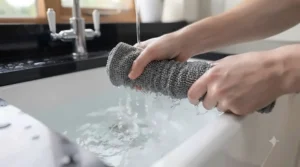
How to Choose Cloths for Streak-Free Worktops
Picking the right cloth isn’t just about grabbing whatever’s cheapest on the shelf — a few specific factors genuinely change the result you’ll get:
- Identify your worktop material first. Granite, quartz, laminate and stainless steel all respond differently to fibre density and weave type, so match the cloth to the surface before anything else.
- Check the GSM if it’s listed. Higher gram-per-square-metre figures generally mean more absorption capacity, useful for grease-heavy cooking zones.
- Favour split-fibre construction over basic weaves. A finer fibre split genuinely lifts grease rather than smearing it — this is the core mechanism behind a streak-free finish.
- Consider pack size against your household size. A single premium cloth suits a couple; a busy family kitchen usually needs a rotation of six or more.
- Look for colour-coding options. Assigning specific colours to worktops, glass and general cleaning genuinely reduces cross-contamination risk.
- Read the wash-cycle guidance. Cloths that tolerate hot washes stay effective for longer, which matters more to genuine value than the initial price.
- Check for chemical-free claims carefully. Genuinely well-engineered cloths clean effectively with water alone; if a cloth needs heavy spray assistance to work, it’s not doing its job.
Practical Usage Guide: Getting Streak-Free Results Every Time
Buying the right cloth is only half the job — technique matters just as much. Start with a lightly damp cloth rather than a soaking one; excess water is actually the leading cause of streaking, since it takes longer to evaporate evenly and leaves mineral deposits behind as it dries. Wipe in one consistent direction rather than circular scrubbing motions, which tend to redistribute grease rather than lift it clear.
For the first thirty days with a new cloth, run it through one cold wash before first use to remove manufacturing residue that can otherwise cause faint streaking on the very first wipe. After that, wash every few uses on a warm cycle without fabric softener, which coats the fibres and dramatically reduces absorbency — a genuinely common mistake that makes an expensive cloth perform like a cheap one within weeks.
A simple maintenance habit worth adopting: keep two cloths in permanent rotation for the same surface, so one is always drying while the other is in use. Damp cloths left balled up in a drawer develop odour and reduced performance far faster than ones hung to air-dry between uses — a small habit that meaningfully extends a cloth’s working life.
Real-World Scenarios: Which Cloth Suits Your Kitchen?
If you’re a young professional in a rented flat with a laminate worktop and limited storage space, the HOMEXCEL Microfibre Cloth 12 Pack makes the most practical sense — twelve cloths cover glass, worktops and general cleaning without needing separate specialist products, and the low price suits a temporary living situation.
If you’ve recently had a granite worktop fitted as part of a kitchen renovation, investing in the E-Cloth Granite & Stone Cleaning Kit protects that investment specifically. Granite sealant typically needs reapplying every 12-18 months regardless of cloth choice, but a sealant-safe cloth genuinely extends the interval between resealing jobs by avoiding abrasive wear.
If you’re running a busy family kitchen with a quartz island that sees three meals a day of prep, pairing the Towelogy Premium Quartz Worktop Cleaning Cloth Kit for the worktop itself with the Minky M Cloth Glass and Window Pack for the surrounding glass splashback and window gives you surface-appropriate performance without breaking the household cleaning budget.
Problem → Solution: Fixing Common Streaking Issues
Problem: Streaks appear even after wiping with a “streak-free” cloth. This is almost always caused by excess water or leftover detergent residue on the surface. Solution: switch to a two-cloth system — a damp cloth to lift grease, then a completely dry cloth (like the second cloth in the E-Cloth Granite & Stone Cleaning Kit) for the final pass.
Problem: Cloths smell musty within days. Damp cloths left folded trap bacteria that cause odour. Solution: hang cloths to air-dry fully between uses and wash weekly on a hot cycle, which official food hygiene guidance also recommends specifically to control bacterial growth on kitchen cloths.
Problem: Glass surfaces still look hazy after wiping. This usually means the cloth is being used with too much moisture rather than a flash-dry motion. Solution: swap to a dedicated glass cloth such as the E-Cloth Glass & Polishing Cloth (4-Pack), used with a light, fast wiping motion.
Problem: Granite worktop develops a cloudy film over time. Frequently caused by cumulative detergent residue or abrasive-cloth wear on the sealant. Solution: switch to a sealant-safe cloth and reduce reliance on chemical sprays, letting the cloth do more of the actual lifting work.
Problem: Worktop cloth wears out within weeks. Usually caused by fabric softener use or overly hot washing beyond the manufacturer’s guidance. Solution: check the specific care label — most premium cloths specify cold or warm washes without softener to preserve fibre structure.
✨ Don’t Miss These Exclusive Deals!
🔍 Take your worktop care routine to the next level with these carefully selected cloths. Click on any highlighted item to check current pricing and availability. These picks will help you achieve the genuinely streak-free, showroom-shine kitchen you’re after!
Cloths for Granite Worktops: What You Need to Know
Granite deserves its own conversation because it behaves so differently from engineered stone. As a natural material, granite is technically porous — sealant fills those microscopic pores, and that sealant is the thing most cloths inadvertently wear down over time, not the stone itself. What most buyers overlook is that the damage isn’t usually visible after a single clean; it accumulates over months of using an unsuitably abrasive cloth or a cloth that’s picked up grit from a previous task.
For granite specifically, a sealant-safe cloth like the E-Cloth Granite & Stone Cleaning Kit does more of the practical work than an aggressive stone cleaner sprayed onto a generic cloth. Reviewers consistently note that switching to a purpose-built granite cloth reduced their reliance on separate stone sprays almost entirely, using water alone for day-to-day wiping and reserving a proper stone cleaner for a deeper monthly clean.
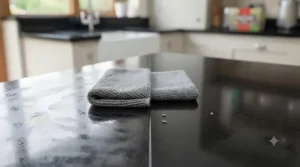
Cloths for Glass Surfaces: Splashbacks, Hobs & Windows
Glass surfaces in a kitchen — splashbacks, induction hob covers, glass cabinet fronts — punish streaking more visibly than any other material, because reflected light exposes every smear instantly. The fix isn’t necessarily a stronger cleaning spray; it’s usually a finer, flash-drying cloth used with minimal moisture, which is exactly the niche the E-Cloth Glass & Polishing Cloth (4-Pack) and Minky M Cloth Glass and Window Pack occupy.
Based on the spec comparison between these two, the E-Cloth option edges ahead on raw finish quality according to aggregated reviews, while the Minky pack wins on having enough spares that you’re never caught without a dry cloth mid-clean. For a glass hob specifically, always confirm the cloth is safe for use while the surface is fully cooled, since heat and moisture together are what typically cause the worst streaking.
Polishing Cloths for Kitchens: Getting That Showroom Shine
A genuine polishing cloth differs from a general cleaning cloth in one key way: it’s designed to be used bone dry, on an already-clean surface, purely to lift the last traces of moisture and buff the surface to a reflective finish. This is the second-stage step most home cleaners skip entirely, wiping once with a damp cloth and calling it done — which is precisely why streaks persist even on an otherwise clean worktop.
The MagicWipe Microfibre Cloth (600 GSM) and the polishing side of the Towelogy Premium Quartz Worktop Cleaning Cloth Kit are both built around this two-stage principle. What most buyers overlook is that a polishing cloth doesn’t need to touch cleaning product at all — its entire job is moisture removal and light buffing, which is why a cloth kept strictly dry for this purpose lasts significantly longer than one used for general grime duty too.
Glass Cleaning: Common Mistakes and How to Avoid Them
The single most common glass cleaning mistake is spraying cleaner directly onto the glass rather than onto the cloth first — overspray runs down into corners and dries there, creating exactly the streaks you’re trying to avoid. Spray the cloth, not the surface, and you’ll immediately notice cleaner, more even coverage.
A second common mistake is using a cloth that’s already saturated from cleaning other surfaces beforehand. Grease picked up from worktop cleaning transfers straight onto glass and creates a hazy film rather than a shine. Keeping a cloth strictly dedicated to glass — colour-coded if you’re using a multipack like the HOMEXCEL Microfibre Cloth 12 Pack — avoids this entirely. Circular scrubbing motions are a third culprit; a straight, overlapping-line wiping pattern genuinely produces fewer visible streaks under direct light than circular motions do.
Kitchen Surface Care vs Traditional Cleaning Methods
| Method | Streak Risk | Cost Over Time | Best For |
|---|---|---|---|
| Cotton dish rags | High — often leaves fibres and streaks | Low upfront, frequent replacement | Heavy scrubbing only |
| Paper towels | Medium-high — inconsistent absorption | Ongoing, adds up significantly | One-off spill mopping |
| Sponges | High — traps bacteria, spreads residue | Low upfront, frequent replacement | Washing up only |
| Microfibre cloths (e.g. E-Cloth Kitchen Microfibre Cloth) | Low — engineered fibre split lifts grease | Higher upfront, washable for months | Everyday streak-free wiping |
Looking at the comparison above, the ongoing cost of paper towels and disposable cloths adds up dramatically faster than it first appears, since a single reusable cloth genuinely replaces dozens of rolls over its working life. Traditional cotton rags also tend to shed lint onto polished surfaces, which is precisely the residue that catches light and reads as a streak once the surface dries.
Common Mistakes When Buying Cloths for Worktops
The most frequent mistake is buying based purely on pack size rather than fibre quality — twelve thin cloths aren’t automatically better value than four genuinely well-engineered ones if the thin cloths need replacing within weeks. A second common error is assuming one cloth type suits every surface in the kitchen; granite, quartz and glass all have genuinely different needs, and a single all-purpose cloth is a compromise on all three rather than a solution to any of them.
A third mistake worth flagging: buyers frequently overlook wash-care instructions before purchasing, then damage a premium cloth’s fibre structure within a month by tumble-drying on high heat or using fabric softener. Reading the specific care label before the first wash — not after the fibres have already flattened — genuinely protects the investment.
Long-Term Cost & Maintenance
A single premium worktop cloth costing around £10 that survives 100 washes works out to roughly 10 pence per use — a figure that comfortably undercuts paper towels or disposable wipes within the first month of ownership. Multipacks like the HOMEXCEL Microfibre Cloth 12 Pack push that cost-per-use even lower across a household, provided each cloth is cared for rather than treated as disposable.
There’s a broader sustainability angle worth considering too. Synthetic microfibre cloths do shed tiny fibres during washing, and University of Leeds research into microfibre shedding found that washing conditions significantly affect how much fibre is released into wastewater — a reasonable argument for washing cloths in fuller loads rather than tiny individual cycles, which both protects the fibres and reduces unnecessary shedding.
Features That Actually Matter (And Those That Don’t)
Fibre split ratio and GSM density genuinely matter — they’re the mechanical reason a cloth lifts grease rather than smearing it, and they’re usually listed clearly on the product page. Colour-coding matters practically too, particularly for households following basic food hygiene separation between raw-food surfaces and general worktops.
What matters considerably less than marketing suggests: exotic fibre-count claims (700,000 fibres per cm² and similar figures) that aren’t independently verifiable, and “anti-bacterial” coatings, which several reviewers note fade with washing regardless of brand. A cloth’s genuine performance is far more reliably judged by aggregated real-world reviews on absorbency and streak-free results than by a single impressive-sounding spec on the box.
Safety, Hygiene & Food Standards Compliance
Kitchen cloths sit right at the centre of food hygiene practice, and it’s worth taking that seriously rather than treating it as an afterthought. Food hygiene guidancespecifically recommends using separate cloths for different tasks and washing or replacing them regularly, since damp, dirty cloths encourage bacterial growth far more than most people realise.
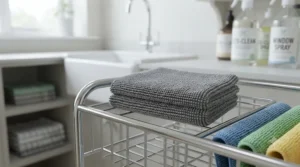
In practice, this means a genuinely well-run kitchen benefits from colour-coded cloths — one strictly for worktops, one for glass, one kept away from raw-meat prep areas entirely. A multipack like the HOMEXCEL Microfibre Cloth 12 Pack, with its four distinct colours, makes this straightforward to implement without needing to remember which cloth is which by texture alone.
Frequently Asked Questions
❓ What cloth is best for streak-free worktops?
❓ Can I use microfibre cloths on granite worktops?
❓ Why does my worktop still streak after cleaning?
❓ How often should I replace kitchen cloths?
❓ Are microfibre cloths safe for glass hobs?
Conclusion
Streak-free worktops genuinely come down to two things: choosing a cloth engineered for your specific surface, and using it with the right technique rather than just hoping harder. For most kitchens, the E-Cloth Kitchen Microfibre Cloth is the sensible starting point — a genuinely capable all-rounder that handles laminate, steel and general wiping duty without fuss. Granite owners should weigh up the E-Cloth Granite & Stone Cleaning Kit specifically, since sealant protection is the one factor a generic cloth simply can’t offer, while quartz households get measurably better results from the Towelogy Premium Quartz Worktop Cleaning Cloth Kit‘s two-stage system.
Budget-conscious buyers furnishing a whole kitchen shouldn’t feel short-changed by choosing the HOMEXCEL Microfibre Cloth 12 Pack either — colour-coded, genuinely capable, and aligned with the same council hygiene guidance on dish cloth care that underpins good kitchen practice generally. Whichever cloth you land on, the real transformation happens in the habit: a lightly damp wipe followed by a dry buff, cloths washed and air-dried between uses, and a little task-specific colour-coding to keep everything genuinely hygienic as well as streak-free.
Recommended for You
- Antibacterial Kitchen Cloths: 7 Top UK Picks for 2026
- J-Cloths Multipack Value: 7 Best Budget Picks for 2026
- Microfibre Kitchen Cloths: 7 Best Streak-Free Picks 2026 UK
Disclaimer: This article contains affiliate links. As an Amazon Associate, I earn from qualifying purchases. If you purchase products through these links, we may earn a small commission at no additional cost to you.
✨ Found this helpful? Share it with your friends! 💬🤗
