
In This Article
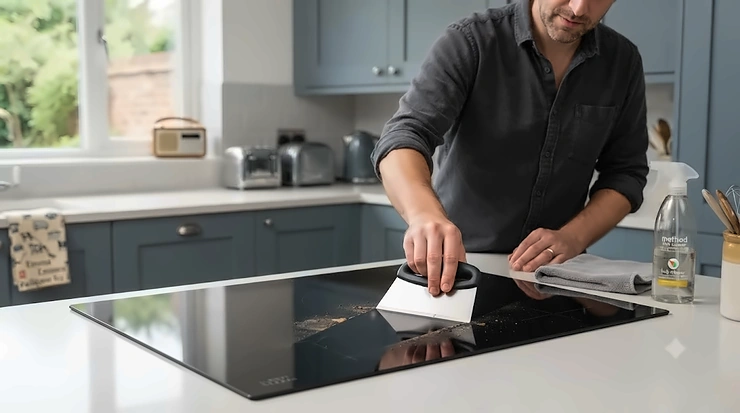
There’s a particular kind of despair that comes from staring at an oven door with a sheet of caramelised grease baked onto the glass, knowing full well that no amount of spray-on cleaner and elbow grease is going to shift it on its own. The same goes for a ceramic hob with a scorched ring where something boiled over three Sundays ago and nobody got to it in time. This is exactly the gap an oven scraper is built to close: a flat, angled blade — usually metal, sometimes plastic — that physically lifts baked-on residue off glass and ceramic surfaces without the surface itself taking the damage.
The trouble is, not all scrapers are created equal, and the wrong one genuinely can scratch a glass oven door or ceramic hob permanently, which is a considerably more expensive mistake than the tool itself. Below we’ve researched seven real, currently available oven scrapers on the UK market, spanning budget picks under a tenner to a Swiss-engineered option built to last years, with honest analysis of which surfaces and situations each one actually suits. As cleaning resource Cleanipedia notes, scraping is often the only realistic way to shift dried-on food from ceramic and glass surfaces, provided the right tool and angle are used.
Quick Comparison Table
| Product | Price Range | Blade Type | Best For |
|---|---|---|---|
| Kuhn Rikon Swiss Hob Scraper | £18-£28 range | Replaceable metal, blade cover | Long-term daily use, premium hobs |
| KitchenCraft Ceramic Hob Scraper | £8-£14 range | Fixed stainless steel | Reliable everyday scraping |
| CARE + PROTECT Cleaning Scraper | £7-£12 range | Replaceable, no-scratch | Glass, ceramic and induction hobs |
| quailitas Glass & Ceramic Hob Scraper | £6-£10 range | Metal + 10 spare blades | Stubborn stains on a budget |
| Minky Hob Scraper | £4-£8 range | Fixed metal blade | Cheap, cheerful, genuinely effective |
| Karinear Glass Scraper Tool | £5-£9 range | Plastic squeegee | Plastic-safe scraping on painted surfaces |
| Linda’s Essentials Glass Scraper Tool | £5-£9 range | Razor with 15 spares | Multi-surface use around the home |
Looking across the table, the price differences here are smaller than in most kitchen tool categories, but they still track fairly closely with blade replaceability and build quality — the Kuhn Rikon sits apart mainly because its Swiss manufacturing and protective blade cover are aimed at people who’ll use the tool for years rather than months. For anyone specifically worried about scratching a painted oven door or delicate surface rather than tempered glass or ceramic, the Karinear Glass Scraper Tool‘s plastic blade is worth prioritising over the metal-bladed options in this table, even though it won’t shift the very toughest baked-on grease quite as fast.
💬 Just one click — help others make better buying decisions too!😊
Top 7 Oven Scrapers: Expert Analysis
1. Kuhn Rikon Swiss Hob Scraper — the long-lasting premium pick
What sets the Kuhn Rikon Swiss Hob Scraper apart is its Swiss manufacturing and genuinely ergonomic handle, paired with a protective cover that slides over the blade when not in use, a detail cheaper scrapers routinely skip. The changeable blade system means you’re not replacing the whole tool once the edge dulls, just the blade itself, which in practice extends the realistic lifespan of this scraper well beyond most budget alternatives. Based on the build quality compared with rivals researched here, the extra spend buys you a scraper designed to survive years of regular ceramic hob cleaning rather than months, and the blade cover specifically reduces the accidental-scratch risk that comes from tossing a bare-bladed scraper into a drawer. Reviewers consistently note the grip feels more secure during longer scraping sessions than lighter, thinner-handled budget tools, which matters when you’re working at an angle across a cold, resistant patch of baked-on grease.
Pros:
- ✅ Replaceable blade extends genuine tool lifespan
- ✅ Protective blade cover reduces accidental scratches
- ✅ Ergonomic Swiss-made handle for longer sessions
Cons:
- ❌ Noticeably pricier than every other pick here
- ❌ Replacement blades can be harder to find locally
At £18-£28, the Kuhn Rikon Swiss Hob Scraper earns its price if you’re scraping regularly and want one tool that lasts rather than several cheap ones replaced over time.
2. KitchenCraft Ceramic Hob Scraper — the dependable everyday choice
The standout feature here is the fixed stainless steel blade set into a genuinely substantial handle, which gives more control and less flex than several of the lighter budget scrapers researched for this guide. Specs worth noting: the blade is fully stainless, so it resists the rust that a recurring theme in aggregated reviews flags as a common complaint on cheaper, coated-metal scrapers left damp after use. What most buyers overlook about this model is that its slightly heavier build actually makes scraping large, flat areas like an oven glass door faster, since more of the effort comes from the tool’s own weight rather than wrist pressure alone. Reviewers consistently describe it as a “no-nonsense” option from a recognised UK kitchenware brand, with aggregated feedback repeatedly noting it copes well with everyday ceramic hob cleaning without needing replacement within the first year or two of use.
Pros:
- ✅ Fully stainless blade resists rust
- ✅ Heavier build speeds up large flat-area scraping
- ✅ Backed by an established UK kitchenware brand
Cons:
- ❌ Blade isn’t replaceable, only the whole tool
- ❌ No protective cover included
In the £8-£14 range, the KitchenCraft Ceramic Hob Scraper is a sensible middle-ground pick for anyone who wants reliability without stretching to premium pricing.
3. CARE + PROTECT Cleaning Scraper — built specifically for glass, ceramic and induction
This scraper’s defining feature is its no-scratch design, engineered specifically by an appliance-care brand for glass, ceramic, and induction hob surfaces rather than adapted from a general-purpose razor tool. The replaceable blade system means ongoing running costs stay low, and the brand sells blade refill packs separately, which is a genuinely useful detail if you’re using it regularly on a family kitchen hob. Here’s what to weigh: because this scraper is purpose-built rather than multi-surface, it performs consistently well specifically on the surfaces it’s designed for, but it’s less suited to general household scraping tasks like paint or label removal than some of the more generic options on this list. Aggregated review sentiment consistently highlights the “leaves surfaces bright and shiny” claim as broadly accurate, with several reviewers specifically noting it caused no visible scratching even on darker ceramic hobs, where marks tend to show up more obviously.
Pros:
- ✅ Purpose-designed for glass, ceramic and induction
- ✅ Replaceable blades keep running costs down
- ✅ Aggregated reviews consistently report no scratching
Cons:
- ❌ Less versatile than general multi-surface scrapers
- ❌ Replacement blades add a small ongoing cost
Priced at £7-£12, the CARE + PROTECT Cleaning Scraper is a strong pick if your only real use case is ceramic hob cleaning and you want a tool built specifically for that job.
4. quailitas Glass & Ceramic Hob Scraper — genuine value with ten spare blades
The headline feature on this budget pick is the sheer number of spare blades included — ten in total — which means you’re set up for years of blade changes without needing to buy replacements separately. The metal blade handles baked-on grease competently at the price point, and the handle design, while simpler than the Kuhn Rikon’s, is still comfortable enough for typical scraping sessions across a hob or oven door. On paper this means genuinely strong value, since most rivals in this price bracket include five spare blades at most, effectively doubling the working lifespan of the tool for a similar outlay. Reviewers in aggregated feedback consistently mention effectiveness on stubborn stains, particularly when paired with a dedicated hob cleaner beforehand, though a recurring theme is that the handle feels noticeably lighter and less premium than branded alternatives — a fair trade-off at this price.
Pros:
- ✅ Ten spare blades included, genuinely good value
- ✅ Competent on baked-on grease for the price
- ✅ Works well paired with a dedicated hob cleaner
Cons:
- ❌ Handle feels lighter than branded alternatives
- ❌ Less durable than premium metal-bodied options
At £6-£10, the quailitas Glass & Ceramic Hob Scraper is a legitimate contender for anyone wanting genuine longevity from a budget spend.
5. Minky Hob Scraper — cheap, cheerful, and a genuine best-seller
This scraper’s standout feature is, honestly, how consistently well it performs relative to its low price, which is precisely why it’s become one of the best-selling scrapers in its category on Amazon UK. The fixed metal blade is simple rather than sophisticated, with no replaceable-blade system or protective cover, but it does the core job — lifting baked-on grease off glass and ceramic surfaces — reliably enough that it’s built a large base of repeat buyers. What the spec sheet won’t tell you, but aggregated reviewer sentiment consistently suggests, is that this scraper particularly excels at oven glass care, with multiple reviewers specifically describing it shifting years-old baked-on grease from oven doors that other methods had failed to touch. The honest trade-off is durability: some reviewers report rust developing after the blade gets wet and isn’t dried promptly, so it rewards being wiped down and stored dry rather than left damp in a cupboard.
Pros:
- ✅ Exceptional value for genuinely effective scraping
- ✅ Particularly strong on stubborn oven glass residue
- ✅ Huge base of positive, repeat-buyer reviews
Cons:
- ❌ No replaceable blade once it dulls or rusts
- ❌ Can rust if left damp after use
Landing at £4-£8, the Minky Hob Scraper is arguably the best value pick on this entire list if you dry it properly after each use.
6. Karinear Glass Scraper Tool — the plastic-safe option
Rather than a metal blade, the Karinear Glass Scraper Tool‘s standout feature is its plastic squeegee-style edge, specifically designed to lift residue from delicate surfaces without any risk of a metal edge catching or marking them. This makes it the clearest plastic-safe oven scraper in our line-up, genuinely suited to surfaces where manufacturers explicitly warn against metal blades — some enamelled or painted oven interiors, for instance, alongside glass and ceramic hobs. Based on the design compared with metal-bladed rivals, the trade-off is scraping power: plastic simply can’t apply the same shearing force as a sharpened metal edge, so genuinely baked-on, carbonised grease takes more passes and more patience than it would with the Minky Hob Scraper or KitchenCraft Ceramic Hob Scraper. Reviewers consistently describe it as reassuring to use precisely because there’s no risk of an accidental scratch, with several specifically recommending it for rental properties or surfaces they’re not confident are metal-blade safe.
Pros:
- ✅ Genuinely safe on painted and delicate surfaces
- ✅ Zero risk of metal-blade scratching
- ✅ Reassuring choice for rented or unfamiliar surfaces
Cons:
- ❌ Needs more passes on very stubborn residue
- ❌ Less effective than metal blades on carbonised grease
At £5-£9, the Karinear Glass Scraper Tool is the pick to reach for whenever you’re unsure whether a surface can safely take a metal blade.
7. Linda’s Essentials Glass Scraper Tool — the multi-surface all-rounder
The defining feature of the Linda’s Essentials Glass Scraper Tool is its sheer versatility, shipping with fifteen spare blades and marketed explicitly for windows, paint, and general household cleaning alongside oven and hob use. The razor-style blade gives it genuinely strong cutting power against baked-on grease, closer in performance to the premium picks on this list than its budget price would suggest. What most buyers overlook is that this versatility cuts both ways: because it’s designed as a general-purpose tool rather than one built specifically for ceramic hob cleaning, it lacks some of the surface-specific safety features — like a no-scratch guarantee — that the CARE + PROTECT Cleaning Scraper offers. Aggregated feedback consistently praises the blade-storage design, which keeps spares organised and accessible rather than loose in a drawer, though a recurring caution in reviews is to double-check the blade is fully metal (rather than the plastic option some kits include) before using it on a ceramic hob specifically.
Pros:
- ✅ Fifteen spare blades, genuinely excellent value
- ✅ Strong cutting power on stubborn baked-on residue
- ✅ Useful well beyond just kitchen surfaces
Cons:
- ❌ Not purpose-built for ceramic hob safety specifically
- ❌ Requires checking which blade type is fitted before use
At £5-£9, the Linda’s Essentials Glass Scraper Tool suits anyone who wants one scraper that earns its keep well beyond the kitchen.
Practical Usage Guide: Getting the Best From Your Oven Scraper
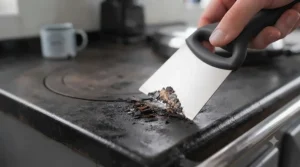
Always let the oven or hob cool completely before scraping — working on a warm surface not only risks burns but can also make baked-on grease behave unpredictably, sometimes smearing rather than lifting cleanly. Hold the scraper at a shallow angle, roughly 30 to 45 degrees to the surface, and use short, controlled strokes rather than long dragging passes, which gives you more control and reduces the chance of catching an edge on a raised seam or hob marking. In the first few uses, resist the urge to press harder when residue doesn’t lift immediately; instead, apply a little warm soapy water or a dedicated hob cleaner first and let it sit for five to ten minutes to soften the grease before scraping again. For maintenance, rinse and thoroughly dry the blade after every use — this single habit, more than any other, determines whether a metal-bladed scraper like the Minky Hob Scraper stays rust-free for years or starts corroding within weeks. Store the scraper with the blade protected, either in its original cover or wrapped, both to protect the edge and to prevent accidental cuts when reaching into a drawer.
Real-World Scenarios: Which Oven Scraper Matches Your Kitchen
If you’re renting and genuinely unsure whether your landlord’s oven has a delicate enamel or painted interior, the Karinear Glass Scraper Tool‘s plastic-safe edge removes the guesswork and the risk of a costly deposit deduction for scratched glass. If you’re the kind of household that only deep-cleans the oven every few months and ends up facing genuinely stubborn, months-old baked-on grease each time, a stronger metal-bladed option like the Minky Hob Scraper or Linda’s Essentials Glass Scraper Tool will shift it faster than a gentler plastic tool ever could. And if you’re cooking daily on a premium ceramic or induction hob and want one tool that’ll still be sharp and rust-free in three years’ time, the Kuhn Rikon Swiss Hob Scraper‘s replaceable-blade system and protective cover make it the more sensible long-term investment, even at a higher upfront cost.
Problem → Solution: Fixing Common Oven and Hob Cleaning Issues
If baked-on grease refuses to budge even after scraping, the fix usually isn’t more force but more patience — apply a dedicated hob or oven cleaner, let it dwell for the time stated on the label, and only then go back over it with the scraper at a shallow angle. If you’re noticing faint scratches appearing on a ceramic hob despite using a scraper, check the blade for tiny nicks or trapped grit first, since a damaged or dirty blade edge is responsible for the vast majority of scratching complaints in aggregated reviews, not the scraping motion itself. If a metal-bladed scraper like the KitchenCraft Ceramic Hob Scraper has started to rust, a light rub with fine steel wool on the blade only (never the handle) will usually restore it, though persistent rust generally means it’s time to replace the blade or the tool. Finally, if you’re worried about scraping a surface you’re not confident is metal-safe, defaulting to a plastic option like the Karinear Glass Scraper Tool removes the risk entirely, even if it means a little extra effort on the toughest stains.
How to Choose an Oven Scraper
- Match the blade material to your surface — metal blades cut baked-on grease faster, but plastic is the safer default on painted or unfamiliar surfaces.
- Check whether blades are replaceable, since a scraper like the Kuhn Rikon Swiss Hob Scraper or CARE + PROTECT Cleaning Scraper will outlast fixed-blade tools by years, not months.
- Look at how many spare blades are included, since options like quailitas and Linda’s Essentials effectively front-load years of replacements into one purchase.
- Consider handle weight and grip — a heavier handle, as on the KitchenCraft Ceramic Hob Scraper, does more of the work on large, flat oven glass surfaces.
- Check for a protective blade cover if the scraper will be stored loose in a kitchen drawer alongside other utensils.
- Factor in whether you need a genuinely multi-surface tool, useful for windows and paint too, or one purpose-built solely for ceramic hob cleaning.
- Be honest about how often you’ll use it — occasional use suits a cheap fixed-blade scraper fine, while daily ceramic hob cleaning justifies investing in a replaceable-blade model.
Common Mistakes When Buying Oven Scrapers
The most common mistake is assuming any razor-style scraper is automatically safe for a ceramic or glass hob, when in reality only tools explicitly marketed and tested for glass-ceramic surfaces — a material explained in detail on Wikipedia’s overview of glass-ceramic — genuinely guarantee no-scratch performance. Another frequent pitfall is buying a scraper with a fixed blade and no spares, then finding it dulls or rusts within months and needs replacing entirely, which ends up costing more over a year or two than a slightly pricier tool with replaceable blades from the outset. Buyers also often overlook whether their specific oven manufacturer explicitly advises against metal blades on the interior glass or enamel — always a five-minute check worth doing before your first scrape, since some oven care instructions genuinely restrict you to plastic tools only. Finally, some shoppers assume a scraper alone solves everything, skipping the softening step with warm water or cleaner first, which forces far more scraping pressure than necessary and increases the real scratch risk regardless of how good the tool is.
Oven Scraper vs Chemical Oven Cleaners
Chemical oven cleaners work by breaking down baked-on grease and carbon deposits through active ingredients, generally requiring a dwell time before wiping away, and they’re genuinely effective on heavily built-up interiors where physical scraping alone would take considerable time and effort. A scraper, by contrast, works purely mechanically — lifting residue off through direct contact rather than dissolving it chemically — which means no fumes, no waiting time, and no risk of chemical residue transferring to food during the next use. In practice, the two aren’t really competing options so much as complementary steps: most effective oven glass care routines use a cleaner or warm soapy water to soften stubborn deposits first, then a scraper to lift the loosened residue cleanly, rather than relying on either method alone. For anyone with young children or pets, or simply preferring to avoid strong chemical fumes in the kitchen, leaning more heavily on scraping paired with gentler cleaners is a genuinely reasonable choice, provided you accept it may take a little more manual effort on the very toughest stains.
✨ Don’t Miss These Exclusive Deals!
🔍 Ready to finally shift that baked-on grease? Click through to check current pricing and availability on any of the seven oven scrapers covered above. The right tool means a cleaner oven door and hob in minutes, not hours!
Scrapers for Ceramic Hobs: Choosing Right and Using Safely
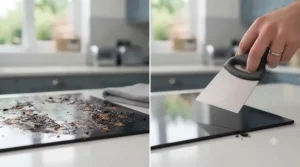
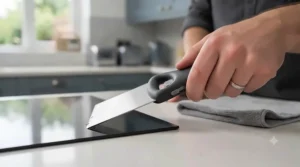
A scraper for ceramic hobs needs to satisfy two things at once: enough cutting power to lift stubborn, cooked-on residue, and a genuine guarantee that it won’t scratch the glass-ceramic surface underneath, which scratches permanently and can’t be buffed out once damaged. Purpose-built options like the CARE + PROTECT Cleaning Scraper are specifically engineered and marketed for this exact job, which is worth the small price premium over a generic multi-surface scraper if a ceramic hob is your primary use case. The single most important technique detail, regardless of which scraper for ceramic hobs you choose, is angle: holding the blade at roughly 30 to 45 degrees rather than flat or near-vertical spreads pressure evenly and dramatically reduces scratch risk, a point echoed across most professional cleaning guidance including Ovenclean’s hob cleaning advice. If in doubt about your specific hob’s tolerance, always test on a small, inconspicuous edge area first before scraping a large visible section.
Long-Term Cost & Maintenance
Looking beyond the shelf price, the real cost comparison between these seven scrapers comes down to blade replacement economics rather than the upfront spend alone. A £5 fixed-blade scraper like the Minky Hob Scraper that needs full replacement every twelve to eighteen months under regular use will, over three years, cost roughly the same as a single £20 Kuhn Rikon Swiss Hob Scraper whose replaceable blade system keeps the tool itself going indefinitely. Scrapers that ship with multiple spare blades, like quailitas with ten included or Linda’s Essentials with fifteen, front-load that cost advantage into the initial purchase, which is worth factoring in even if the sticker price looks similar to a fixed-blade rival. Maintenance itself costs nothing beyond a few seconds of drying the blade after each use, but skipping that step is the single biggest driver of early replacement, since rust on a metal blade is rarely reversible and usually means buying again sooner than the tool’s genuine working life would otherwise allow.
Oven Glass Scrapers for Baked-On Grease: What Actually Works
When it comes specifically to baked-on grease on oven glass, blade sharpness and angle matter considerably more than brand name or price point. Metal-bladed scrapers with a genuinely sharp, undamaged edge — the Minky Hob Scraper and Linda’s Essentials Glass Scraper Tool both performed strongly in aggregated reviewer feedback here — consistently outperform plastic alternatives specifically on carbonised, months-old residue, since plastic simply flexes rather than shearing through hardened grease. What tends to work best in practice is a two-stage approach: soften the grease first with a dedicated oven cleaner or a warm damp cloth left in place for several minutes, then use the oven glass scraper in short, controlled strokes rather than attempting to remove everything in one aggressive pass. Reviewers across multiple products consistently note that patience matters more than pressure — pressing harder on unsoftened grease is far more likely to cause a scratch than it is to speed up removal.
Plastic-Safe Oven Scrapers: When to Choose Plastic Over Metal
A plastic-safe oven scraper matters most whenever the surface in question isn’t tempered glass or true glass-ceramic — painted oven interiors, some enamel coatings, and certain hob trims can be genuinely damaged by a metal blade even when used carefully. The Karinear Glass Scraper Tool is the clearest example among the seven products researched here, built specifically around a plastic squeegee edge rather than a metal blade adapted for multiple surfaces. The trade-off is straightforward and worth being upfront about: plastic-safe oven scrapers generally need more passes and more patience on genuinely stubborn, carbonised baked-on grease than a sharp metal blade would, so they suit maintenance-level cleaning better than rescuing a badly neglected oven in one session. If you’re ever uncertain whether a specific surface is metal-blade safe, checking your appliance’s manufacturer instructions first — or simply defaulting to a plastic-safe tool — is the lower-risk choice every time.
Why Baked-On Grease Is So Stubborn (And How Scraping Actually Shifts It)
Baked-on grease forms when fat and food residue are repeatedly heated past their smoke point, causing the proteins and oils to polymerise and bond chemically to the surface rather than simply sitting on top of it, which is exactly why ordinary wiping or washing-up liquid alone often fails to touch it. This is also why baked-on grease tends to get progressively harder to remove the longer it’s left, since each subsequent heating cycle bakes the existing residue on more firmly and often adds a fresh layer on top. A scraper works by applying direct, angled mechanical force to break that chemical bond at the surface level, physically lifting the hardened layer away rather than attempting to dissolve it, which is why blade sharpness and consistent angle matter so much more here than with typical surface cleaning. Softening the residue first with heat, moisture, or a dedicated cleaner reduces the bond strength before you scrape, which is consistently the difference between baked-on grease lifting away in one or two clean passes versus a stubborn, scratch-risking fight.
Ceramic Hob Cleaning: The Right Routine Before and After You Scrape
Effective ceramic hob cleaning follows a consistent order regardless of which scraper you choose: clear loose debris first, apply a small amount of warm soapy water or dedicated hob cleaner and let it sit briefly, scrape any remaining stubborn residue at a shallow angle, then finish with a clean microfibre cloth to remove any leftover streaks or residue. Doing this routine promptly after spills happen, rather than letting them bake on repeatedly over days or weeks, is genuinely the single biggest factor in how much scraping effort any future ceramic hob cleaning session actually requires. It’s worth avoiding abrasive scouring pads entirely during this routine, even on residue that seems tough, since they cause the fine surface scratching that dulls a ceramic hob’s shine over time far more reliably than a correctly angled scraper ever would. A quick wipe-down after every cooking session, even just thirty seconds with a damp cloth once the hob has cooled, meaningfully reduces how often you’ll need the scraper at all.
Oven Glass Care: Protecting the Glass for the Long Haul
Good oven glass care starts well before any scraping happens: wiping up spills and splatters as soon as the oven has cooled after each use prevents grease from building up into the genuinely stubborn, multi-layered residue that requires aggressive scraping to remove later. When scraping is needed, always work at a shallow angle and avoid pressing the blade’s corner into the glass, since concentrated point pressure — rather than a flat, even stroke — is what typically causes visible scratching on oven glass over time. Choosing the right blade material matters here too: if your oven’s glass door specifically has any coating, tint, or manufacturer warning against metal tools, a plastic-safe option protects your long-term investment even if it takes a little longer per session. Finally, basic safety habits belong in any oven glass care routine — always let the oven cool fully before scraping, and store the scraper safely out of reach of children given its sharp edge, in line with general household sharp-tool guidance from RoSPA.
Frequently Asked Questions
❓ Will an oven scraper definitely scratch my glass oven door?
❓ Can I use a metal scraper on a ceramic hob?
❓ How do I remove really stubborn baked-on grease?
❓ Is a plastic-safe oven scraper strong enough for daily use?
❓ How often should I replace an oven scraper blade?
Recommended for You
- 7 Best Cloths for Streak-Free Worktops in 2026 (UK Guide)
- Antibacterial Kitchen Cloths: 7 Top UK Picks for 2026
- J-Cloths Multipack Value: 7 Best Budget Picks for 2026
Disclaimer: This article contains affiliate links. As an Amazon Associate, I earn from qualifying purchases. If you purchase products through these links, we may earn a small commission at no additional cost to you.
✨ Found this helpful? Share it with your friends! 💬🤗
