In This Article
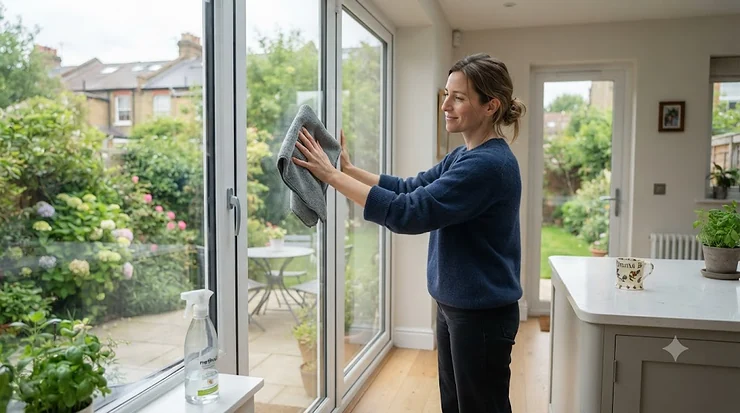
There’s a particular kind of despair that comes from stepping outside, looking back at the window you just “cleaned,” and watching the low winter sun light up a constellation of smears you swear weren’t there thirty seconds ago. If you’ve ever blamed the spray, the weather, or your own technique, there’s a decent chance the real culprit was sitting in your hand the whole time: the wrong cloth. A lint-free cloth for windows is a cleaning cloth engineered so its fibres don’t shed onto glass, leaving surfaces genuinely clear rather than dusted with fluff that catches the light. Get the material right and even cheap supermarket glass spray starts performing like something from a professional’s kit bag.
This guide is built around real products you can actually find on amazon.co.uk, not vague advice about “buying a nice cloth.” We’ve dug into genuine specifications, aggregated customer sentiment from verified reviews, and honest side-by-side analysis to help you separate the cloths worth your money from the ones destined for the bin bag under the sink. Whether you’re after a budget multipack for weekly upkeep, a traditional chamois for the caravan, or a premium set that claims to work with nothing but water, you’ll find a genuine recommendation here.
We’ll also dig into the perennial argument between lint free window cloth vs microfibre, work out whether chamois leather window cloth technology still earns its keep against modern synthetics, and answer the question everyone eventually asks: does a genuinely zero lint window wipe exist, or is it mostly marketing? By the end, you should know exactly which cloth belongs in your cleaning cupboard — and why.
Quick Comparison Table
| Product | Type | Best For | Price Range |
|---|---|---|---|
| E-Cloth Window Cleaning Kit | Microfibre (2-cloth system) | Chemical-free all-rounder | £15-£20 range |
| MR.SIGA Ultra Fine Microfibre Cloths for Glass (12-Pack) | Microfibre | Best value multipack | £15-£20 range |
| Amazon Basics Microfibre Cleaning Cloth (24-Pack) | Microfibre | Bulk budget buyers | Under £15 |
| CarMax English Premium Grade Natural Chamois Leather | Natural chamois | Traditionalists & large panes | £15-£20 range |
| Airlab Genuine Chamois Leather XXL (90x60cm) | Natural chamois | Conservatories & patio doors | Around £20 |
| Kärcher Spray Bottle & Microfibre Cloth Kit | Microfibre (vac accessory) | Window vac owners | Under £15 |
| Norwex Window Cloth | Premium microfibre | Buy-it-for-life shoppers | £20-£30 range |
Looking across the table, there’s no single “best” cloth so much as a best cloth for your situation. The E-Cloth Window Cleaning Kit and MR.SIGA Ultra Fine Microfibre Cloths for Glass dominate the middle ground because they balance genuine glass-specific performance with a price that doesn’t sting. Budget shoppers gravitate toward the Amazon Basics Microfibre Cleaning Cloth, but as we’ll explain in the product breakdown, that low price does come with trade-offs on glass specifically. If you already own a window vacuum, the Kärcher kit is a near-automatic pairing rather than an optional extra.
💬 Just one click — help others make better buying decisions too!😊
Top 7 Lint-Free Cloths for Windows: Expert Analysis
Choosing between these seven means weighing material, size, and how each one behaves once damp. Here’s what the specs actually mean once you’re stood in front of a dirty patio door.
1. E-Cloth Window Cleaning Kit — best chemical-free two-step system
The E-Cloth Window Cleaning Kit pairs a textured, waffle-weave Window Cloth for lifting dirt with a smooth Glass & Polishing Cloth for the final streak-free pass — and that two-step structure is the whole point. Both cloths are designed to work with plain water rather than chemical spray, and E-Cloth backs them with a 100-wash promise, which at a rough £15-£20 range works out to pennies per clean over the cloth’s lifespan. The set has been assessed by the Good Housekeeping Institute and is recommended by Allergy UK, which matters if fragrance-heavy sprays trigger headaches or breathing issues in your household.
Based on the spec comparison, this is the cloth to reach for if you want fewer chemicals in the house without sacrificing shine — the tight microfibre weave is engineered specifically to avoid depositing lint on glass, which is the entire promise of this product category. Reviewers consistently report that windows come up “brilliantly clean” using water alone, with several long-term users noting they’ve converted friends and family after years of streaky results with spray-and-wipe methods. A recurring theme in aggregated feedback is that results depend on technique — the cloth needs folding into a pad and used with genuinely light dampness, not soaked.
Pros:
- ✅ Genuinely works with just water, no chemical spray needed
- ✅ Good Housekeeping Institute assessed and Allergy UK endorsed
- ✅ 100-wash promise keeps long-term cost low
Cons:
- ❌ Two-cloth system takes slightly longer than a single wipe
- ❌ Needs care with drying and washing to preserve absorbency
Sitting in the £15-£20 range, the E-Cloth kit is genuine mid-range value — not the cheapest option here, but arguably the smartest first purchase if you’re building a proper window-cleaning routine from scratch.
2. MR.SIGA Ultra Fine Microfibre Cloths for Glass — best value multipack for regular use
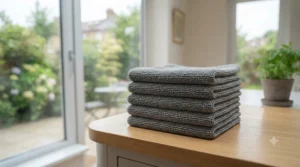
Twelve cloths at 35 x 40cm each puts the MR.SIGA Ultra Fine Microfibre Cloths for Glass firmly in “never run out” territory, and the ultra-fine weave is specifically tuned for glass rather than general-purpose wiping. That distinction matters more than it sounds: a thicker, plusher all-purpose cloth can actually smear glass because its fibres are too coarse to sit flat against a hard, non-porous surface. What most buyers overlook about this model is that the fine weave is what prevents streaking, not just the “microfibre” label on the packet.
Reviewers consistently note the cloths leave zero lint deposits and describe results as “sparkling,” with several long-term users specifically praising performance on tinted glass and mirrors alongside standard windows. A smaller number of aggregated reviews mention confusion between MR.SIGA’s various product lines, with buyers occasionally receiving a differently sized cloth than expected depending on which listing variant they ordered — worth double-checking dimensions before you buy. At a price in the £15-£20 range for twelve cloths, the cost-per-cloth undercuts most single-pack premium options comfortably.
Pros:
- ✅ Twelve-pack means one for every room, permanently
- ✅ Ultra-fine weave built specifically for glass, not general cleaning
- ✅ Machine washable and holds up over hundreds of uses
Cons:
- ❌ Sizing has varied slightly between MR.SIGA product listings
- ❌ Thinner feel than premium single cloths, some users note
For anyone who cleans multiple windows weekly, or who wants a dedicated “glass only” cloth kept separate from kitchen or bathroom cloths, this multipack earns its place near the top of the list.
3. Amazon Basics Microfibre Cleaning Cloth (24-Pack) — cheapest bulk option for general households
At 40.5 x 30.5cm and sold in packs of 24, the Amazon Basics Microfibre Cleaning Cloth is built from a 90% polyester, 10% polyamide blend designed to absorb roughly eight times its own weight in liquid. It’s a genuinely capable all-rounder — cars, kitchens, dashboards, windows — and the sheer quantity makes it the obvious pick if you want disposable-wipe convenience without the ongoing cost or landfill guilt of actual disposables.
Here’s what the spec sheet won’t tell you, but user reports suggest: because this cloth is designed as a general-purpose workhorse rather than a glass specialist, some users find it leaves faint streaking on very reflective or very dark glass compared with dedicated glass cloths like the E-Cloth or MR.SIGA options above. It’s not a lint problem so much as a weave-density issue — general cloths are typically less tightly woven than glass-specific ones. For everyday windows in normal household light, though, most buyers report perfectly acceptable, streak-free results, particularly when the cloth is used slightly damp rather than dry.
Pros:
- ✅ Lowest cost-per-cloth of any option on this list
- ✅ Genuinely multi-purpose across car, kitchen and home
- ✅ Machine washable and reusable hundreds of times
Cons:
- ❌ Not glass-specialised, so can streak on very dark or glossy panes
- ❌ Colours can run in early washes if mixed with other laundry
If your budget is under £15 and your priority is having a cloth in every drawer of the house, this remains a sound and honest choice — just don’t expect showroom-finish results on a jet-black conservatory roof.
4. CarMax English Premium Grade Natural Chamois Leather — best traditional pick for large panes
Genuine chamois leather has been used to dry and polish glass for centuries, and the CarMax English Premium Grade Natural Chamois Leather keeps that tradition alive with a large-format, UK-made cloth designed to soak up serious amounts of water in a single pass. Unlike microfibre, chamois doesn’t rely on a dense fibre weave to trap dirt — it works through natural absorbency, pulling moisture into the leather itself and releasing it with a simple wring.
Reviewers consistently rate this as excellent for drying large panes quickly after a wet wash, and the “Made in the UK” provenance is a genuine point of difference from the mass-produced synthetic alternatives that dominate this category. On paper this means it suits people with big Georgian sash windows or conservatory glazing who want fewer wiping passes rather than a delicate multi-step routine. The trade-off is maintenance: chamois needs to be soaked, softened, and kept slightly damp between uses to avoid stiffening, which is more faff than tossing a microfibre cloth in the wash.
Pros:
- ✅ Exceptional single-pass absorbency for large glass areas
- ✅ Genuine UK manufacturing with traditional tanning process
- ✅ Naturally lint-free without any synthetic fibre shedding
Cons:
- ❌ Requires ongoing conditioning to prevent stiffening
- ❌ Can scratch if grit isn’t cleared from glass first
At around £15-£20, this sits at a similar price point to the premium microfibre kits, so the decision often comes down to preference for natural materials over synthetic performance.
5. Airlab Genuine Chamois Leather XXL (90x60cm) — best for conservatories and oversized glazing
Scaling up to 90 x 60cm, the Airlab Genuine Chamois Leather XXL is aimed squarely at bigger jobs — think conservatory roofs, patio doors, or anyone drying a car and a full set of windows from the same cloth. The brand states it can absorb up to six times its own weight in water, and the natural oils retained during processing are what give chamois that distinctive streak-free sheen once buffed dry.
What most buyers overlook about chamois leather in general is that it needs proper preparation before first use: soaking in warm soapy water, rinsing thoroughly, and using it damp rather than bone dry. Skip that step and the cloth behaves stiffly and unevenly, dragging rather than gliding across glass. Reviewers who follow the manufacturer’s care instructions consistently report excellent results on large surfaces, with the size genuinely reducing the number of wiping passes needed compared with a standard microfibre cloth. Reviewers less enthusiastic about the product tend to be those who stored it damp in direct sunlight, which the care label specifically warns against.
Pros:
- ✅ XXL size covers large glazing in fewer passes
- ✅ High absorbency reduces drips and water spots
- ✅ Reusable for years with proper conditioning
Cons:
- ❌ Needs pre-soaking and careful storage to avoid stiffening
- ❌ Bulkier and less pocket-friendly than folded microfibre
Priced around £20, it’s a specialist buy rather than an everyday essential — but for anyone with genuinely large glass areas, the size advantage is difficult to replicate with standard microfibre.
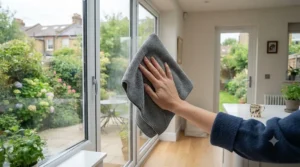
6. Kärcher Spray Bottle & Microfibre Cloth Kit — best companion for window vacuum owners
If you already own a Kärcher window vacuum, the Kärcher Spray Bottle & Microfibre Cloth Kit is less an optional accessory and more a natural extension of the system. The included microfibre cloth attaches to the spray bottle via a hook-and-loop fastening, letting you pre-clean and loosen dirt before the vacuum sucks up the excess water and grime, leaving virtually nothing behind for the cloth itself to smear.
Based on the spec comparison, this kit solves a specific problem that neither microfibre nor chamois can fully address alone: window vacuums are excellent at removing liquid but still miss the frames, sills, and edges, which is exactly where a pre-clean microfibre pass earns its keep. Reviewers consistently note the cloths fit well, machine wash easily, and hold up across repeated use, though a minority mention that fit can vary slightly depending on which Kärcher WV model they own — always worth checking compatibility before ordering. At under £15, it’s one of the most affordable entries here, reflecting its role as a supporting accessory rather than a standalone solution.
Pros:
- ✅ Designed specifically to complement Kärcher window vacuums
- ✅ Hook-and-loop attachment makes swapping cloths quick
- ✅ Affordable given its specialist compatibility
Cons:
- ❌ Only genuinely useful if you own a compatible window vac
- ❌ Fit has varied slightly across different Kärcher WV models
For window vac owners specifically, this is close to an essential purchase; for anyone without the device, it offers little advantage over a standalone microfibre cloth.
7. Norwex Window Cloth — premium buy-it-for-life splurge pick
The Norwex Window Cloth sits at the top of the price ladder here, typically landing in the £20-£30 range for a single cloth — a figure that raises eyebrows until you understand its intended role. Unlike the other cloths on this list, Norwex frames its Window Cloth as a buffing tool rather than a primary cleaner: you wash the glass first with a damp cloth, then use the Window Cloth dry to polish out streaks and residue, working with the grain of the weave for best results.
Here’s what most first-time buyers overlook — the ultra-fine microfibre used in Norwex’s premium range is genuinely denser than budget alternatives, and reviewers consistently describe the finish as sharper and longer-lasting between cleans than cheaper microfibre. That said, honest comparative analysis has to acknowledge the elephant in the room: independent comparisons between Norwex and lower-priced brands like E-Cloth generally conclude that both use comparable premium microfibre technology, with Norwex’s higher price reflecting its direct-sales distribution model as much as any material difference. If budget is a genuine constraint, the E-Cloth Window Cleaning Kit at roughly half the price delivers very similar core performance.
Pros:
- ✅ Extremely fine, dense microfibre weave
- ✅ Long-lasting shine described consistently in reviews
- ✅ Doubles as a polishing cloth for mirrors and chrome
Cons:
- ❌ Among the most expensive single cloths on the market
- ❌ Distribution model can make it harder to buy directly
Buy this one if you want the reputation-driven premium option and don’t mind paying extra for it; buy the E-Cloth kit if you want comparable results without the mark-up.
Practical Usage Guide: Getting Streak-Free Results Every Time
Even the best cloth underperforms with poor technique, so here’s what actually changes your results in the first thirty days of ownership. Start by washing any new microfibre cloth separately before first use — factory finishing residue can reduce initial absorbency, and a quick 30°C wash without fabric softener strips it away. Fabric softener is the single most common mistake people make with microfibre: it coats the fibres in a waxy residue that kills absorbency permanently, so avoid it on every subsequent wash too.
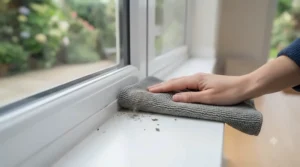
For actual cleaning, work top to bottom, using overlapping horizontal strokes rather than circles — circular motion tends to redistribute rather than lift dirt, which is where streaks originate. If you’re using a two-cloth system like the E-Cloth kit, dampen the textured cloth lightly (not soaking) and follow immediately with the dry polishing cloth while the glass is still slightly warm from the first pass; letting it dry naturally first tends to leave mineral deposits from tap water. Chamois users should always pre-soak in lukewarm water and wring rather than twist, since twisting stresses the leather fibres and shortens its working life. Whichever cloth you choose, rinse it thoroughly between windows — a cloth loaded with grit from one filthy pane will happily transfer fine scratches to the next, spotless one.
Real-World Scenarios: Which Cloth Suits Your Home
Picture three very different households, each with a genuinely different best answer. First, a first-floor flat with four modest sash windows cleaned monthly on a tight budget — here the Amazon Basics Microfibre Cleaning Cloth 24-pack makes financial sense, since the volume covers windows, mirrors, and general cleaning from one purchase, and occasional light streaking on standard glass is an acceptable trade-off for the price.
Second, a family home with a large conservatory and patio doors, cleaned weekly by someone who’s tired of paying for glass spray. This is the E-Cloth Window Cleaning Kit scenario almost perfectly — the chemical-free approach saves recurring spend over time, and the two-cloth system handles the volume of glass without excessive replacement cost. Third, a period property with big single-glazed Georgian windows and a gardener who dries the car on the same day. Here, either the CarMax or Airlab chamois leather options genuinely outperform microfibre, simply because their absorbency reduces the number of wiping passes needed across a large surface area — time saved that matters when you’re up a ladder.
Common Window-Cleaning Problems, Solved
Streaks despite a “streak-free” cloth are almost always down to one of three causes: fabric softener contamination, using the cloth too wet, or wiping in direct sunlight where the glass dries faster than you can buff it — always clean shaded or overcast where possible. Lint appearing on supposedly lint-free cloths is usually a sign the cloth itself is nearing the end of its working life; microfibre does eventually shed as the fibre bonds break down after hundreds of washes, so periodic replacement is normal rather than a fault. Smeared frames and sills, meanwhile, are a job the cloth alone can’t solve — a soft brush or old toothbrush to loosen debris first prevents you dragging grit across the glass with your cleaning cloth afterwards. Finally, persistent hard-water spotting on the outside of windows typically needs a mild vinegar-water solution before your lint-free cloth goes anywhere near it, since plain water alone won’t dissolve mineral deposits.
✨ Ready to Upgrade Your Window Cleaning Kit?
🔍 Compare today’s top-rated lint-free cloths and pick the one that matches your windows, your budget, and your patience for maintenance. Check current pricing and availability before you decide.
How to Choose a Lint-Free Cloth for Windows
- Check the weave density first. A tighter, finer weave traps dirt rather than smearing it — this is the single biggest factor separating a genuinely lint-free glass cleaning cloth review from a disappointing one.
- Match size to your glass. Small cloths are fine for car windows and mirrors; large panes and conservatories benefit from bigger formats like the Airlab XXL chamois.
- Decide on material philosophy. Microfibre suits low-maintenance, machine-washable convenience; chamois leather suits those who prioritise absorbency and don’t mind a little upkeep.
- Factor in your existing tools. Owners of a window vacuum should prioritise cloths designed to complement it, like the Kärcher kit, rather than buying a completely separate system.
- Consider your chemical preferences. If you want to reduce cleaning spray use, prioritise cloths explicitly designed for water-only cleaning, such as E-Cloth or Norwex.
- Budget per-clean, not per-cloth. A £20 multipack working out at under £2 per cloth often beats a £5 single cloth that wears out within months.
- Read the care instructions before buying. Some premium cloths demand specific washing routines; factor that ongoing effort into your decision now, not after your first disappointing wash.
Lint Free Window Cloth vs Microfibre: What’s Actually the Difference
This is a genuinely common point of confusion, because “lint-free” and “microfibre” aren’t actually opposites — most lint-free window cloths are microfibre, engineered with a tighter weave specifically to avoid shedding. The real distinction worth understanding is between glass-specialist microfibre and general-purpose microfibre. A general cloth, like a standard car-cleaning towel, is often plush and thick, which is fantastic for absorbing spilled coffee but too coarse to sit flush against smooth glass, leading to faint fibre transfer under bright light. A dedicated lint-free glass cloth uses a flatter, denser weave with shorter fibres, which is what genuinely prevents streaking.
| Feature | Lint-Free Glass Cloth | Standard Microfibre |
|---|---|---|
| Weave density | Tight, flat weave | Looser, plush weave |
| Best for | Glass, mirrors, screens | General surfaces, cars, kitchens |
| Streak risk on dark glass | Low | Moderate to high |
| Typical price | £15-£20 range | Under £15 |
The table above makes the trade-off clear: general microfibre like the Amazon Basics Microfibre Cleaning Cloth is more versatile and cheaper per cloth, while glass-specialist options like MR.SIGA Ultra Fine Microfibre Cloths for Glass cost slightly more but noticeably reduce streaking risk on your most reflective surfaces. If you only ever clean windows, buy the specialist. If you need one cloth type for everything in the house, general microfibre remains a perfectly sensible compromise. According to Wikipedia’s overview of the material, microfibre works partly through van der Waals forces, physically attracting dust and fine particles into the fibre structure rather than just pushing them around — which is the underlying science behind why a tighter weave genuinely does perform better on glass.
Chamois Leather Window Cloth: The Traditional Alternative
Long before synthetic microfibre existed, professional window cleaners relied almost exclusively on chamois leather — traditionally made from the treated skin of the chamois goat-antelope, though most modern “chamois” sold today, including the options featured here, are genuine sheepskin processed using oil-tanning methods that preserve natural absorbency. The appeal isn’t complicated: chamois can hold an enormous volume of water relative to its size and releases it evenly when wrung, which suits large panes where a microfibre cloth would need constant re-wetting or swapping.
What most buyers overlook about chamois leather window cloth performance is that it excels specifically at the drying stage rather than the initial cleaning stage — professional window cleaners typically wash first with a soapy applicator, then use chamois purely to remove the water cleanly, rather than expecting the leather itself to lift grime. Reviewers of both the CarMax and Airlab options featured earlier consistently praise this drying performance, while newer synthetic alternatives edge ahead on convenience: no soaking, no conditioning, straight in the washing machine. For a household deciding between the two, the honest answer is that chamois rewards patience with superior large-surface performance, while microfibre rewards busy schedules with lower-maintenance reliability.
Common Mistakes When Buying a Lint-Free Cloth for Windows
The single most common mistake is assuming any microfibre cloth will perform identically on glass — as covered above, weave density genuinely matters, and buying a general-purpose cloth expecting glass-specialist results is a frequent source of disappointment. A close second is ignoring pack size relative to actual need: buying a single premium cloth for a large family home with many windows means constant re-washing between panes, when a multipack like the MR.SIGA 12-pack would let you work through the whole house without stopping.
Another overlooked pitfall is skipping the care instructions entirely, then blaming the product when performance drops after a few washes — fabric softener, high heat drying, and bleach are the three fastest ways to kill any microfibre cloth’s absorbency permanently. Buyers new to chamois leather also frequently make the mistake of storing it bone dry in a hot car boot or direct sun, which causes the leather to harden and crack over time; a slightly damp, cool storage spot preserves it far longer. Finally, don’t assume the most expensive option is automatically the best fit — as the Norwex versus E-Cloth comparison earlier demonstrates, premium pricing sometimes reflects distribution model rather than a meaningful leap in cleaning performance.
What to Expect: Real-World Performance on Different Window Types
Specs on a packet rarely translate directly into what you’ll actually see through your own glass, so here’s the honest breakdown by window type. On modern double-glazed uPVC windows with a smooth, consistent surface, virtually any of the seven cloths above will perform well — this is the easiest scenario for lint-free cleaning, and even the budget Amazon Basics option tends to satisfy. On older single-glazed or slightly pitted glass, texture matters more, and reviewers consistently report that chamois leather’s superior absorbency handles imperfect surfaces more forgivingly than a thinner microfibre cloth, which can catch and drag on rough patches.
Mirrors and dark-tinted glass are where the difference between general and glass-specialist microfibre becomes most visible, since any residual lint shows up starkly against a dark, high-reflection background — this is exactly where the tighter weave of the E-Cloth or MR.SIGA options earns its higher price tag over general-purpose cloths. Car windscreens present a slightly different challenge again: the angled surface and combination of road grime and interior off-gassing residue benefit from the two-step wash-then-buff approach that both the E-Cloth kit and Norwex Window Cloth are specifically designed around.
Long-Term Cost & Maintenance: Cloths vs Traditional Alternatives
The maths on reusable lint-free cloths versus disposable paper towels or single-use glass wipes is genuinely stark once you run the numbers over a year. A household cleaning six windows weekly with disposable wipes can easily use several packets a month; a single £15-£20 microfibre kit, washed and reused hundreds of times, replaces that spend entirely after a few months and keeps working for years afterwards.
| Method | Typical Lifespan | Ongoing Cost | Environmental Note |
|---|---|---|---|
| MR.SIGA Ultra Fine Microfibre Cloths | 200+ washes each | Very low after purchase | Reusable, some synthetic fibre shedding in wash |
| CarMax Chamois Leather | Several years with care | Low, minimal replacement | Natural material, biodegradable |
| Disposable glass wipes | Single use | Ongoing, recurring | Higher packaging waste |
There is a genuine environmental nuance worth acknowledging honestly: synthetic microfibre cloths, like all synthetic textiles, shed tiny plastic fibres during machine washing. Research collected by scientists studying washing-machine effluent has quantified this release directly, finding that a single wash of synthetic fabric can shed hundreds of thousands of individual microfibres depending on the fabric type and wash conditions. It’s a genuinely small contribution compared with the far larger volumes shed by clothing, but washing cloths in a full load, at lower temperatures, and less frequently than every single use, reduces the impact without sacrificing performance — and if this concerns you, natural chamois leather sidesteps the issue entirely since it doesn’t shed synthetic microplastics at all.
Zero Lint Window Wipes for Streak-Free Windows: Are They Worth It?
Pre-moistened, single-use “zero lint window wipe” products have become a common supermarket impulse buy, promising the convenience of a disposable without the streaking of paper towel. Based on the spec comparison against the reusable cloths featured throughout this guide, disposable wipes genuinely do avoid the lint problem in the short term, since they’re manufactured from non-woven material specifically to avoid fibre shedding. However, the honest trade-off is cost and waste: a pack of wipes handles a handful of cleans before you’re buying another, whereas any of the seven reusable cloths above works out dramatically cheaper across a year of regular use.
There’s also a performance consideration worth flagging plainly — most disposable wipes are pre-treated with a cleaning solution rather than designed for the buff-dry stage, meaning they excel at the initial clean but don’t replace the polishing pass a good microfibre or chamois cloth provides. For occasional touch-ups on a mirror or car window between proper cleans, disposable zero lint wipes are a reasonable convenience purchase. For anyone cleaning windows regularly as part of a routine, a proper reusable lint-free cloth for windows remains the more sensible long-term investment, both financially and in terms of the packaging waste avoided.
Buyer’s Decision Framework: Which Cloth Should You Choose
If you clean windows infrequently and want maximum bang for minimum spend, choose the Amazon Basics 24-pack because volume and versatility outweigh glass-specialist precision for occasional use. If you clean regularly and want the best genuine streak-free performance without a premium price tag, choose the MR.SIGA Ultra Fine Microfibre Cloths for Glass because the specialist weave and generous pack size hit the sweet spot between cost and results. If chemical sensitivity or a desire to cut down on cleaning spray is your priority, choose the E-Cloth Window Cleaning Kit because it’s specifically engineered and independently endorsed for water-only cleaning.
If you have large, older, or heavily soiled glass and don’t mind a bit of upkeep, choose one of the chamois leather options because their absorbency genuinely reduces the number of passes needed on bigger surfaces. If you already own a window vacuum, choose the Kärcher kit as a natural extension of your existing system rather than duplicating effort with an unrelated cloth. And if budget genuinely isn’t a factor and you want the most premium single cloth available, the Norwex Window Cloth delivers — just go in aware you’re paying partly for brand and distribution model rather than a dramatic leap in raw cleaning ability.
FAQ
❓ What is the best cloth for streak-free windows?
❓ Is chamois leather better than microfibre for windows?
❓ Can I use a lint-free cloth for windows without any cleaning spray?
❓ How often should I replace a microfibre window cloth?
❓ Do zero lint window wipes work as well as reusable cloths?
Conclusion
Streaky windows are rarely a technique problem in isolation — more often than not, the cloth itself is working against you, shedding fibres or smearing dirt rather than lifting it cleanly away. Across the seven products covered here, there’s a genuinely honest recommendation for almost every situation: the MR.SIGA Ultra Fine Microfibre Cloths for Glass for reliable everyday value, the E-Cloth Window Cleaning Kit for chemical-free convenience, chamois leather from CarMax or Airlab for large or older glass, and the Norwex Window Cloth if premium performance and brand reputation matter more than price.
What ties every genuinely good option together isn’t a flashy marketing claim — it’s a tight, purpose-built weave or natural absorbency that’s specifically engineered not to leave anything behind on glass. Match that to your actual windows, your cleaning frequency, and your appetite for maintenance, and streak-free glass stops being a lucky outcome and starts being the expected one, every single time you clean.
✨ Found the right cloth for your windows?
🔍Check today’s availability and start seeing genuinely streak-free glass this weekend! 💬🤗
Recommended for You
- Water Fed Pole System: 7 Best Pure Water Kits for 2026
- Telescopic Pole for Window Cleaning 2026: 7 Poles Worth Buying
- Professional Window Cleaning Kit: 7 Best Picks for 2026
Disclaimer: This article contains affiliate links. As an Amazon Associate, I earn from qualifying purchases. If you purchase products through these links, we may earn a small commission at no additional cost to you.
✨ Found this helpful? Share it with your friends! 💬🤗
